

When an ABS pipe fails, the visible symptom may be far from the damaged section. A recurring backup, damp area, sewer odor, or unexplained moisture can leave a Florida homeowner asking whether a local repair is enough or a longer section needs attention. Planning ABS pipe repair starts with confirming the material, locating the failure, and understanding what condition the adjoining pipe is in.
Request an inspection and discuss your pipe concern
What makes an ABS pipe problem different?
ABS, or acrylonitrile butadiene styrene, is a plastic material used in some drain, waste, and vent systems. A homeowner may recognize it as a dark pipe, but color alone does not confirm the material or tell you what caused a failure. Other pipe materials can be present in the same building, and a prior repair may have introduced transitions or fittings that are not obvious from the surface.
ABS sections are commonly joined with solvent cement. Over time, a failure may appear at a joint, fitting, bend, or length of pipe. A crack can also develop in the pipe wall. Possible contributors include physical impact, poor support, stress at a connection, material condition, or a previous repair that did not address the underlying issue. Those are possibilities to investigate, not a diagnosis based on one symptom.
Location matters, too. A visible leak beneath an accessible sink is different from a drain line concealed below a slab, behind a finished wall, or underground. In a multi-material system, the repair plan must account for how the ABS connects to the rest of the line. A suitable repair for one exposed section may not resolve a problem farther along the run.
Before the evaluation, gather any records that may clarify the pipe route or previous work: repair invoices, inspection notes, or photographs taken when a section was exposed. Do not assume an old sketch is exact, but it can give the technician a useful starting point. If you can safely see the pipe, photograph the area without touching or stressing it. Note nearby fittings and whether the pipe changes material; do not scrape, cut, or remove insulation to identify it.
In short: Identify the pipe and the precise failure before selecting materials or deciding how much pipe to replace. A symptom alone rarely defines the full scope.
What signs should prompt a closer look?
Some failures are easy to spot, such as a visible split or active leak. Others show up as changes in how a drain behaves. Watch for patterns and note when they occur. A single slow fixture can have a different cause from several fixtures that back up together.
- Repeated backups: A line that clears temporarily but soon slows again may need inspection to identify the restriction or damage.
- Moisture or staining: Wet spots, softened materials, or discoloration near a pipe route can indicate a leak, but the source should be verified before opening a wall or floor.
- Drain odors: A persistent sewer-like smell can have several causes, including a faulty connection or an issue elsewhere in the drainage system.
- Unusual sounds or changes in drainage: Gurgling, bubbling, or changes affecting multiple fixtures are useful observations to share with the inspection team.
- Visible cracking or separation: If a section is exposed, take a photo from a safe distance and avoid putting pressure on the pipe or joint.
Write down which fixtures are affected, whether the symptom is constant or intermittent, and whether it changes after water use. Avoid repeatedly running water into a line that is backing up. Do not apply sealants, adhesives, or a chemical product to a suspected crack as a substitute for confirming the source. A surface patch may hide evidence without restoring the line.
For a persistent odor, a focused leak detection evaluation may help narrow down whether water loss is involved. If the concern is a drain or sewer line, a drain service assessment can help determine which diagnostic step fits the symptoms.
It can help to keep a short symptom log for several days if the issue is intermittent. Record the date and time, which fixtures were used, what changed, and whether more than one drain was affected. A pattern after laundry or several fixtures running may guide the evaluation differently from a symptom that appears without water use. If there is active leakage or a backup, prioritize limiting further water use and arranging an assessment rather than waiting to build a longer log.
In short: Record the pattern and location of symptoms. The combination of observations helps guide inspection, but does not by itself prove that ABS pipe has failed.
How can inspection shape a durable repair plan?
Before choosing a repair, confirm what is damaged, where it is, and whether nearby sections show related problems. Depending on access and the system, an evaluation can include a visual check of exposed pipe, a camera inspection of an accessible drain line, or other appropriate diagnostic testing. The method depends on the suspected location and type of line; a camera cannot inspect every hidden water line or every inaccessible section.
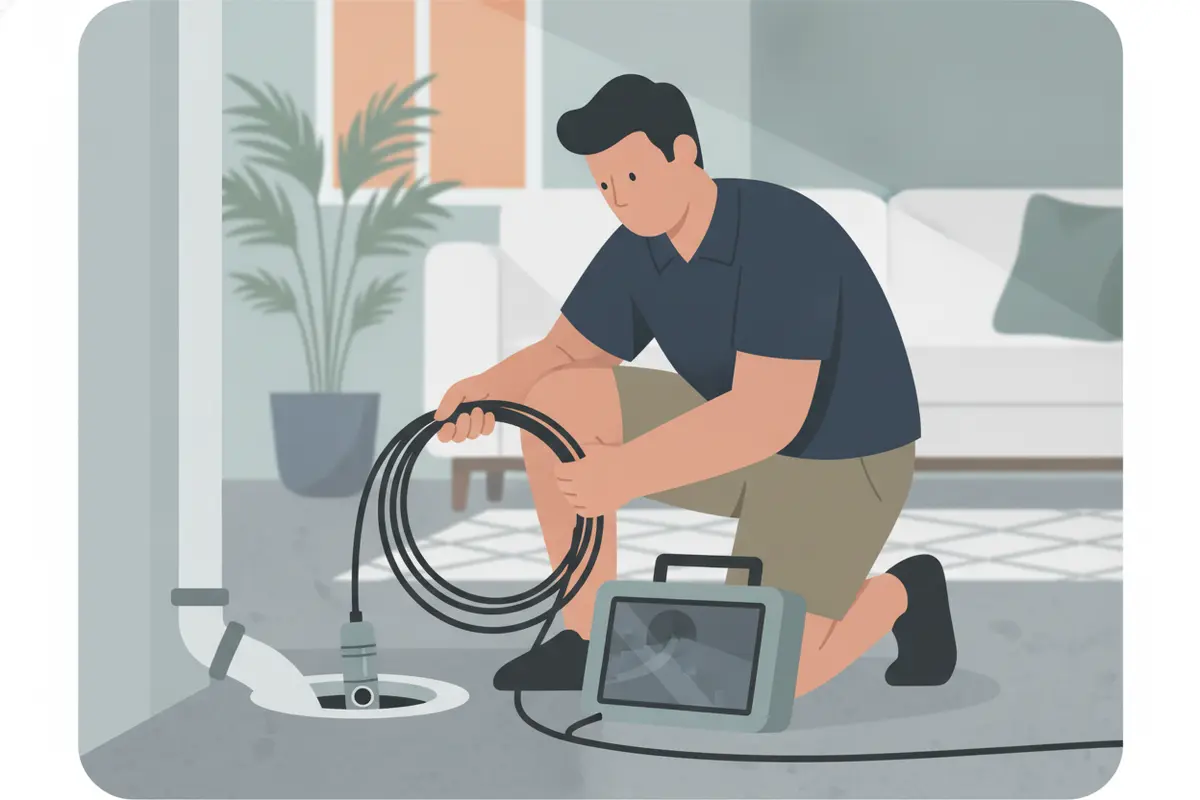
A camera can show the interior condition of a line that it can physically reach. It may help identify a break, offset, obstruction, deformation, or a change in the pipe path. It does not automatically establish the condition of every branch or confirm the material of every section. Ask which portions were inspected, what the camera could not reach, and whether the finding is documented. Pipe Surgeons offers camera inspection services for drain and sewer lines.
For an ABS concern, useful inspection questions include:
- Can you confirm the pipe material at the suspected failure, or is that still uncertain?
- Is the problem isolated to one joint or segment, or are there signs of damage beyond it?
- Can the line be accessed through an existing opening, or would access work be needed?
- What findings support the proposed scope, and what remains unverified?
- After the work, how will the repaired or replaced section be checked?
Some damage is outside the range of a camera view. For example, a camera inside a drain line cannot show all conditions on the pipe exterior or explain every source of movement around a buried line. If a finding is unclear, ask what additional access or test would answer the question before agreeing to a larger scope.
Ask the inspector to connect each recommendation to an observation. For instance, a visible separation at a joint, a repeatable leak at an exposed section, or a camera view showing a damaged segment are different kinds of evidence. Request the location in plain language—such as the branch, cleanout, or distance from a known access point—and ask whether photos or video can be shared. A record helps you compare a proposed repair with a second opinion and understand what was actually examined.
In short: Inspection is useful when it narrows uncertainty and connects the observed defect to a specific plan. Ask for the limits of the inspection as well as its findings.
Should you repair one section or replace more of the line?
A localized repair may be reasonable when the failure is clearly isolated, the adjoining pipe appears serviceable, and the damaged area can be accessed and properly joined. Replacing a longer section may make more sense when damage extends beyond one point, repeated failures suggest a broader condition, or access to the affected area makes a small patch impractical. Neither option is automatically right for every ABS system.
Repair method also depends on where the pipe runs and what the line does. A short, exposed section may call for a different approach from a buried sewer lateral or a line beneath a finished surface. Trenchless methods are not suitable for every failure, and their use depends on pipe condition, access, alignment, and whether the existing line can support the proposed work. A specialist can explain whether trenchless pipe repair is appropriate for the particular line.
| Planning factor | Localized repair may fit when… | Broader replacement may be considered when… |
|---|---|---|
| Extent of damage | Inspection identifies one discrete defect. | Several damaged areas or a longer affected section are found. |
| Condition nearby | Adjacent pipe and connections appear sound. | Nearby sections show related deterioration or repeated problems. |
| Access | The failed area can be reached and joined appropriately. | Access to one point is difficult, or a wider route is needed to address the confirmed issue. |
| Confidence in diagnosis | The location and cause are sufficiently clear. | Further inspection is needed before defining the complete scope. |
| Work plan | The contractor can describe how the repair will be checked. | The proposal explains the replacement limits and how connections will be handled. |
This table is a discussion aid, not a rule that guarantees one option will work. A credible proposal should explain why the recommended scope matches the inspection findings, what areas will remain untouched, and what could change if access reveals additional damage.
When comparing proposals, separate the technical scope from the access and restoration assumptions. One plan may include opening and closing a specific access point while another may leave surface restoration to the property owner or another trade. Ask whether the amount of pipe being addressed is measured or estimated, how transitions to other materials will be handled, and what happens if the exposed pipe differs from the inspection view. These details make it easier to compare the plans fairly, beyond looking at the repair label alone.
For a buried line where the existing pipe cannot be retained, pipe bursting may be one option to discuss. It is a method with specific site and pipe requirements, not a default solution for every ABS failure. For a repair that involves a sewer lateral, review the contractor's explanation of sewer pipe repair options and how the proposed work addresses the actual defect.
A U.S. Department of Transportation research report distinguishes temporary repairs from permanent repairs and discusses selection of pipe repair methods. Its subject is pipeline repair rather than a diagnosis of residential ABS systems, but it reinforces a useful planning point: understand whether a proposed measure is temporary or intended as a lasting repair, and ask what supports that choice. Read the report on selection of pipe repair methods.
In short: Match the extent of work to documented damage and access. Ask the contractor to explain why a spot repair, longer replacement, or trenchless approach is suitable for this line.
What access and property questions should you settle first?
Access can shape both the method and the disruption. Before work is scheduled, establish where the line is believed to run and how the crew will reach it. An accessible cleanout may make inspection easier; a pipe beneath a slab, landscaping, or a finished surface can require a different plan. Do not assume that trenchless means no access work or that conventional access necessarily means the entire yard or floor will be opened.
Ask for the expected work area and any preparation that is your responsibility. Clarify whether furniture, stored items, or vehicles need to be moved, which fixtures should not be used, and how the work area will be protected. If the pipe is in a shared building or commercial property, coordinate access and any notice needed for occupants. Pipe Surgeons describes work across residential pipe services and other property types; the site conditions still determine the practical plan.
Florida properties vary in layout, surfaces, and pipe routing. The service location and access conditions matter as much as the broad region. You can confirm coverage through the Pipe Surgeons service area list, then share the address and the symptoms when arranging an evaluation.
Get the proposal in writing and check that it identifies the section to be repaired or replaced, the method, the basis for the recommendation, and any important exclusions. Ask what inspection or test will verify the work, what restoration is included, and whether a separate trade may be needed for surfaces or finishes. A quote-based scope should be clear enough that you can compare alternatives, rather than compare only a single total.
If payment arrangements are relevant, ask what options and terms are currently available directly from the provider. Information about Pipe Surgeons financing is available online; review the applicable details before making a decision.
Before the appointment, make a simple access checklist: confirm the arrival route and parking, clear the area around the suspected pipe or cleanout, keep pets away from equipment, and identify any rooms or fixtures that should remain available. For a shared property, tell affected occupants what areas may be unavailable and for how long, based on the contractor's plan. Confirm who will provide updates if inspection changes the anticipated work area, and ask whether the crew will pause for approval before proceeding beyond the written scope.
In short: Set expectations for entry, access, work limits, verification, and restoration before the appointment. Written scope helps prevent different assumptions about what the repair includes.
Talk with Pipe Surgeons about your ABS pipe findings
Frequently asked questions about ABS pipe repair
Can a cracked ABS pipe be patched?
A patch may appear to stop a visible leak, but it does not establish why the pipe cracked or whether nearby sections are affected. The right repair depends on the defect, access, pipe condition, and the connection method. Have the failure assessed before treating a surface patch as a durable solution.
Does a camera inspection identify every ABS pipe problem?
No. A camera can show the interior of accessible drain or sewer pipe, but it cannot inspect every hidden pipe, every exterior condition, or areas it cannot reach. Ask which section was inspected and what limitations apply to the findings.
Can an ABS drain line be repaired without excavation?
Sometimes a trenchless method may be considered for a suitable line, but the answer depends on the location, condition, geometry, access, and repair objective. An inspection and site evaluation are needed to determine whether a trenchless option is appropriate. Some work still needs access points.
Should I replace all ABS pipe if one section fails?
Not automatically. A single confirmed defect with sound adjoining pipe may support a localized repair. Wider damage, repeated failures, or poor condition in connected sections may justify considering a larger scope. Ask for the findings that support the extent proposed.
Plan the next step for an ABS pipe concern
A practical repair decision starts with evidence: identify the material as accurately as possible, document the symptoms, inspect the affected line, and compare the proposed scope with what was found. When the location, access limits, and verification plan are clear, it is easier to weigh a localized repair against replacement without assuming that one method fits every property.
In short: Let the condition of the pipe and the access available guide the plan, and ask questions until the proposed work is clear.
Request a pipe evaluation and discuss the next step
Share the symptoms, any inspection findings, and the pipe location so the next conversation can focus on the right questions for your property.