

CIPP pipe lining creates a new pipe inside an existing one using an epoxy-based coating. It can be a trenchless repair option when the inspected line and site conditions support it. A camera inspection can help show what is happening inside the pipe before anyone recommends a repair.
Request a pipe lining consultation
What does CIPP pipe lining do?
Cured-in-place pipe lining, or CIPP, rehabilitates a pipe from the inside rather than replacing the entire line by opening a trench along its route. Pipe Surgeons describes its lining service as creating a new pipe within the existing pipe with an epoxy-based coating. The method is described as requiring no digging and minimizing property disruption. Those general descriptions do not mean every project has identical access needs or that every damaged pipe can be lined.
CIPP is listed as an option for cracked or crushed, corroded, unaligned, and slow-draining pipes, as well as tree-root intrusion and severe sewage overflow or backups. These are reasons to investigate, not a remote diagnosis or automatic approval for lining. The line’s observed condition, configuration, and project context all matter. The EPA’s retrospective evaluation provides historical background on municipal CIPP use: EPA evaluation of cured-in-place pipe. It is not a determination about a particular property or a project-specific installation guide.
For a property owner, the practical question is not simply whether CIPP exists as a method. It is whether the inspection supports discussing it for the affected segment, what else could address the problem, and what the contractor can confirm about the proposed work.
How should you begin with an inspection?
Start with the observed condition rather than the preferred repair. A sewer camera inspection can provide a 360-degree view of sewer lines from a home or building toward the city sewer main connection. Pipe Surgeons describes customers viewing the inspection, receiving an explanation of findings, and reviewing options with written estimates. Ask to identify the segment in question and the evidence that supports the recommendation.
Useful questions include: Where is the concern located? What can be seen clearly, and what is uncertain? Does the camera show one localized defect or concerns along a longer section? What is the condition immediately before and after the affected area? These questions help separate what was observed from what is inferred.
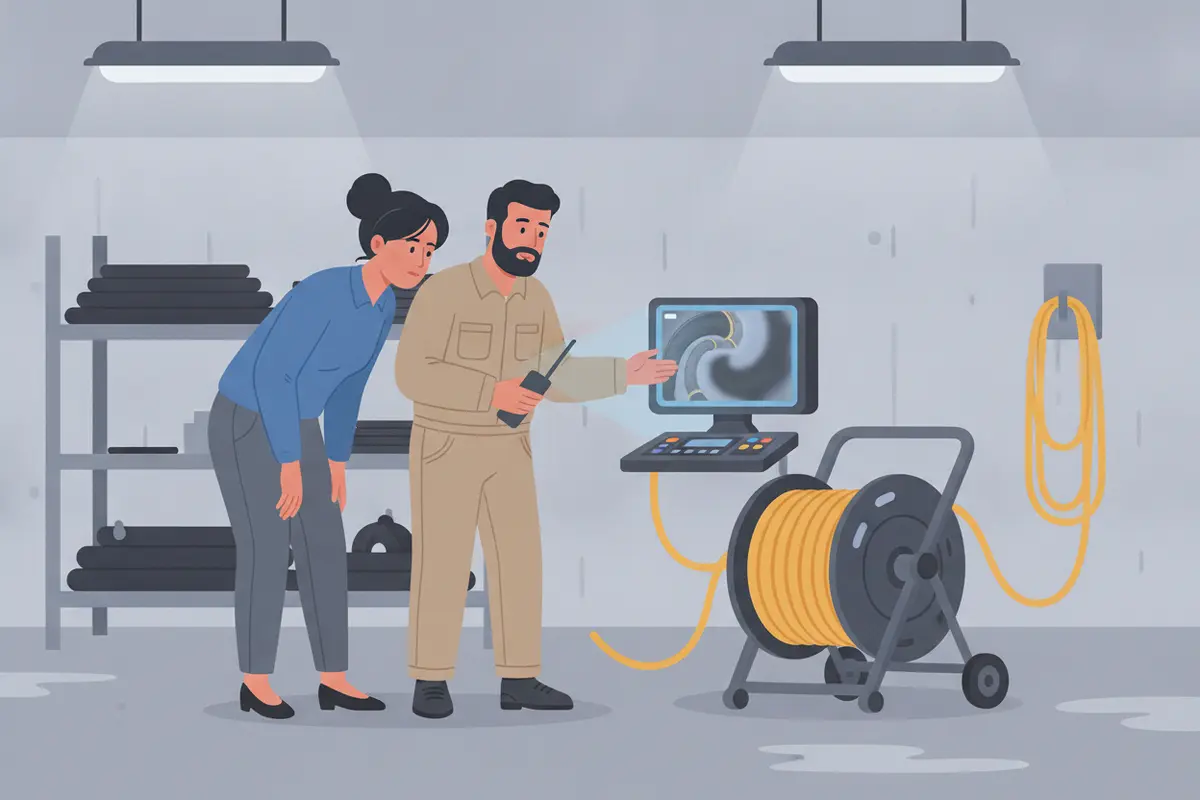
Video is useful documentation, but it represents what was visible during that inspection. If debris, water, or another condition limits the view, ask how that affects confidence in the assessment. Ask whether another assessment is appropriate before choosing a repair. The purpose is not to interpret footage without a specialist; it is to understand how the footage connects to the scope being proposed.
See sewer and drain camera inspections for information about inspection services. If the concern might involve a leak rather than a sewer defect, review leak detection services and ask what kind of assessment fits the reported symptoms.
What does the available process information tell you?
The service information says CIPP uses an epoxy-based coating and describes the process as taking a few hours. It does not specify the installation sequence for a particular job, such as preparation, liner placement, curing method, or the precise point at which the pipe can return to service. Those details should be confirmed directly for the planned project rather than assumed from a general description.
Before work is scheduled, ask the contractor to describe the planned steps in plain language. Which portion of the line is included? What work happens at the property? What will the crew need access to? How will the contractor communicate if the actual condition differs from what was visible during assessment? When should occupants expect to use the line again? The answers should be tied to the specific scope, not a generic process timeline.
Access is also a site-specific question. CIPP is described as a no-dig service, but that does not establish that a particular existing cleanout is sufficient or that no other access work could be needed. Ask which access points are anticipated, whether any additional opening may be required, and what areas should remain clear. If the property is occupied or has shared facilities, clarify how people should plan around the work.
Keep a written record of these answers with the estimate. If timing or access depends on an inspection finding that is not yet confirmed, ask for that condition to be stated explicitly. This makes it easier to distinguish the expected plan from a contingency.
How can you evaluate whether lining may fit?
Only a property-specific assessment can determine whether CIPP is appropriate. The service list includes several types of pipe problems, but a listed use is not a technical rule that every pipe with that symptom qualifies. Ask the specialist to connect the visible condition to the recommended scope and explain why lining is being considered over another option.
A useful discussion might distinguish among three situations. A localized issue could prompt a spot repair discussion if that is suitable. More extensive damage could prompt full rehabilitation. If repair is not viable, replacement may be presented as an alternative. These categories describe options Pipe Surgeons says it may present; they do not prescribe which one applies to a given line.
For example, if a camera view suggests a defect at one point, ask whether nearby sections appear sound and how the scope would address the full concern. If several areas appear affected, ask whether the proposed work covers all of them or only a defined segment. If the pipe is difficult to assess, ask what uncertainty remains and whether it changes the recommendation. A written explanation should clarify the boundaries of the work, not simply label the whole pipe as damaged.
Pipe Surgeons lists cast iron repair and replacement among its services, but the available information does not establish that CIPP is suitable for every cast iron pipe or condition. The company’s page on cast iron pipe lining basics can provide context for that subject. Ask the specialist to explain the evidence and options for the specific line rather than treating material type alone as a decision.
- Which line and segment are included in the assessment?
- What defect or condition was actually observed?
- Is the proposal for a localized repair, rehabilitation, or replacement, and why?
- What cannot be confirmed from the available inspection?
- What access assumptions does the estimate rely on?
- What conditions could change the scope or schedule?
These questions help a property owner compare recommendations without trying to make a technical diagnosis from symptoms alone.
How does lining compare with other repair choices?
No method is best for every line. Compare the observed condition, extent of damage, access, and whether repair is viable. The table below is a conversation aid, not a finding about eligibility or a price comparison.
| Option | General approach | Questions to clarify |
|---|---|---|
| CIPP lining | Creates a new pipe within an existing pipe using an epoxy-based coating | Which segment, what inspection evidence, which access assumptions, and what schedule? |
| Spot repair | Addresses a localized issue when suitable | How was the affected location identified, and what is known about adjacent sections? |
| Pipe bursting | Bursts the old pipe while pulling new HDPE pipe through | Why is replacement being considered, and what route and site access are involved? |
| Excavated replacement | Replaces pipe where repair is not viable or appropriate | What excavation and restoration are included in the proposed scope? |
Pipe Surgeons prioritizes non-invasive trenchless methods when appropriate, but trenchless is not automatically the right answer for every site. Read about trenchless pipe repair options and pipe bursting. Ask how the proposed approach fits the inspection findings and how alternatives would address the same concern.
When comparing two estimates, make sure they cover the same segment and outcome. One proposal may cover a specific section while another addresses a broader length. Note whether each includes the same access assumptions, documentation, and return-to-service expectations. A lower headline amount is difficult to compare if the scopes differ.
What should a CIPP estimate include?
CIPP pricing is customized. Pipe Surgeons says cost varies with cleanout accessibility, equipment needed, and plumbing quality, and an accurate estimate requires a property assessment. Published fixed prices are not available. Request a written estimate that identifies the property line or segment, inspection findings behind the recommendation, planned scope, and assumptions used to prepare it.
Ask the estimate to make clear what is included and what is not. If the scope depends on access being available, ask for that assumption to be noted. Ask what could change the cost or schedule if conditions differ from those observed. Clarify how changes will be described and approved before additional work proceeds. This is a practical way to understand the quote without relying on a general price range that may not fit the property.
Also ask what documentation will be provided after the work and whether any follow-up inspection is planned. The available information does not specify a liner lifespan, material details for a particular job, or warranty duration. Do not assume these terms. Ask for any applicable performance, warranty, or guarantee terms in writing, including what they cover and any limits. Pipe Surgeons states a guarantee for trenchless pipe repair work, but specific terms are not disclosed in the available information; obtain the applicable terms for the proposed project.
Pipe Surgeons serves residential, commercial, industrial, and municipal clients across Brevard, Indian River, St. Lucie, Martin, Palm Beach, Broward, and Miami-Dade counties. See pipe repair and inspection services and industries served. For a commercial or multi-occupant property, include operating hours, access coordination, and any areas that must remain available in the project discussion.
What should you record before and after the assessment?
Before an inspection, make a short timeline of the concern. Note when symptoms began, whether they are constant or intermittent, and which fixtures or areas are affected. Record whether more than one area is involved and whether the problem appears after a particular use or event. These notes are not a diagnosis, but they can help the specialist understand the history.
For a building with multiple occupants, record where and when the issue appears. Note which facilities may be affected and any operating constraints, such as periods when access is difficult. Avoid making assumptions about a shared line based only on one occupant’s report; share the pattern and let the assessment determine what it means.
After the camera review, retain the video documentation provided, the written findings, and the estimate. Make sure the records identify the line or segment and distinguish observations from assumptions or proposed work. If the contractor discusses more than one option, keep the reasoning and scope for each option alongside the estimate. That way, a later comparison is based on the same evidence rather than memory.
For broader context, see traditional and trenchless sewer repair comparisons and the sewer lateral lining discussion. These resources can help frame questions, but neither substitutes for a property-specific assessment.
What should you do when symptoms continue?
Recurring slow drainage, backups, sewer odors, or signs of leakage deserve attention, but symptoms alone do not identify the cause or confirm that lining is appropriate. Write down what is happening and where, then arrange an assessment that can investigate the line. If a backup or leak is causing active damage, contact a qualified pipe specialist promptly to discuss next steps.
Pipe Surgeons has served South Florida and the Treasure Coast for over 40 years and provides sewer camera inspections and trenchless pipe repair options. A useful next step is to review the inspection findings, ask what the contractor can and cannot confirm, and compare the proposed scope with alternatives before authorizing work.
Discuss your pipe inspection and repair options
Frequently asked questions
Does CIPP lining mean there will be no digging?
The service is described as requiring no digging and minimizing disruption. However, general descriptions do not settle the access needs for a particular property. Ask which access points the proposed work requires and whether additional openings could be needed.
How long does CIPP pipe lining take?
Pipe Surgeons describes the process as taking a few hours. Ask for the anticipated schedule for the specific project and the point at which the line can return to use, since the available general description does not specify those details.
Can every cast iron pipe be lined?
No. The available information does not establish that every cast iron pipe or condition is suitable for CIPP. Ask for a camera-based explanation of the observed condition and a comparison with other repair or replacement options.
How much does CIPP pipe lining cost?
The price is quote-based and varies with cleanout access, equipment needs, and plumbing quality. Request a written estimate based on the property assessment and ask which conditions could change the scope.
A careful inspection, documented findings, and a clear written scope can help you decide whether lining, localized repair, or replacement is the right discussion for your pipe.