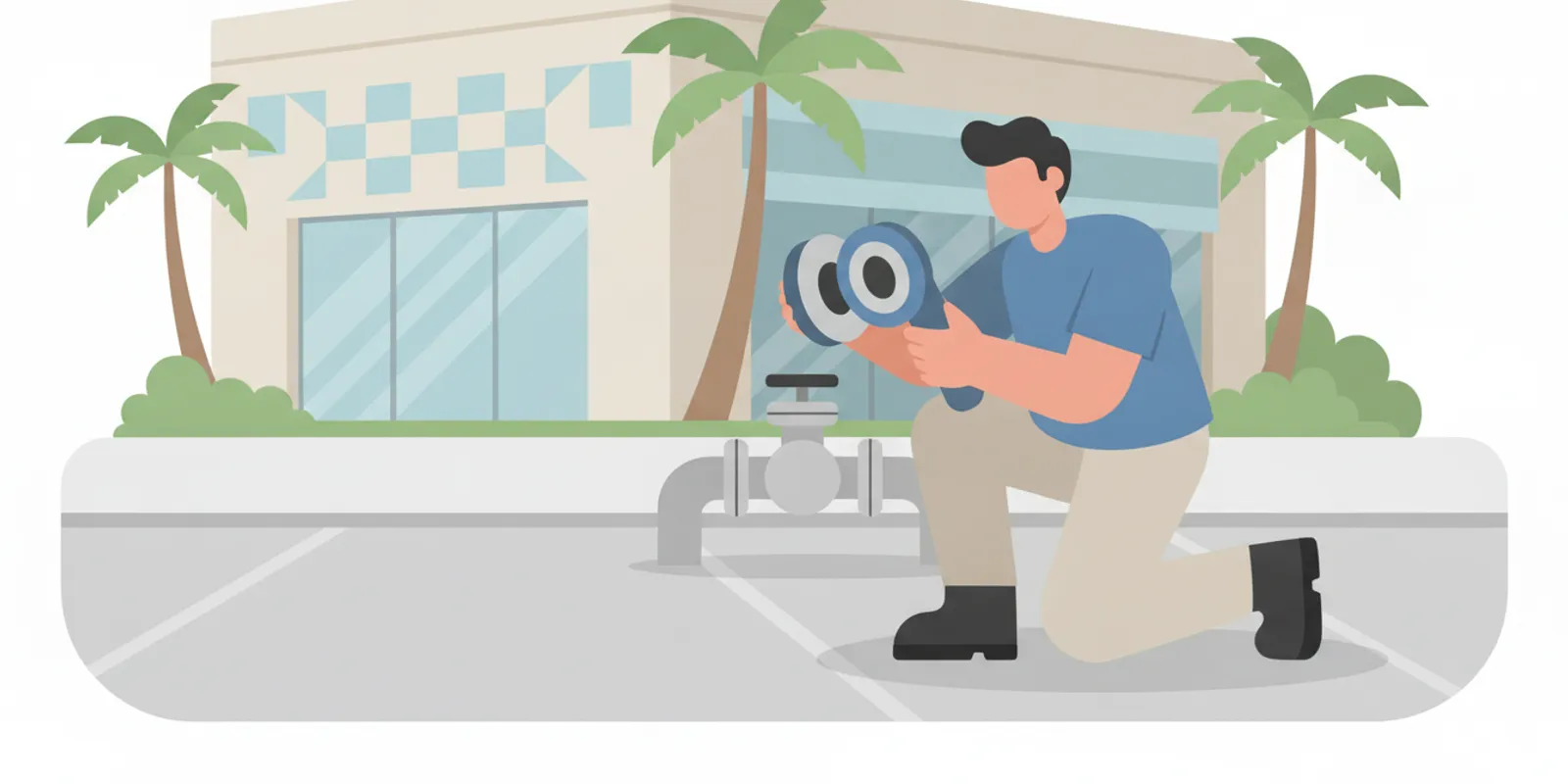
A leak inside a commercial property can be difficult to locate when water is traveling through walls, a slab, or buried pipework before it becomes visible. Commercial acoustic leak detection uses sound as one clue to help narrow the search area. It can support a focused investigation, but it is not a shortcut around diagnosis: pipe material, water pressure, background noise, access, and the suspected leak location all affect what a technician can hear. Understanding the process helps facility teams prepare useful information and decide what questions to ask.
Request a commercial leak detection evaluation
Why can a commercial pipe leak be hard to locate?
In brief: A leak may be concealed, its water may travel away from the break, and building noise can make the sound difficult to isolate.
A wet floor or an unexplained increase in water use may identify a problem without showing where the pipe has failed. In a large facility, water lines can run under paved areas, through utility spaces, or beneath concrete. Water can follow a pipe sleeve, a joint, a wall cavity, or the surface of a slab before appearing somewhere else. The visible wet spot is evidence to investigate, not proof that the leak is directly below it.
Commercial sites also have competing sounds. Pumps, mechanical equipment, traffic, production activity, and water moving through other lines can mask or resemble leak noise. A building may operate on several schedules, so sound conditions can change between a quiet overnight period and a busy workday. Access can be another constraint: the line may not have a nearby valve, cleanout, or exposed section where a technician can take a useful reading.
Those conditions make a planned, evidence-based assessment more helpful than opening a floor or wall based only on where water appeared. A specialized leak detection evaluation can help identify which diagnostic approach makes sense for the site and the suspected line.
How does acoustic leak detection work?
In brief: A technician listens for sound associated with escaping water, compares readings at accessible points, and uses the pattern to guide further investigation.
Water escaping through a defect can create vibration or sound that travels through the pipe and surrounding materials. Acoustic equipment helps a trained operator listen for and compare those signals at selected points. Depending on the site and the system, those points may include accessible valves, fittings, or other exposed locations connected to the line under investigation. The purpose is to gather clues and narrow the area for additional checking—not to declare a precise repair location from one reading.
Some acoustic methods use listening equipment at individual points; other configurations can compare signals from more than one location. What is suitable depends on the line, access, and conditions. An academic paper indexed by Semantic Scholar describes acoustic emission as a technique used to detect pipeline leakage, offering a research example of sound-based leak investigation. The particular equipment and procedure for a commercial property still depend on the actual system and site conditions.
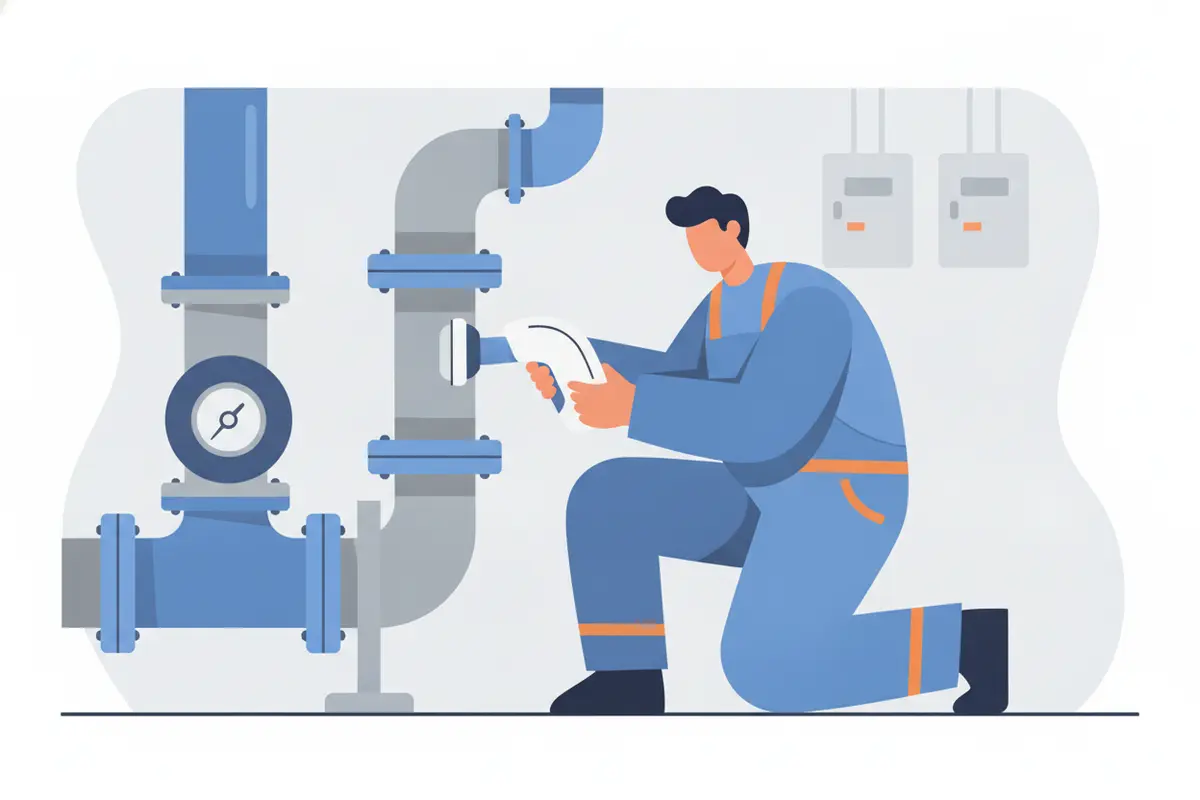
Sound is one part of a diagnostic picture. A strong investigation begins by establishing what line is involved, what areas it serves, and what evidence points to a leak. A technician may compare locations, repeat measurements, and consider whether an alternate method is needed. If the site has a camera inspection opportunity on a compatible accessible line, visual information may answer a different question than acoustic listening can. A camera does not necessarily apply to every water line or every suspected leak, so the method should match the system.
When is acoustic testing a useful option for a commercial site?
In brief: It may be worth considering when there is a credible reason to suspect a pressurized pipe leak and the team needs to narrow a search before disruptive access work.
Acoustic testing is most useful as part of a targeted investigation. It may be considered when a facility team has already identified a likely line or zone but cannot see the leak, when water is appearing at a distance from a suspected pipe, or when opening a broad area without more evidence would create avoidable disruption. It may also help investigators compare accessible points along a line and decide where another test should focus.
It is not a guarantee that every leak can be heard. A small leak, low pressure, certain pipe materials, long distances between access points, or noisy surroundings can make a signal difficult to separate from other sounds. A leak in a drain that is not under pressure may require a different investigative approach from a pressurized water line. If the issue is recurring sewer trouble rather than suspected water loss, a pipeline inspection or another suitable diagnostic service may be more relevant.
Start with the question the team needs answered. Is the immediate concern whether a leak exists? Is the goal to isolate a section of pipe? Does the crew need to identify the likely repair area, or determine whether a particular line is involved? Being clear about the decision helps the service provider explain what a test can establish and what would require follow-up.
What affects the accuracy of acoustic leak detection?
In brief: The quality of a result depends on signal clarity, pipe and site conditions, access, and the way readings are interpreted alongside other evidence.
There is no single set of conditions across commercial properties. A technician may need to consider:
- Pipe material and size: Different pipe characteristics can affect how sound travels and how it can be detected at available points.
- Water pressure and leak behavior: The sound from an escaping flow may vary with operating conditions and the suspected defect.
- Distance and access: Readings are more useful when the technician can reach meaningful points on or near the line.
- Background noise: Pumps, machinery, vehicles, and normal building activity can make comparison harder.
- Building layout: Slabs, soil, walls, and other materials may affect sound transmission between the pipe and listening point.
- System knowledge: Unclear drawings, undocumented changes, or uncertainty about which valve controls a line can complicate testing.
For projects where a pipe route is uncertain, pipe mapping can be a related consideration. Mapping and leak detection answer different questions, and one does not automatically replace the other. Coordinating the questions up front can help the site team avoid testing a line that has not been correctly identified.
How does acoustic testing compare with other investigation methods?
In brief: Acoustic listening can help narrow a suspected leak area; other methods may be better suited to confirming a leak, tracing a route, or inspecting a pipe interior.
No single method suits every pipe, symptom, or property. The options below are broad categories, not a prescribed sequence. A qualified assessment should determine which tests fit the actual site.
| Approach | What it can help investigate | Important consideration |
|---|---|---|
| Acoustic listening | Sound clues associated with a suspected leak; comparison of accessible points | Background noise, access, pipe conditions, and signal strength can limit findings. |
| Pressure or hydrostatic testing | Whether a defined section or system holds pressure under test conditions | The system must be suitable for the test, and the section being tested must be identified. |
| Smoke testing | Potential openings or pathways in compatible sewer and drain systems | It is a different diagnostic method and is not a universal test for pressurized water lines. |
| Camera inspection | Visual information inside an accessible, compatible pipe | Access and pipe condition matter; a camera view may not show every external leak. |
| Electronic or other leak detection | Additional evidence from equipment suited to a particular pipe and site | The provider should explain the method's limits and what it can verify. |
Pipe Surgeons describes using multiple leak detection methods, including hydrostatic, smoke, and electronic testing. The right tool depends on the system under investigation, not simply on which equipment is available. For example, smoke testing is associated with investigating suitable drain or sewer systems; it should not be confused with acoustic testing of a pressurized water line. A team can review the company's pipe inspection and repair services to understand the broader service categories.
What should a facility team prepare before an evaluation?
In brief: Share the symptoms, system details, access information, and operational constraints so the investigation can focus on the right line and work window.
Before the visit, gather what is readily available. A complete set of drawings is helpful, but lack of drawings does not mean the team cannot begin. Notes from staff who have seen the problem can be just as useful in building a timeline.
- Record when the issue began and whether it is continuous, intermittent, or tied to a particular operating period.
- Mark where water, dampness, or other evidence appeared, and note if it changes after rain, cleaning, or equipment use.
- List the systems and areas that may be affected, including any known valves, meters, or accessible pipe locations.
- Gather available plans, prior inspection notes, repair records, and recent changes to the pipe system.
- Identify noise sources, restricted areas, safety requirements, and hours when testing can take place.
- Choose a site contact who can explain operations and approve access to relevant rooms or grounds.

Pipe Surgeons serves residential, commercial, industrial, and municipal clients and provides specialty pipe diagnosis and repair. For larger facilities, the team can also review relevant industry-specific pipe service information. Sharing the site's operating context helps clarify what access and coordination may be required.
What should you ask before choosing a diagnostic plan?
In brief: Ask what the proposed test will establish, what could limit it, how findings will be documented, and what decisions may follow.
Before authorizing investigation or repair work, make sure the diagnostic plan is understandable to the people responsible for the property. Useful questions include:
- Which pipe or system will be investigated, and what evidence led to that choice?
- Which detection method is proposed, and why is it appropriate for this line?
- Where will readings or tests be taken, and what access will the crew need?
- What conditions might affect the result, such as operating noise or limited access?
- How will the findings be shared, and will the report distinguish confirmed observations from likely explanations?
- If the test is inconclusive, what other diagnostic options could be considered?
- Will any repair recommendation require separate confirmation or a further assessment?
- What work-area, operating, or scheduling coordination should the facility plan for?
For background on the company's approach and operating history, see About Pipe Surgeons. The service area page can help determine whether a location is within its coverage.
Discuss a commercial pipe leak concern
Frequently asked questions about commercial acoustic leak detection
Can acoustic testing identify the exact leak point?
It may help narrow a search area, but a reading is not automatically a confirmed repair location. The result depends on the pipe, access, sound conditions, and other site factors. Ask how the technician will interpret the readings and whether another test is needed to confirm the next step.
Does acoustic leak detection work on every pipe?
No single method is appropriate for every line or leak. Pipe material, pressure, layout, access, and background noise affect whether acoustic signals can be useful. A service provider should evaluate the system and explain any limits before recommending a diagnostic plan.
Is acoustic detection the same as a camera inspection?
No. Acoustic equipment listens for sound clues associated with a suspected leak, while a camera provides visual information inside a compatible, accessible pipe. These methods answer different questions and may be used independently or alongside other investigation methods.
Should a commercial facility shut down before testing?
That depends on the suspected line, the test, and site operations. Discuss noise, access, water use, and any required system changes with the service provider and the facility's responsible personnel. Do not make operational changes without the site's approval.
What happens if the acoustic findings are inconclusive?
An inconclusive result can show that the available signal or access was not sufficient to confirm a location. The team can then review the evidence and consider whether another suitable method, more access, or additional system information is needed.
Plan a focused next step for a commercial pipe leak
In brief: Start with the observed symptoms, identify the system in question, and ask for a diagnostic plan that explains its evidence and limits.
A commercial leak investigation works best when the site team and pipe specialist share clear observations and agree on the question the testing needs to answer. Acoustic leak detection can contribute useful sound-based evidence, especially when a suspected leak is hidden, but findings should be interpreted in context and matched with the right follow-up. Pipe Surgeons focuses on leak detection, pipe inspection, and pipe rehabilitation for properties that need specialized pipe services.
Contact Pipe Surgeons about leak detection
Gather the available site information and discuss the next diagnostic step with a qualified pipe service team before deciding where to open or repair the system.
Research context: Leak detection and localization using acoustic emission describes an acoustic emission technique for detecting pipeline leakage.