
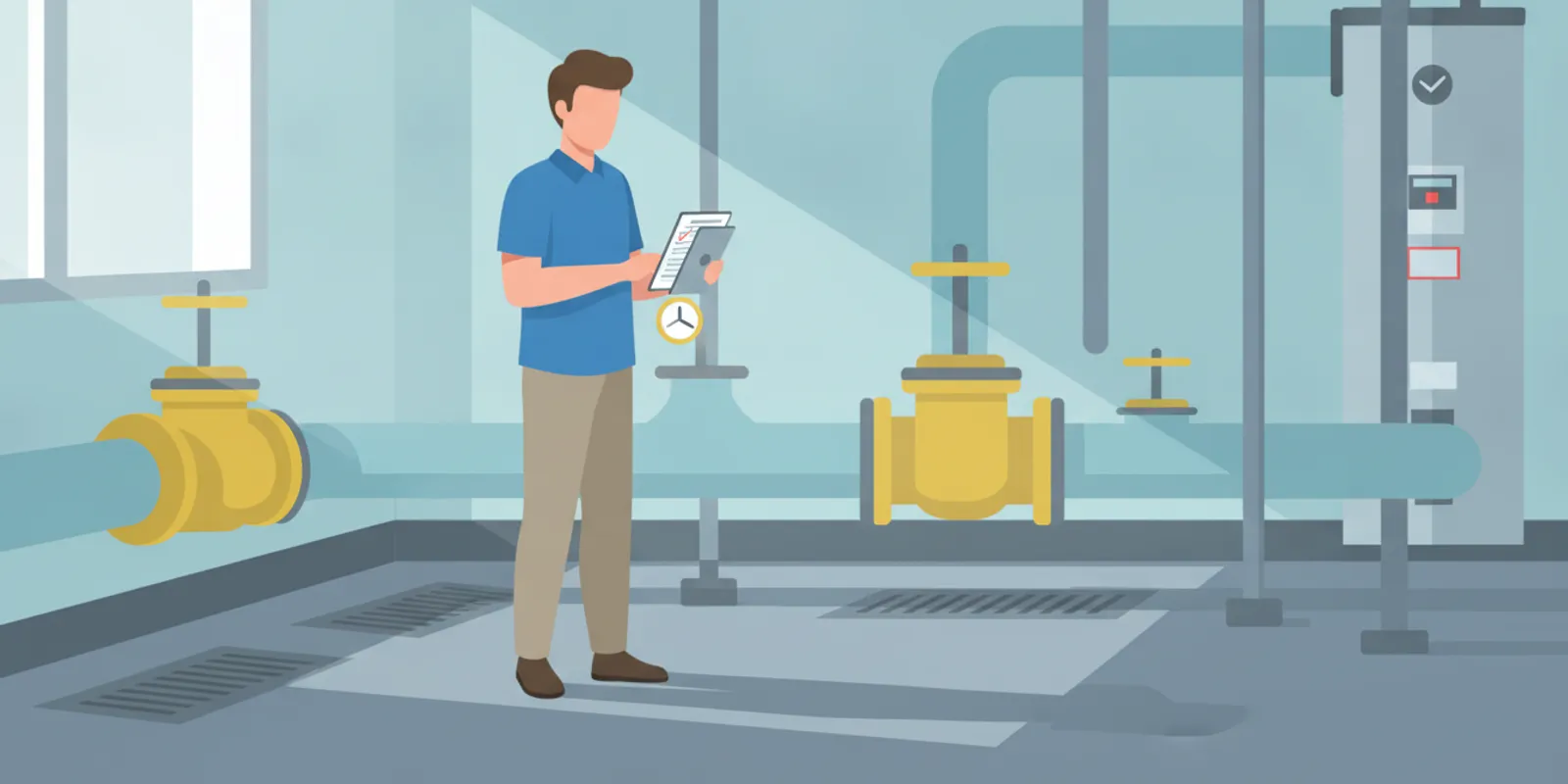
A practical commercial plumbing maintenance plan gives property managers a repeatable way to check drains, water lines, backflow devices, and inspection records before a small concern disrupts daily operations. Commercial plumbing maintenance is not one fixed checklist for every building: the right plan reflects how the property is used, what equipment it has, and which issues have appeared before.
Request a commercial pipe-service review
What should a commercial maintenance plan cover?
A plan works best when it assigns four clear responsibilities: observe, document, respond, and verify. It should not treat every drain or pipe as a candidate for the same procedure. A restaurant kitchen, an apartment property, a medical facility, and an office building have different use patterns and operational priorities.
Start with an asset list. Record the location and purpose of key drains, cleanouts, water-line shutoffs, backflow prevention devices, and other equipment relevant to the property. Add available equipment records, prior inspection findings, recurring complaints, and the name or role of the person responsible for each follow-up. The list can be simple; its purpose is to help staff recognize what is on site and where to report a change.
Then define the plan's boundaries. Routine observation and recordkeeping are not a substitute for an inspection or repair when a system shows signs of trouble. Set a process for escalating recurring backups, unexplained water use, visible leaks, unusual odors, or changes in water pressure. Pipe Surgeons provides specialized pipe repair and inspection services for properties that need a closer evaluation.
A preventive maintenance approach is intended to keep critical building assets in good working order, as described in the Construction and Property Council of India’s overview of preventive maintenance at commercial buildings. For a property operator, that principle becomes useful when checks, findings, and follow-up are recorded consistently rather than left to memory.
Make the plan usable at the point of work. Keep a current digital or printed copy where the facility team can find it, and ensure that the person receiving reports knows how to route them. Include the asset name, location, responsible role, and escalation contact in one place. If a tenant reports a concern after hours, the receiving employee should know whether to notify a manager, restrict access to an affected area under site procedures, or arrange qualified assistance.
Before adopting the checklist, walk through it with the people who will use it. Ask whether they can identify the assets, distinguish an observation from a diagnosis, and find the right reporting channel without searching through multiple files. A short trial run can reveal unclear labels or missing locations. Correct those gaps before relying on the plan during an active issue.
How should you organize checks for drains and sewer lines?
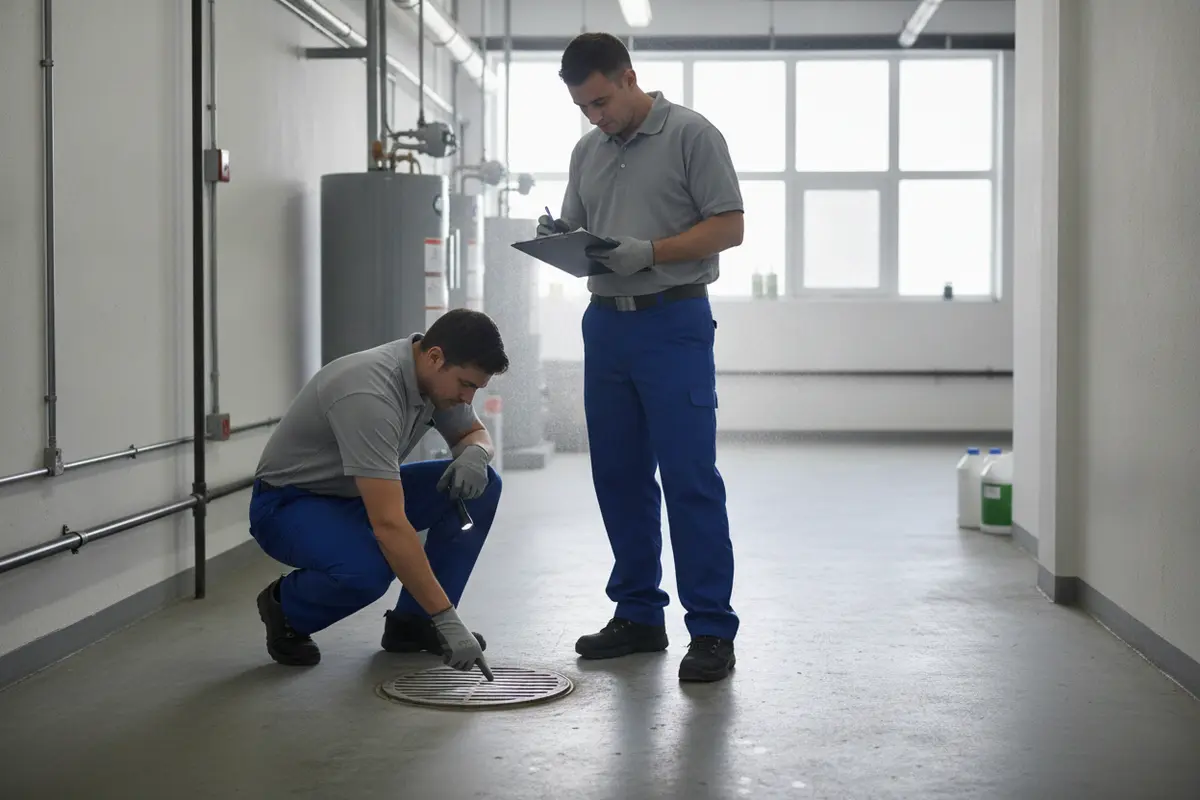
Begin with the drain types and their use. Note floor drains, sinks, restrooms, kitchen drains, roof drains, storm drains, and any known sewer access points. Identify locations where staff or occupants have previously reported slow drainage, odors, recurring clogs, or backups. These observations help you prioritize attention without assuming that every symptom has the same cause.
- During routine walkthroughs: Look for standing water, slow drainage, visible overflow, unusual odor, staining, or a drain that has become a repeat complaint.
- After a report: Record the location, time, fixture or area affected, whether other drains were involved, and any immediate operational impact.
- For repeat issues: Track each occurrence and the work completed. Recurrence may warrant a more focused assessment rather than repeating the same response.
- For roof and storm drainage: Include visible drain areas in the property’s appropriate site checks, especially where water is collecting or drainage behavior has changed.
Keep observation separate from diagnosis. A slow fixture can have a localized cause, while several affected fixtures may require a broader look at connected piping. A camera inspection can help a specialist assess the inside of accessible sewer or drain lines; see Pipe Surgeons’ camera inspection services for the kind of evaluation available. For properties with a documented drain concern, the drain services page outlines related service categories.
Staff should know when to stop using an affected area and whom to notify. Do not ask untrained personnel to open access points, handle wastewater, or attempt a repair beyond their role. A written escalation path helps the property team communicate the issue and arrange qualified support promptly.
Use a consistent log so separate reports can be compared. For example, if two tenant reports describe a slow sink in the same suite on different days, record each date and whether the condition cleared or returned. If multiple fixtures or neighboring areas are mentioned, make that clear rather than grouping every report under a generic “drain issue” label. The detail helps a qualified professional understand the pattern without asking staff to diagnose it.
At a restaurant or food-service property, identify who is responsible for reporting drain problems in work areas and how the issue affects operations. At a multi-tenant building, specify whether a tenant contacts the property office or a designated facilities channel. These distinctions avoid duplicate calls and help the operator see whether apparently separate requests share a location or time pattern.
What belongs in water-line and leak checks?
Water-line checks should focus on visible clues, access to shutoffs, and prompt reporting—not on making assumptions about hidden piping. During property walkthroughs, staff can note moisture near exposed pipes, unexplained pooling, corrosion or damage visible on accessible sections, and a change in pressure reported by occupants. The property’s asset list should show where known shutoffs are located and who is authorized to operate them.
Build a simple reporting record that captures:
- Exact room, floor, or exterior location of the concern.
- Whether the condition is active, intermittent, or no longer visible.
- Nearby equipment, fixtures, or areas affected.
- Any immediate steps taken under the property’s own safety procedures.
- Who was notified and what follow-up was scheduled.
Where a leak is suspected but its location is unclear, do not rely on a guess based only on where moisture appears. A qualified assessment may use appropriate diagnostic methods to narrow down the source. Pipe Surgeons describes its leak detection services for locating concealed leaks, and its water services page covers water-line service options.
For more involved pipe condition concerns, distinguish diagnosis from the repair decision. A line may call for a localized repair, replacement, or rehabilitation approach depending on its condition and access. Learn about trenchless pipe repair as one potential category to discuss after the line has been evaluated. The method should follow the conditions found, not a maintenance calendar alone.
Keep the property team focused on what it can reliably observe. A moisture mark may appear some distance from its source, and a pressure complaint may have several possible explanations. Record when the symptom began, whether it changes, and which areas are affected; do not label the cause unless an appropriate evaluation has established it. This keeps the report useful and avoids directing a response toward an unconfirmed assumption.
It also helps to verify the practical response details before a concern occurs. Confirm that authorized staff can locate relevant shutoffs, know how access is controlled, and understand how to communicate an affected area to tenants or building users under the property's procedures. Review this information when rooms, equipment, or staff responsibilities change. The goal is a clear handoff, not an instruction for unqualified staff to perform pipe work.
How can you manage backflow devices and required records?
Include each known backflow prevention device in the asset inventory. Note its location, the system it serves, any available identification details, and the records already held by the property. Assign responsibility for keeping those records together and for confirming what inspection or testing schedule applies to the device.
Requirements can depend on the device, property, water provider, and applicable authority. Do not assume that a general building checklist replaces a required test or that one schedule applies everywhere. Confirm the applicable requirements with the responsible water provider or authority having jurisdiction, and use a qualified professional when testing or service is needed. Pipe Surgeons provides information about backflow prevention certification.
For each device, retain the available service or test documentation, date, reported result, follow-up action, and next due date when one is specified. If records are incomplete, mark the gap and identify who will confirm the status. A clear record trail helps a new facility manager understand what has been done without treating an undocumented assumption as proof of compliance.
Organize the documentation so an operator can connect a report to the correct device. A device register might use a consistent identifier, building location, served area, and record status. Store the report with that identifier and note any follow-up separately from the original result. If a report lists a recommendation or a due date, assign an owner and record how the item was resolved. If the available paperwork does not answer whether a requirement applies, leave the status marked for confirmation instead of guessing.
When responsibility transfers to a new property manager, review the register together with the prior records. Point out missing documents, upcoming dates, and unresolved follow-ups. This handoff can be brief, but it should distinguish verified history from information that still needs confirmation. That distinction protects continuity when the person who originally arranged a test or service is no longer managing the property.
How often should a property schedule maintenance?
There is no single interval that fits every commercial property. Set the cadence using equipment instructions, applicable requirements, occupancy and use, the consequences of an interruption, and the property's history of issues. Then review the schedule when the use of a space changes, a recurring concern emerges, or a service professional recommends a different next step.
The table below is a planning framework, not a regulatory calendar. “Routine” means the checks set by the property team; it does not replace a required inspection, test, or professional evaluation.
| Area | Routine property-team action | When to arrange a closer review | Useful record |
|---|---|---|---|
| Drains and sewer access | Observe drainage behavior and log recurring reports during scheduled walkthroughs. | Repeated slow drainage, backups, odors, or several affected fixtures. | Location, symptom, dates, affected area, and prior response. |
| Visible water lines | Note visible moisture, damage, and access to known shutoffs. | Persistent moisture, unexplained pooling, or a reported change in pressure. | Location, observed condition, notification, and follow-up. |
| Backflow devices | Keep an inventory and review available device and service records. | A due date is unclear, documentation is missing, or a required test or service is approaching. | Device identification, test or service records, result, and next action. |
| Property-wide records | Review open items and assign owners for unresolved concerns. | A repair recurs, an issue affects operations, or an asset changes. | Work history, inspection findings, responsible person, and status. |
For multi-tenant properties, establish one reporting channel so the same concern does not get lost among separate tenant requests. For facilities with specialized or high-use areas, work with the appropriate service professional to shape a schedule around the systems present. Pipe Surgeons serves commercial properties, and its broader industries served information describes additional property types.
Turn the broad framework into a calendar only after confirming the relevant requirements and property needs. One practical approach is to assign a recurring time for staff walkthroughs, a separate reminder to review open work orders, and a document check timed around applicable device requirements. The calendar entry should name the responsible role and where the result is recorded. A reminder that says only “check pipes” is difficult to complete consistently because it does not identify which asset or what evidence to capture.
Choose the interval for ordinary observations based on the property’s use and operating procedures. A heavily used kitchen or shared restroom may warrant a different observation cadence from a low-traffic storage area. A history of repeated issues may also justify more frequent reporting review. These are reasons to adjust the property team's attention, not a substitute for the test intervals or service requirements established by the applicable authority or equipment guidance.
Review the schedule after a significant change: a space gains a different use, an asset is replaced, a recurring symptom appears, or a service report identifies follow-up. Close the loop by changing the inventory or calendar when needed. This prevents the written plan from describing an earlier version of the building while staff are operating under different conditions.
What should an operator record after an inspection or service visit?
Close the loop after every inspection or service visit. Keep the findings with the property's asset records and translate them into specific actions. A short, consistent record is more useful than a long narrative that does not identify what happens next.
- Identify the asset: Use the location and asset name from the property inventory.
- Capture the finding: Save the report or note the observed condition, areas examined, and any limits on what could be assessed.
- Separate findings from recommendations: Record what was observed and what follow-up was recommended as distinct items.
- Assign an owner: Name the role or person responsible for scheduling or approving the next step.
- Track completion: Add the completion date and retain related service documentation.
This approach also helps operators compare repeat reports over time. If the same location repeatedly appears in work orders, the accumulated history may help a professional determine whether a focused inspection is appropriate. Pipe Surgeons has information about the company and its pipe-service focus for property teams assessing who to contact for a specialized pipe concern.
Before arranging a visit, gather access details, operating constraints, and any relevant records. Tell the service provider what areas are affected, how the issue was observed, whether the concern is ongoing, and what prior work has been performed. This makes the discussion more focused while leaving diagnosis and recommendations to the appropriate professional.
A compact work record can use the same fields every time: asset or location, date reported, observed symptom, operational impact, action taken, person notified, visit date, finding, recommended next step, owner, and completion status. For example, “east wing, second-floor restroom; two reports of slow drainage this week; no other fixtures reported; facilities lead notified; assessment scheduled” is more actionable than “restroom problem.” Use the property's own privacy and record-retention procedures when saving tenant or occupant details.
At the next team review, sort open records by status rather than relying on memory. Separate items waiting for a professional evaluation from items waiting for approval, access, or documentation. Confirm that completed work has a date and supporting record, and that unresolved recommendations have an owner. This small administrative check helps prevent a finding from remaining in a service report without a clear decision or next step.
Discuss a maintenance concern with Pipe Surgeons
Frequently asked questions
Is a preventive maintenance plan the same as a repair plan?
No. A maintenance plan organizes routine observation, records, and follow-up. A repair plan responds to a specific condition identified through reporting or assessment. Maintenance can help a property team notice changes, but it cannot guarantee that a pipe issue will not occur.
Should facility staff clear every slow drain themselves?
No. Staff should follow the property’s procedures and remain within their training and responsibilities. Recurring or worsening symptoms should be documented and escalated rather than repeatedly treated as an isolated inconvenience.
Does every commercial property need the same inspection schedule?
No. The appropriate schedule depends on the systems present, how the building is used, applicable requirements, equipment guidance, and previous findings. Confirm device-specific and regulatory requirements with the responsible authority or qualified professional.
What if a property has incomplete maintenance records?
Start by listing the known assets and the records available. Mark unknowns clearly, identify who can verify them, and organize future reports and follow-up in one accessible location. Avoid treating missing paperwork as evidence that an inspection or service was completed.
Plan the next step for your property
A useful commercial plumbing maintenance plan gives staff a clear way to observe concerns, route reports, keep records, and arrange the right evaluation when a pattern or symptom needs attention. Review the plan periodically so it continues to reflect the building’s systems, use, and documented findings.
Contact Pipe Surgeons to discuss pipe maintenance needs
With a consistent process in place, property teams can make better-informed decisions about when to monitor, when to investigate, and whom to involve.