
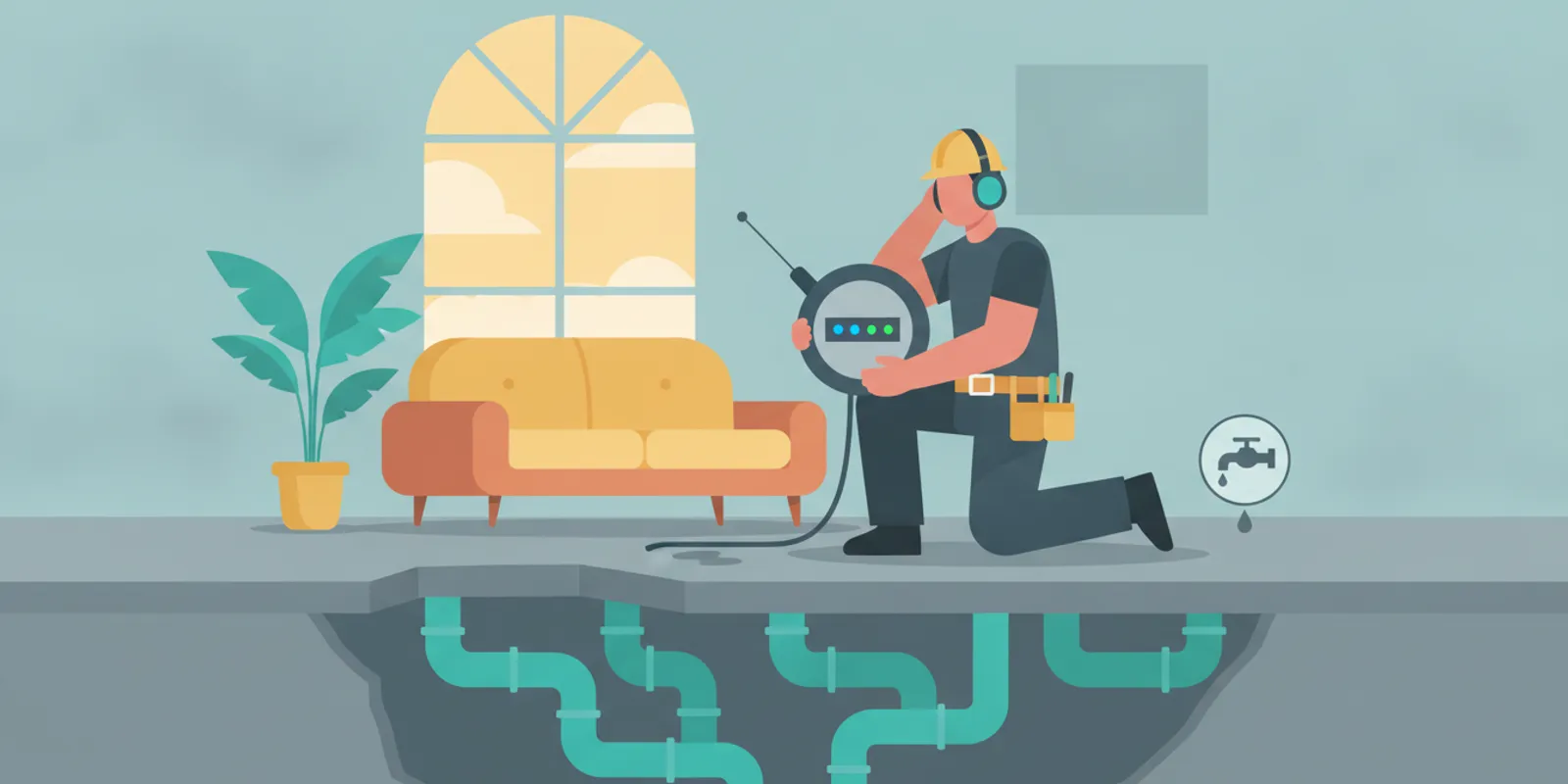
A concrete slab leak repair begins with finding out whether a pipe beneath the floor is leaking, where the affected section may be, and what condition the rest of the line is in. Damp flooring, a warm patch, water sounds, or a change in water use can be clues, but none proves the source by itself. A good repair plan follows the test findings rather than relying on a visible symptom alone.
What does a suspected leak beneath a slab tell you?
A slab leak is a leak in a water line below a concrete foundation or floor. Water can move along soil, pipe paths, or gaps before it reaches a visible surface. That means a damp mark may not be directly above the leak. Moisture can also come from another source, such as a fixture, a drain, or water entering from outside. Treat a symptom as a reason to investigate, not as a diagnosis.
Start by making a simple record. Note where the moisture or floor change appears, when you first noticed it, and whether it changes over the day. Record whether the sound continues when fixtures are off. If it is safe and practical, check the water meter with all water-using fixtures turned off. A moving meter can indicate continued water flow, but it cannot show where a leak is located or what kind of line is involved.
- Photograph discoloration, damp areas, or changes in flooring, with the date.
- Write down when you hear water and whether it stops after a fixture is used.
- Keep water-use statements or notes that show when a change began.
- List recent repairs or changes to fixtures that may help explain the timing.
- Avoid cutting the floor or breaking concrete before the likely source and route are assessed.
Pipe Surgeons shares an overview of signs that can accompany a hidden leak. Those signs help describe what you have observed, but testing is needed to distinguish a pipe leak from other causes. If you are unsure whether the concern involves a water line or a drain, tell the specialist what you see and when it occurs instead of choosing a cause in advance.
In short: A symptom log gives a specialist useful context. It does not pinpoint a leak or establish that the slab itself is damaged.
To make the record easy to use, keep observations separate from assumptions. For example, write “floor feels warm near the hallway after the shower” rather than “hot-water pipe is broken.” Include the time, the room, nearby fixtures, and whether the condition changed after water use stopped. If you notice more than one symptom, record each one independently. That helps a specialist compare the pattern with the layout and test results without treating a guess as a fact.
Also note what has not changed. If only one area is damp, other rooms remain dry, or the meter stays still during a particular check, those details can be useful too. A short, dated timeline is often easier to discuss than a long recollection assembled during the visit. Do not delay getting help just to create a complete record; the purpose is to communicate what you already know, not to perform a home diagnosis.
How do specialists narrow down the source and location?
An assessment should connect your observations with the building’s water system. The specialist may ask which fixtures are affected, whether the water meter moves while everything is off, and whether the issue is constant or intermittent. They may then select tests to confirm whether water is escaping, narrow the likely area, or rule out another source. Each test answers a particular question; no single tool automatically determines the full repair plan.
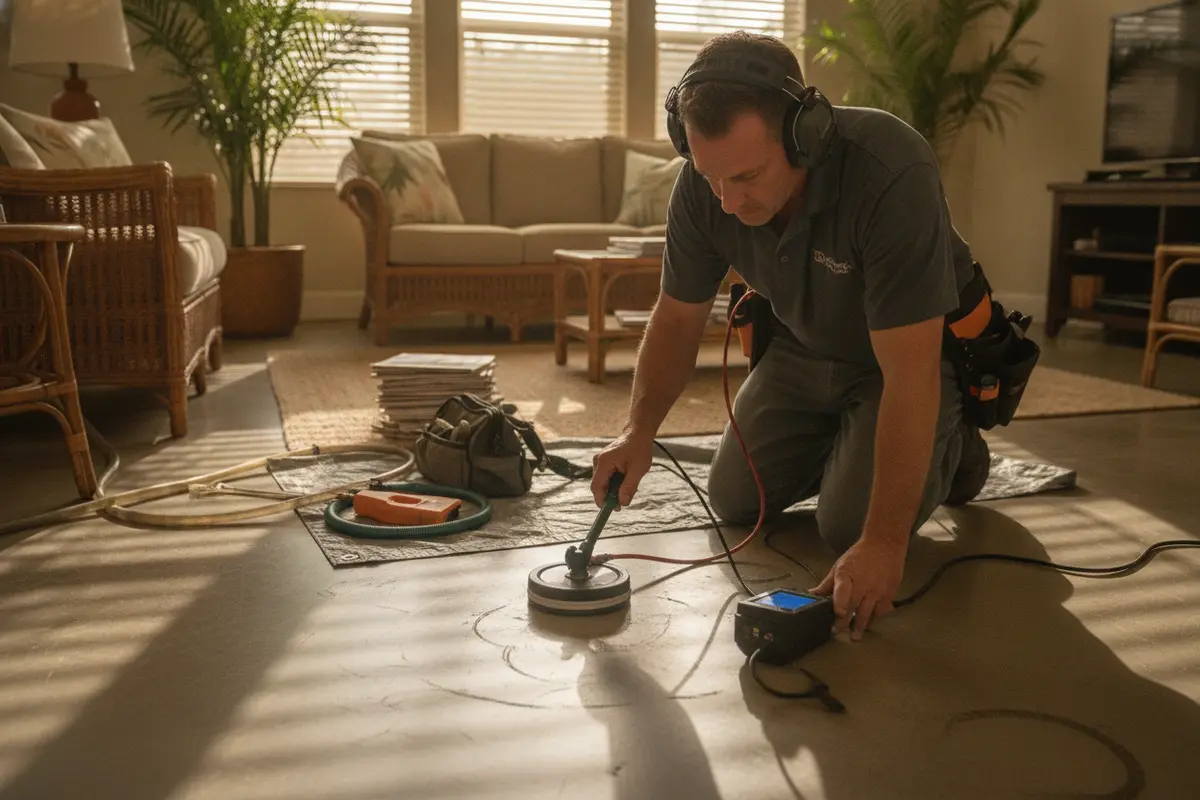
Pipe Surgeons describes using hydrostatic, smoke, and electronic testing as part of leak detection. The method chosen depends on the pipe system and the information needed. Ask what a test can establish, what its limits are, and how its result changes the proposed next step. The company’s leak detection services page provides additional context about diagnostic work.
It is also important to identify whether the concern is a pressurized water line or a drain or sewer line. A camera inspection can help examine an accessible drain or sewer pipe, but it is not a substitute for a test designed to detect a leak in a water supply line. See the camera inspection information for the role of visual pipe inspection. If there are changes in water pressure, share that detail as well; the company explains some possible considerations on its water pressure issues page.
For a broad public resource on using water efficiently and understanding water use, the U.S. Environmental Protection Agency provides information for households. That resource does not diagnose a slab leak; property-specific testing is needed to establish the source.
In short: Diagnosis should separate water-line concerns from drain or sewer issues and explain what each test shows before anyone chooses an access or repair method.
Which repair approaches might be considered?
After the likely location and pipe condition are better understood, the specialist can compare methods. The key questions are how much pipe is affected, whether the surrounding line appears suitable to remain in use, where access is possible, and whether a replacement route is practical. There is no single method that fits every layout or leak.
| Approach | When it may be considered | What to clarify |
|---|---|---|
| Direct spot repair | A localized failure is identified and nearby pipe appears suitable to remain in service. | How was the location confirmed? What surface access and restoration might be needed? |
| Rerouting | A replacement path through accessible areas may avoid relying on the affected section. | Where will the new route run? Which parts will be isolated or left in place? |
| Pipe lining | The pipe, access, and preparation conditions suit a lining process. | Is this pipe suitable? What preparation, curing, and verification are included? |
| Replacement or pipe bursting | The affected length or condition supports replacing a section or route. | How much pipe is involved? What connections, access, and surface work are expected? |
A direct spot repair may require opening the surface near the confirmed location to reach the pipe. The size and location of access depend on the findings and site conditions. Rerouting takes a different approach: a new path may be installed through accessible areas, while the affected line is taken out of service as appropriate. Ask how the new route will connect and how the existing section will be handled.
Lining rehabilitates the interior of a suitable pipe; it is not a universal fix for every water line or every kind of damage. The pipe must be compatible with the chosen process and accessible for preparation. Pipe Surgeons explains CIPP pipe lining and its broader trenchless pipe repair approaches. Pipe bursting is another replacement method in appropriate conditions; the company describes pipe bursting separately. Trenchless does not mean that no access work is ever needed, so ask what openings and restoration a particular plan would involve.
For example, imagine testing indicates one localized leak while nearby pipe appears serviceable. A specialist might explain direct access and compare it with rerouting, including the trade-offs in access and the amount of existing line left in service. If testing instead points to several weak areas or broader deterioration, a spot repair may not address the wider condition. The useful comparison is not “which method is always best?” but “which method matches these findings and this pipe?”
Consider a hypothetical comparison: one assessment finds evidence of a single leak in an otherwise serviceable section, while another finds multiple weak points along a longer run. The first situation may support discussing a localized repair; the second may justify comparing a new route or broader replacement. These are not automatic rules. The pipe material, connections, layout, and test confidence still matter. The example shows why a method should follow the actual findings rather than a general promise about a repair technique.
Ask the specialist to explain the trade-offs in concrete terms: how much of the existing line remains, where the work will be performed, what access is required, and what risks or uncertainties remain. If two options both appear feasible, compare their scope and future implications rather than assuming the least disruptive option is always the right one. You can also ask what would cause the recommendation to change once the line is exposed or further checked.
In short: Compare methods against the diagnosis, pipe condition, access route, and scope. A trenchless label by itself does not prove that a method is suitable or that no surface work is needed.
What should a repair proposal explain?
A proposal should make the reasoning visible from diagnosis through completion. Ask the specialist to identify what is confirmed, what remains uncertain, and how the proposed work addresses the likely failure. If the estimate uses terms you do not recognize, ask for a plain explanation before comparing options. Pipe Surgeons’ slab leak repair options page is a useful place to review the service context before that conversation.
- Findings: Which tests were performed, and what did each result indicate? Is the leak confirmed or is the location still an estimate?
- Scope: Is the work limited to one point, a section, or a changed route? What pipe or connections are included?
- Access: Where might concrete, flooring, a wall, or landscaping need to be opened? Who handles surface restoration, and what is excluded?
- Alternatives: Which other feasible methods were considered? Why does the recommended approach fit the pipe and site better?
- Verification: How will the repaired or replaced line be checked before the work is considered complete?
- Estimate: Which labor, materials, access, testing, and restoration items are included? What conditions could change the scope?
Costs depend on the confirmed location, pipe material and condition, access, equipment, and job complexity. Without an assessment, a generic price is not a reliable comparison. Ask for a written scope and assumptions, then compare proposals item by item. A lower total may cover less access work or omit restoration; a higher total may include a broader replacement scope. Neither number is meaningful without understanding what it buys.
If one proposal recommends opening a large area, ask what evidence supports that extent of access and whether the suspected failure point has been narrowed sufficiently. If a proposal recommends lining, ask what confirms that the pipe is suitable and what preparation is needed. If rerouting is proposed, ask where the route goes and how connections will be verified. The goal is not to select a technical method by name, but to understand the diagnosis and the work being authorized.
Pipe Surgeons presents its pipe repair and inspection services and company background online. Reviewing relevant service information can help you frame questions, while the site assessment and proposal should address the specific property.
When comparing estimates, create a simple side-by-side list with the same headings for each: diagnostic basis, repair length or location, access, materials, testing after the work, restoration, exclusions, and conditions that could change the price. Mark items that are unclear and ask for clarification in writing. This makes it easier to see whether two providers are proposing the same amount of work or solving different parts of the problem.
For example, one estimate might include access and pipe work but leave floor restoration outside its scope, while another may describe restoration separately. That difference matters even if the first total is lower. Likewise, a proposal based on a suspected location should say so; do not treat an estimate as confirmation that the leak has been located. Clarifying assumptions before authorizing work can reduce surprises and help you make a fair comparison.
In short: Compare complete scopes, not just totals. A clear proposal states the findings, work limits, access assumptions, alternatives, and how the result will be checked.
How can you prepare and avoid unhelpful work?
Before an assessment, collect the symptom log, photographs, and any notes about prior repairs or known pipe routes. Clear access to relevant shutoff valves or inspection points if you can do that safely. Make a list of the areas where moisture appears and whether they are near fixtures, exterior walls, or changes in floor level. You do not need to expose the pipe or determine the exact source yourself.
Prepare a few questions that will help keep the discussion focused:
- Are the test results consistent with a leaking water line, or could another source explain the symptoms?
- How certain is the location, and what additional information would improve that confidence?
- What parts of the pipe are included in the recommended repair, and what is not included?
- What could require a change in access or scope once work begins?
- How will the line be tested after repair, and what record of the work will I receive?
Before the visit, think about access and safety without disturbing the suspected area. Move small items that block a shutoff or inspection point if you can do so safely, and keep pets or children away from any area where standing water may create a slipping risk. Do not use electrical equipment on a wet floor. If there is a clear, accessible shutoff and you know how to operate it, follow the property’s normal safety procedures if water flow needs to be stopped; if you are unsure, ask for guidance rather than experimenting.
Avoid trying to expose a suspected line with a saw or by breaking concrete. An unplanned opening may damage a pipe or floor and still fail to identify the source. If moisture is spreading or you are concerned about continued water flow, contact a qualified specialist to discuss an appropriate next step rather than relying on appearance alone.
If you want to understand how the company works in your area, its service area information provides a starting point. Keep the conversation centered on the property, test findings, and repair options; service-area information cannot determine whether a specific line is accessible or suitable for a particular repair method.
In short: Bring useful observations, preserve safe access, and ask for a diagnosis-led explanation. Do not make an opening in the floor a substitute for finding the leak.
Talk with Pipe Surgeons about an evaluation
Frequently asked questions
Can a damp spot show the exact leak location?
No. Water may move beneath a floor before it appears, and moisture can have causes other than a leaking pipe. The spot is useful information, but testing is needed to narrow the source and location.
Does every leak beneath concrete require opening the slab?
No single access plan applies to every case. A specialist can compare direct access with feasible alternatives after considering the pipe, location, and route. Ask what access each option involves and why it is recommended.
Is pipe lining always an option?
No. Suitability depends on pipe material and condition, configuration, access, and the repair goal. Ask what evidence shows the line can be prepared for the proposed lining process.
Should I check the water meter?
If it is safe and practical, you can note whether the meter moves while all fixtures are off. That observation may help show that water is still flowing, but it does not locate a leak or prove that a pipe beneath the slab is responsible.
What should I compare when reviewing two estimates?
Compare the diagnosis, exact scope, access, restoration assumptions, exclusions, and completion checks. Ask each provider to explain how the recommended work follows from the test findings.
Plan a clear next step
Document what you have noticed and request an explanation that ties the test results to a repair scope. When you understand the likely leak location, pipe condition, access needs, and verification plan, you can make a more informed decision about a concrete slab leak repair.