

The cost to repair a slab leak depends on what is leaking, how precisely the source can be located, and what it takes to reach or repair the affected line. For South Florida and Treasure Coast property owners, a useful estimate starts with evidence about the specific property—not a generic price range that may describe a very different job.
Request a slab leak assessment
What does a slab leak repair estimate cover?
A slab leak is a leak in a water line located beneath a concrete slab or floor. A repair estimate may involve several distinct tasks: investigating the symptoms, narrowing down the leak location, deciding how to address the pipe, accessing the affected area or using another suitable method, and checking the work afterward. Surface restoration may be part of the same proposal or handled separately.
In brief: An estimate is only useful when it connects the observed problem to a defined scope. Ask what is included, what remains uncertain, and which parts are excluded.
That distinction matters because two homes can show similar signs but have different pipe layouts, floor finishes, access conditions, and pipe states. One situation may involve a localized defect that can be reached directly. Another may require additional investigation, or the findings may suggest a broader line concern. The visible symptom alone cannot establish the repair method or its cost.
Pipe Surgeons provides specialized pipe diagnostics and repair rather than serving as a general plumbing service. Its leak investigation may use electronic, hydrostatic, or smoke testing, depending on the suspected issue and the conditions. Read about its leak detection services to understand how diagnosis can inform the next decision.
Which factors can change the cost?
In brief: Location, diagnostic certainty, pipe condition, access, repair method, verification, and restoration are the main scope questions to resolve before comparing totals.
- How certain is the leak location? A symptom such as a warm patch, damp flooring, or an unexplained change in water use can point to a concern, but it does not by itself confirm which pipe is involved. Testing may be needed to distinguish a water-line leak from another source and to narrow down the area. More investigation can change the cost and the work recommended.
- What is the pipe condition? A single localized failure and a line with multiple weak or damaged sections are different repair problems. The scope should reflect what testing reveals, not assume that every leak has the same cause or extent.
- What access is available? A pipe beneath a slab may be difficult to reach. Floor finish, the pipe route, nearby fixtures, and the position of the suspected leak can all affect how a specialist proposes to work. Ask what surfaces may be disturbed and what access work is anticipated.
- Which repair approach fits the findings? Direct access, rerouting, or a suitable trenchless method may be considered in different circumstances. The decision depends on the pipe, route, condition, and property. A method should be recommended because it fits the findings, not because it is assumed to suit every slab leak.
- What testing follows the repair? Post-work verification is a separate question from locating the original problem. Ask what check is planned and what result would indicate that the defined repair has been completed.
- Who handles restoration? Plumbing work and restoration of tile, flooring, concrete, or other finishes may be separate scopes. The estimate should make clear what is included and who is responsible for any work outside the pipe repair.
These variables explain why a phone description rarely produces a dependable property-specific total. A call can help establish the concern and arrange a next step, but the scope may change after the line and access conditions are evaluated. The company’s pipe repair and inspection services page provides an overview of its specialized work.
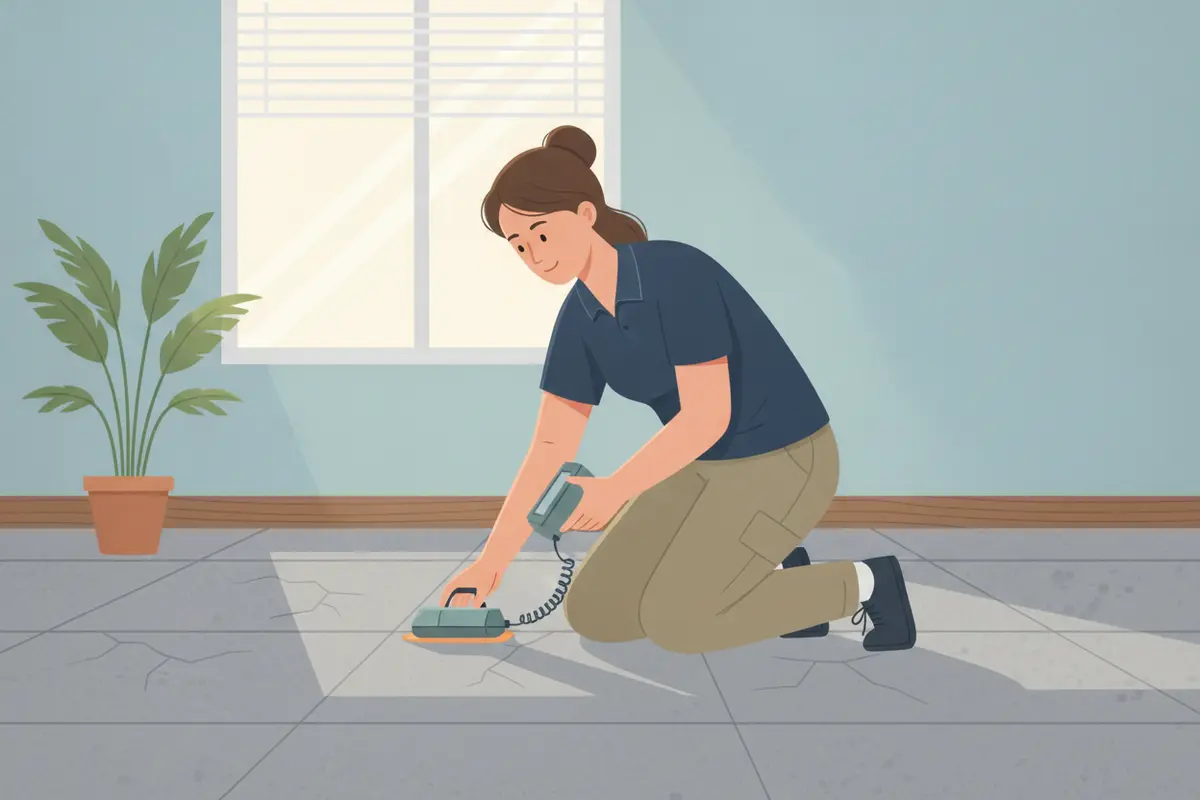
How does diagnosis shape the repair decision?
In brief: Testing helps turn a suspected leak into a more defined problem. The result can affect both the repair recommendation and which costs can be estimated with confidence.
A careful assessment is not just a search for a point to open. It should help establish whether a leak is present, what system or line may be involved, and how confidently its location is known. The investigative method can vary with the symptoms and the property. A specialist may use electronic detection to listen or measure for signs of water movement, a pressure-based test to evaluate a line, or smoke testing when investigating a different kind of suspected leak. No single test answers every question.
For example, if water use appears to continue when fixtures are shut off, that observation is useful context, but it does not prove a slab leak. A meter check, previous repairs, and the timing of symptoms may help describe the issue. A professional still needs to evaluate the evidence and determine whether further testing is appropriate. The explanation of what hydrostatic leak detection examines can help readers understand one diagnostic approach without treating it as a universal solution.
Before approving a repair, ask what the diagnostic findings establish and what they cannot establish. If the location is approximate, find out whether more testing is recommended before choosing an access point. If the evidence suggests more than one affected area, ask how the proposal addresses the full concern. A defined diagnosis protects against comparing a detailed proposal with a broad guess.
How do repair and access options compare?
In brief: Compare options by the conditions they address, the access they require, and the verification and restoration they include—not by assuming one technique always costs less.
The table below is a discussion guide, not a price list or a promise that every option will be available. A specialist should explain why an approach fits the observed pipe and property conditions. Pipe Surgeons describes its trenchless pipe repair methods as part of its specialty work; suitability still depends on assessment.
| Possible approach | What may drive the scope | Questions to ask |
|---|---|---|
| Localized access and repair | Where the line is, how the work area can be reached, and the condition of the affected section | What area may need to be opened? Is the repair limited to a confirmed defect? |
| Rerouting a line | The route available for a replacement path and the connection points involved | Why is rerouting being considered? What portions of the line are included? |
| Trenchless rehabilitation, when suitable | Pipe material, route, condition, access points, and whether the method addresses the specific failure | What inspection supports this option? What limitations or preparation should I understand? |
| Further diagnosis before repair | Uncertainty about the source, line, or extent of the suspected issue | What question will the additional test answer? How will the result affect the proposed scope? |
Ask the specialist to explain the trade-offs in plain language. A method that avoids opening one particular floor area may still have requirements elsewhere; a direct repair may be more focused but require access at the leak location. Do not infer total project cost from the technique’s label. Compare the full work plan, including testing and any restoration responsibilities.
How should you compare written estimates?
In brief: Put proposals side by side by matching diagnosis, repair boundaries, access, verification, exclusions, and restoration. A lower total is not comparable if it covers less work.
Use a written estimate to understand what the contractor believes is happening and what the proposed work is intended to accomplish. If one proposal includes diagnostic work and another begins after the leak has already been located, the totals do not represent the same scope. Similarly, a proposal that excludes finish restoration should not be treated as equivalent to one that includes it.
- Ask what confirms the suspected leak. Note the test or observation, the line being evaluated, and whether the location is confirmed or approximate.
- Identify the boundaries. Which pipe section, connection, or work area is included? Does the proposal address one defect or a wider section?
- Understand the method. Ask why the proposed repair fits the pipe’s material, route, condition, and access. If alternatives were considered, ask why they were or were not suitable.
- Clarify access and protection. Ask where work may take place, which surfaces could be disturbed, and what precautions or access steps are anticipated.
- Confirm testing after the work. Ask what will be checked, when it will be checked, and how the result will be communicated.
- Separate restoration from pipe work. Confirm whether flooring, tile, concrete, cabinets, or paint are included, excluded, or assigned to another contractor.
- Read exclusions and contingencies. Find out what conditions could change the scope, whether approval is required before additional work, and how changes will be documented.
A clear proposal makes the reason for each major task understandable. If it says only “repair leak,” request a description of the findings, method, verification, and excluded work. For background about Pipe Surgeons and its specialty focus, see the company overview. The water services information may also help you identify related water-line work when the investigation points beyond a single suspected point.
How might the estimate change in different situations?
In brief: The same initial symptom can lead to different scopes. These examples show why findings and access—not a generic square-foot or per-leak assumption—should guide the estimate.
Example: One localized leak with a clear access point
Suppose testing points to one area and the affected pipe section is clearly defined. The proposal may focus on confirming the location, accessing that section, completing the selected repair, and checking the line afterward. The owner should still ask whether opening and closing the floor is included, and whether the finish material will be restored by the pipe contractor or another party. Even a seemingly focused job has separate plumbing and surface-work questions.
Example: Symptoms are present, but the source is uncertain
Imagine a homeowner notices dampness but does not know whether it comes from a water line, a nearby fixture, or another source. In that case, a repair quote before diagnosis could be based on an unconfirmed assumption. The first defined scope may be investigation, with repair choices and costs clarified after findings. Ask what diagnostic step is proposed and what decisions its result will support.
Example: Evidence points to more than one weak area
If testing or inspection suggests multiple problem sections, a single localized repair may not address the full concern. The specialist may explain a limited repair and a broader option, where appropriate, and describe what each covers. Ask whether the recommendation addresses only the confirmed leak or the wider condition observed. A larger scope may have different access and verification needs; the estimate should explain those differences rather than relying on a vague label.
Example: Access and restoration are separate projects
A proposal may define pipe work but leave flooring repair outside its scope. That does not automatically make the pipe estimate incomplete, but it means the owner needs a clear plan for the surface afterward. Ask whether the contractor will leave the area in a stated condition, whether a separate restoration provider is needed, and whether that work is included in the amount being compared. Keep the two responsibilities visible in your project notes.
These are planning examples, not diagnoses or promises about the cost or outcome of a particular home. If the investigation reveals something different, the appropriate scope can differ too. The objective is to understand how each recommendation follows from the evidence.
What can you do before an assessment?
In brief: Record the history, gather relevant records, and avoid opening the floor yourself. Clear information can make the first service conversation more useful.
- Write down when you first noticed the symptom and whether it has changed.
- Note the affected rooms or areas, any visible moisture, and whether the issue appears at particular times.
- If safe and practical, record whether the water meter changes while fixtures are off; treat this as context, not proof of a slab leak.
- Gather recent utility bills, prior leak tests, repair documents, and any plans that show pipe routes if you have them.
- List questions about access, testing, restoration, and what could change the estimate.
Do not break concrete or attempt to expose a buried line as a way to confirm the source. That can cause damage and may not reveal the leak. If water is actively escaping, take reasonable steps to limit further damage and arrange qualified help promptly. Pipe Surgeons lists its coverage on the service areas page; confirm that your property is in the service area when you contact the company. You can also review its guide to signs of a hidden leak for context, while remembering that symptoms alone do not confirm a slab leak.
For general household water-conservation information, the U.S. Environmental Protection Agency (EPA) provides resources through its official website. That broad guidance is not a diagnostic test and cannot establish the location, repair method, or estimate for a particular property.
Discuss your slab leak concerns with Pipe Surgeons
Frequently asked questions
Can I get an exact cost to repair a slab leak over the phone?
A call can help describe symptoms and arrange an assessment, but an exact scope usually depends on the leak location, pipe condition, access, and repair method. Ask which details can be established before a visit and what remains subject to inspection.
Does every slab leak require opening the floor?
No single access plan fits every property. The appropriate approach depends on the pipe route, leak location, condition, and repair options that suit the findings. Ask the specialist to explain the access needed for each recommended method.
Does a trenchless method always cost less?
Not necessarily. Suitability and scope depend on the pipe, route, access, and condition. Compare the complete proposal—including diagnosis, repair, testing, and any restoration—rather than assuming a method’s name predicts the total cost.
Will homeowners insurance pay for the repair?
Coverage depends on the policy and circumstances. Review your policy and ask your insurer what documentation it needs. Do not assume diagnosis, pipe repair, and damage restoration are treated the same way.
How can I tell whether restoration is included?
Look for an explicit description of surface work and exclusions. If the estimate does not say who will address flooring or other finishes, ask for a written clarification before approving the work.
Plan a clear next step for your property
A useful estimate starts with a defined problem and a written scope that links findings to the proposed work. Before you approve a repair, confirm what testing established, why the method fits the property, how the result will be checked, and who is responsible for surface restoration. Those details make it easier to compare proposals fairly and understand what the quoted amount covers.
Request a property-specific assessment
Gather the history and questions you have, then discuss the suspected leak and next diagnostic step with Pipe Surgeons.