Blog / Article
Hydro Jetting vs Cable Cleaning for Scale
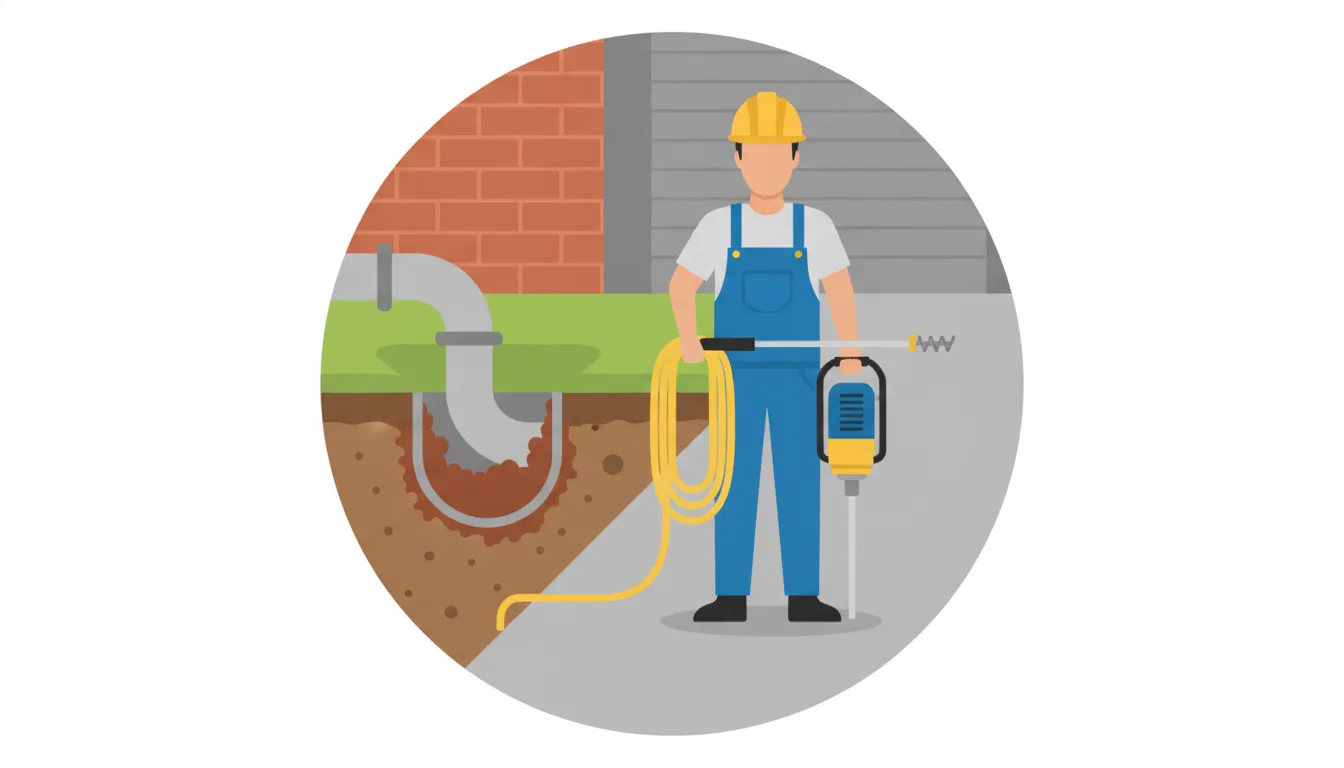
When a drain keeps slowing after it has been opened, hydro jetting vs cable cleaning for scale becomes a practical question. Grease, soft scale, biofilm, or mineral buildup can narrow the pipe over a wider area. A root intrusion, foreign object, or mass of wipes may be a discrete obstruction.
Contact Pipe Surgeons for help choosing the right pipe-cleaning method
For hydro jetting vs cable cleaning for scale, the practical choice depends on whether you need to create a passage through one blockage or clean buildup from the pipe wall. Cable cleaning can restore flow through a localized obstruction. Hydro jetting uses pressurized water to scour the interior when pipe condition, access, and the extent of accumulation make that approach appropriate.
That distinction matters in a home, a commercial property, or a larger facility. A recurring problem may call for a different method than a first-time blockage, and older or weakened pipe should be assessed before pressurized cleaning. Start by comparing what each method actually does, then match the equipment to the condition of the line.
How Do You Choose Hydro Jetting vs Cable Cleaning for Scale?
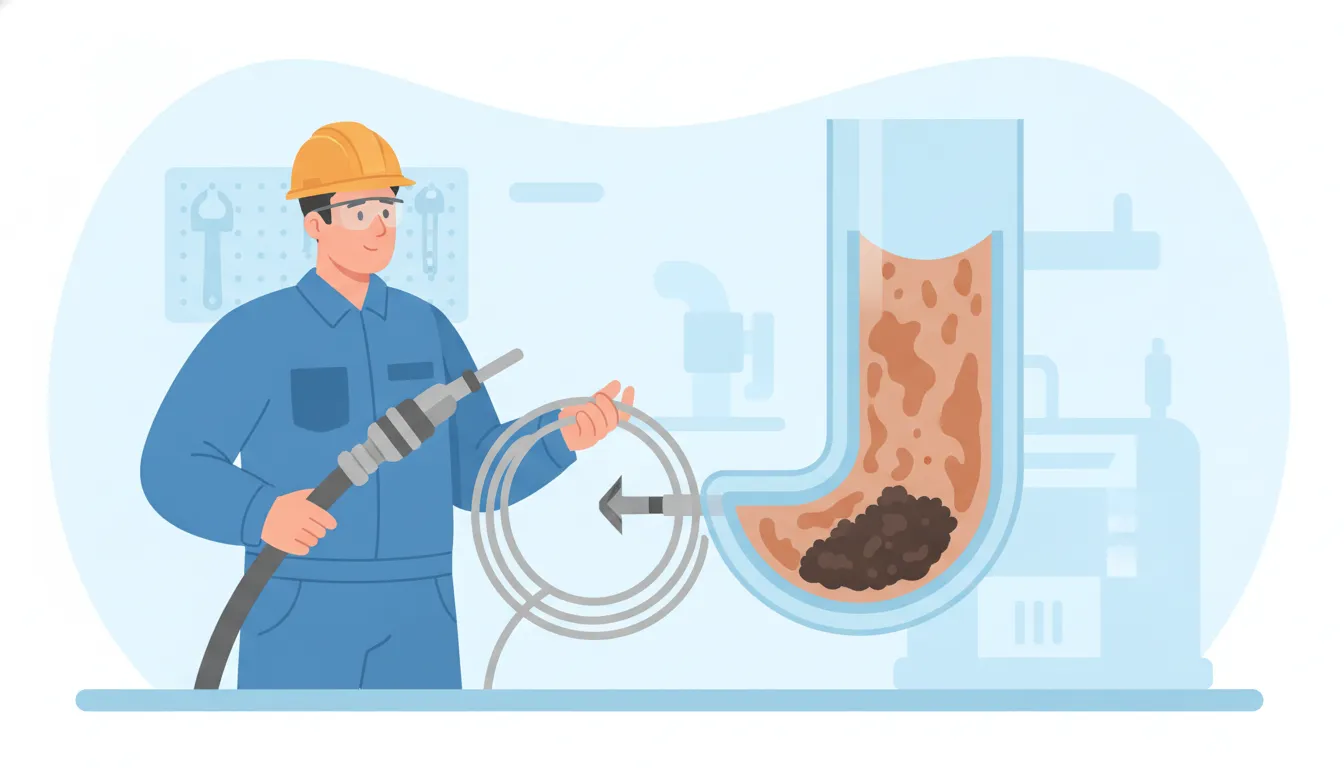
The key difference is what each method does inside the pipe. Cable cleaning uses a rotating metal cable to break apart or move through material blocking the line. A hydro jetter sends high-pressure water through a specialized nozzle to scour the interior surface. Cable cleaning is designed to make a passage through a blockage. Hydro jetting is designed to clean more of the pipe wall.
That distinction matters when deciding between hydro jetting vs cable cleaning for scale. A slow drain is not always caused by one object lodged at one point. The line may be narrowing because material has accumulated along a longer section of the pipe. Choosing the method requires separating a discrete obstruction from distributed buildup, then considering the pipe's condition, access, and the extent of the problem.
How cable cleaning addresses a blockage
A cable machine advances a flexible metal cable through the line. Its rotating end can break apart material at the point where the cable meets the obstruction. This creates an opening for water to pass. This approach can be useful when the immediate problem is a defined blockage. Such as a localized mass of debris, a foreign object, or roots entering at a specific joint. It is also a portable, traditional option when hydro jetting is not appropriate for the line or site.
Cable cleaning does not necessarily remove material from the full inside diameter of the pipe. It may restore flow by opening a channel through an accumulation while some residue remains attached to the pipe wall. If the underlying issue is distributed grease, soft scale, or biofilm, that remaining material can continue to reduce capacity and contribute to another restriction.
How hydro jetting treats pipe-wall buildup
Hydro jetting uses fast-moving, high-pressure water to clean the pipe interior. A jetter nozzle can use rear-facing jets to pull the hose through the line while the water stream scours around the inside diameter. This action is better suited to addressing accumulation spread along the pipe wall rather than only punching through one point.
For example, a line that gradually becomes slower, is cleaned, and then gradually slows again may have buildup distributed across the pipe instead of one recurring object. Grease, soft scale, and biofilm are examples of accumulations that call for a different diagnostic question than a single obstruction. Pipe Surgeons also uses specialized mechanical equipment, such as chain cutters for certain cast-iron conditions, so the best solution is not automatically the same for every scaled line.
Neither method should be selected by name alone. A camera inspection can identify the type and location of the issue. Pipe material and condition then determine which cleaning approach is safe. The practical goal is to match the equipment to the problem: open a defined obstruction when that is the issue. Or address wall buildup when scale has reduced the usable diameter of the line.
How Should You Compare Hydro Jetting vs Cable Cleaning for Scale?
Usually, hydro jetting is the stronger option when the main problem is heavy scale spread along the pipe wall rather than one object blocking the passage. That does not make it the right choice for every line. The decision starts by separating an obstruction from an accumulation, then confirming that the pipe can safely receive the selected equipment.
A discrete obstruction may be a root intrusion at one joint, a foreign object, or a mass of wipes. Cable cleaning can address that type of blockage directly by cutting or breaking through the material at the point of contact. Scale is different. Grease, soft scale, and biofilm can build across a wider section of the line. A cable may open a path through that buildup while leaving material attached to the surrounding wall.
| Consideration | Cable cleaning | Hydro jetting |
|---|---|---|
| Primary action | Breaks through or removes material at the cable head | Scours the interior surface with pressurized water |
| Best fit | A discrete obstruction or a small, non-dense blockage | Distributed grease, soft scale, biofilm, or debris buildup |
| Scale limitation | May leave residual accumulation along the pipe wall | Can clean more of the accessible pipe interior when the line is suitable |
| Key condition | Still requires appropriate access and equipment selection | Requires assessment of pipe condition before pressurized cleaning |
Recurring symptoms can help identify the pattern, but they do not replace inspection. If the line works after cleaning and then gradually loses capacity again on roughly the same interval, distributed buildup may be contributing to the recurrence. In that situation, a method that only creates a narrow passage may provide temporary flow without addressing the material remaining on the wall. You can review ways to prevent recurring sewer line clogs while evaluating the underlying cause.
Hydro jetting is not a universal answer for heavy scale. Older, weakened, or damaged pipe may not be appropriate for pressurized water. And a fast repeat blockage may point to a belly, dropped joint, break, or root entry rather than leftover dirt. A camera inspection can show whether cleaning is a reasonable next step. When the line is suitable and the buildup is distributed, Pipe Surgeons' drain services can be evaluated based on pipe condition, access, and the extent of the scale.
When Can Cable Cleaning Be the Better First Step?
Cable cleaning can be a sensible starting point when the problem appears to be a small, localized blockage rather than a broad layer of scale inside the pipe. Pipe Surgeons describes the traditional sewer snake as a portable option that can be useful when hydro jetting is not ideal. It is especially suited to small-scale, non-dense clogs such as food, hair, and similar material.
The method is direct. A rotating steel cable travels through the line, and a cutting head can bore a passage through an obstruction at the point of contact. That approach may restore flow without introducing pressurized water into a pipe whose condition, access, or layout makes jetting a poor fit. In practical terms, cable work can make sense when the immediate goal is to open a blocked section and the available evidence does not point to widespread buildup.
When the blockage is discrete
A discrete obstruction has a specific location and form. Examples can include a foreign object, a concentrated mass of wipes, or roots entering at one joint. In those situations, a cable and the right head may address the material directly rather than treating the entire interior of the line. That does not mean every root intrusion or foreign object should be handled the same way. The pipe material, obstruction, access point, and likelihood of damage still matter.
It is also important to distinguish basic cable work from specialized mechanical equipment. A traditional sewer snake is not automatically a full pipe-wall descaling tool. Chain cutters, for example, are specialized attachments that scrape the full diameter of some cast-iron lines and may be used for grease, scale, and tree roots. Whether that equipment is appropriate depends on the pipe and the condition of the buildup. Ask which tool is being recommended and what problem it is intended to solve.
Know what cable cleaning may leave behind
A cable can create a passage through accumulated material while leaving some residue on the pipe wall. If a drain improves and then gradually slows again on a similar cycle, that pattern may point to distributed buildup rather than one isolated clog. Grease, soft scale, and biofilm can narrow the usable opening along a longer section of pipe. Repeating the same basic clearing method may restore flow temporarily without addressing the accumulation.
For that reason, cable cleaning should be viewed as one option in a diagnosis-led plan, not as a lesser version of hydro jetting. A professional can compare the blockage, pipe condition, access, and service objective before recommending cable drain cleaning, hydro jetting, or chain cutter service. When the concern is wall buildup across a sound line, a different cleaning method may be more appropriate. When the pipe is fragile or its condition is uncertain, inspection should guide the choice first.
Can Hydro Jetting Damage an Older or Weakened Pipe?
Hydro jetting is not appropriate for every drain or sewer line. Pipe Surgeons' guidance is direct: hydro jetting cannot be used on damaged pipes. The important question is not simply whether a line is old, but whether its material and structure can safely withstand pressurized cleaning. That determination should come before choosing equipment.
An older line may still be structurally sound. Another line of a similar age may have corrosion, brittle material, displaced joints, or other defects. Graphitized cast iron is a particular concern because corrosion can leave a brittle graphite shell. It retains the pipe's shape without retaining its original strength. Orangeburg and other compromised materials also require a different assessment than sound pipe. These distinctions are why age alone should not determine the cleaning method.
Recurring blockages can signal a structural problem
A fast repeat blockage is not always evidence that the previous cleaning was incomplete. A belly can hold standing water, a dropped joint can interrupt the line, a break can allow soil to enter, or roots can re-enter through a defect. Each of these conditions may cause a blockage to return even after material has been removed. Cleaning can restore flow temporarily without correcting the underlying structural issue.
If a line keeps closing, clearing, and closing again on a similar schedule, treat that pattern as a reason to investigate rather than simply repeat the same service. A camera can show whether the problem is distributed scale, a localized obstruction, or a defect that cleaning alone cannot resolve. Pipe Surgeons uses sewer camera inspection to identify the type and location of pipe issues and help determine the appropriate treatment.
Inspection should come before pressurized water
For an older line or any pipe with an uncertain condition, inspection provides the evidence needed to choose responsibly. The camera view can help distinguish a cleanable accumulation from a weakened wall, open joint, break, or other structural concern. If the pipe is sound and the issue is scale or another buildup along the interior, hydro jetting may be considered. If the inspection shows damage, the next step may be a different mechanical approach, repair, or further evaluation instead of pressurized water.
The same principle applies in homes, commercial properties, and larger facilities. Access, pipe material, line condition, and the extent of the buildup all matter. A careful assessment protects the pipe and prevents a recurring blockage from being treated as though it were only dirt.
How Does a Camera Inspection Help Choose the Cleaning Method?
A camera inspection turns a recurring drain problem into a location-specific diagnosis. Instead of choosing between hydro jetting and cable cleaning based only on symptoms. The technician can see whether the line contains a concentrated obstruction, distributed scale, a damaged section, or a condition that needs repair. Pipe Surgeons describes camera inspection as a way to identify both the type and specific location of a pipe issue. A sewer camera inspection can also provide visible evidence for property owners before work begins.
This evidence-based sequence helps separate a temporary flow-opening job from work intended to remove wall buildup or address a pipe defect. It also gives homeowners, property managers, and facility operators a clearer basis for approving the method.
What Should Property Owners Ask Before Scheduling Scale Removal?
Before scheduling work, identify what you need the cleaning to accomplish. A slow drain, repeated backups, and visibly narrowed pipe capacity can point to different problems. Ask whether the goal is to restore flow temporarily, remove buildup from the pipe wall, or understand why the restriction keeps returning. That distinction helps the technician choose between a focused blockage-clearing visit and a more complete descaling plan.
What symptoms are occurring, and how often?
Record which fixtures are affected, whether several drains slow at once, and whether the problem returns after cleaning. A single fixture with a discrete obstruction may call for a different first step than gradual restriction throughout a shared line. Note any unusual odors, gurgling, wastewater backups, or changes after heavy use. This history gives the service team useful context before equipment is selected. Review the available drain cleaning options rather than assuming every recurring symptom requires the same method.
What are the pipe material and current condition?
Ask whether the line is cast iron, clay, PVC, or another material, and whether its age or condition is known. Scale removal should not be treated as a stand-alone equipment decision. If the pipe is damaged, weakened, heavily corroded, or otherwise uncertain, inspection may be needed before pressurized water is considered. Ask what evidence supports the recommendation and whether cleaning could expose a structural issue. If damage is found, discuss repair options if cleaning finds damage instead of planning repeated cleaning as the only response.
Where is access, and how much service interruption is acceptable?
Confirm the location and condition of cleanouts, the route to the affected line. And whether equipment can reach the work area without disrupting tenants, customers, vehicles, or sensitive operations. Homeowners should ask what access must be cleared in advance. Property managers and facility operators should identify affected units, operating windows, safety requirements, and any coordination with building staff. Commercial service may be scheduled after hours to minimize interruption. Industrial work may require planning around larger-diameter piping and facility operations.
Is the priority wall descaling or immediate flow restoration?
Ask what result each proposed method is designed to deliver and how the team will verify the condition afterward. For a scale-focused project, review pipe descaling with hydro jetting and discuss whether the pipe is suitable. A clear scope should account for symptoms, material, access, condition, and operating constraints before work is scheduled.
Contact Pipe Surgeons about your pipe-cleaning options
Frequently Asked Questions
Is hydro jetting better than snaking?
Not in every situation. Cable cleaning is often useful when a discrete obstruction is blocking the line, such as roots at a joint, a foreign object, or a concentrated mass of wipes. Hydro jetting is generally better suited to distributed buildup, including grease, soft scale, or biofilm along the pipe wall. The right choice depends on what is causing the restriction, the pipe's condition, access, and the desired result. A cable may restore a passage without removing all surrounding accumulation.
Is descaling the same as hydro jetting?
They are related, but the terms do not always mean exactly the same thing. Descaling describes removing mineral or other hardened buildup from a pipe. Hydro jetting is a cleaning method that uses pressurized water and specialized nozzles to scour the interior. In some service situations, hydro jetting is the tool used for pipe descaling. A technician should first confirm that the pipe can safely withstand pressurized water and that the restriction is buildup rather than structural damage.
Is hydro jetting worth the cost?
It can be worthwhile when recurring restrictions result from buildup spread along the pipe wall, because opening a small passage may leave the underlying accumulation behind. It may be unnecessary for a simple, isolated obstruction that cable cleaning can address. If a line quickly backs up again after cleaning, the cause may be a belly, dropped joint, break, or roots entering through a defect. In that case, camera inspection may be more valuable than repeating either cleaning method.
What is the 135 rule in plumbing?
The phrase is not a universal rule for choosing between cable cleaning and hydro jetting. Plumbing recommendations should be based on the actual obstruction, pipe material and condition, access, and the property's needs. Ask what the inspection found, whether the proposed method removes buildup or only opens a path, and what evidence supports the recommendation. That approach is more reliable than applying a fixed number to every residential, commercial, or facility line.
Get a Pipe Cleaning Recommendation Based on Your Line
The right cleaning method depends on the type of buildup, the condition of the pipe, and whether the line serves a home, business, or facility. A professional assessment can help you compare hydro jetting, cable cleaning, and camera inspection before work begins.
Need Pipe Services in South Florida?
Pipe Surgeons specializes in slab leak detection, sewer camera inspections, and trenchless pipe repair across South Florida and the Treasure Coast.