
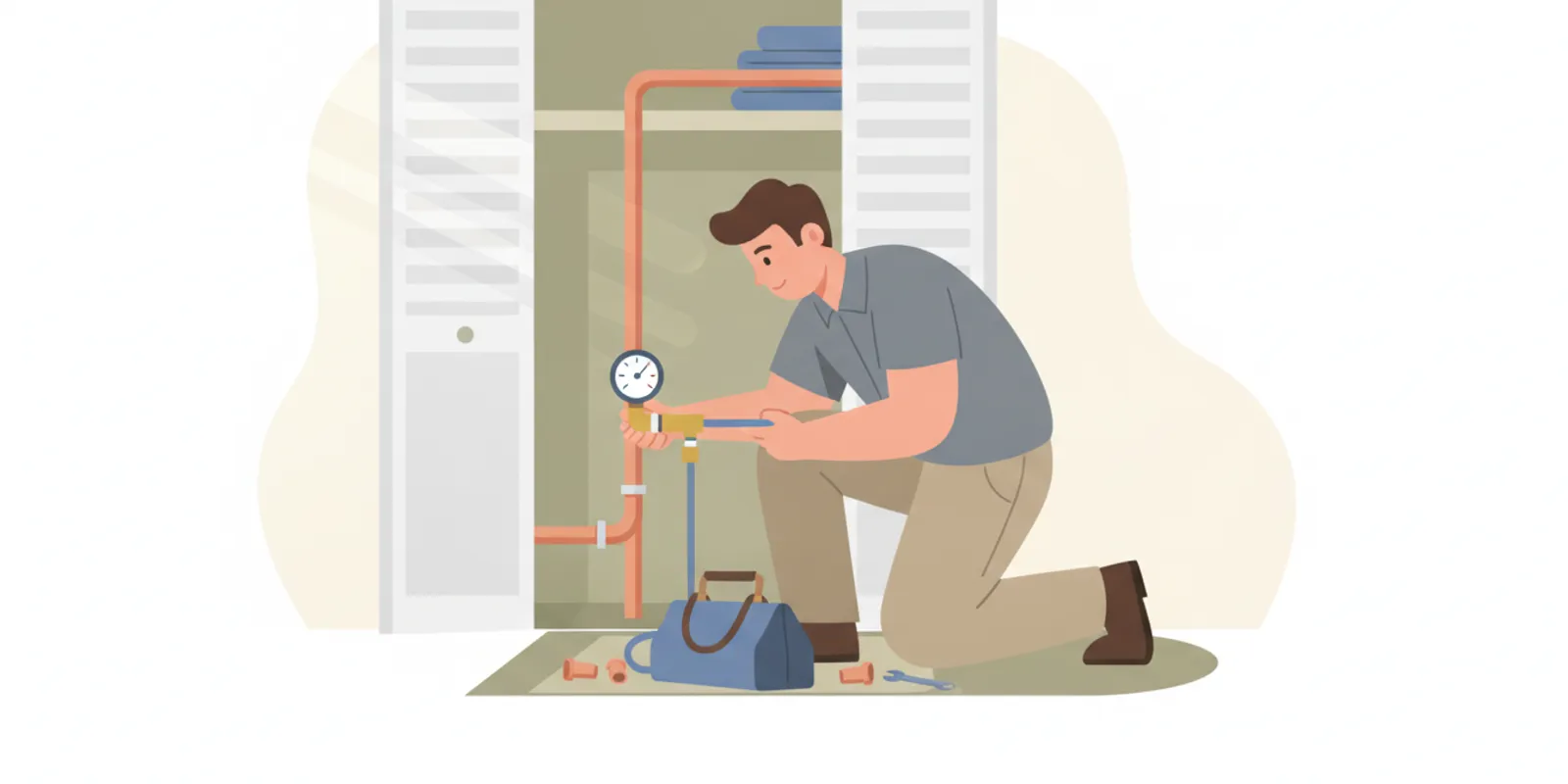
A hydrostatic test after slab leak repair can help answer one key question: does the tested section of the water line hold pressure under the conditions of the test? It is a focused check, not a blanket guarantee about every pipe beneath a home. Knowing what the test covers—and what it does not—helps you understand the result and decide what to ask next.
What does a hydrostatic test check after a repair?
A hydrostatic test uses water and pressure monitoring to assess a defined, isolated piping section. The setup matters: a technician must know which line is being tested, where it can be isolated, and which fixtures or branches remain connected. The test is meaningful only for the portion of the system included in that setup.
During a test, the technician may bring the isolated section to a selected pressure and observe whether the reading remains stable over a specified period. The pressure, duration, test boundaries, and acceptable change depend on the pipe material, configuration, repair plan, and applicable requirements. There is no single result that can be interpreted correctly without knowing those details.
Hydrostatic testing is one of several ways to investigate water-line concerns. A general engineering overview describes hydrostatic testing as pressurizing piping to a level at or above its normal operating pressure, but residential test procedures and acceptance criteria are specific to the system being assessed. Read the hydrostatic testing overview for general background, rather than treating it as a home-repair standard.
A test may be useful after a repair when the question is whether the repaired, isolated line appears to hold pressure. It is different from locating an unknown leak. If the source has not been confirmed, a test result may need to be considered alongside other diagnostic evidence, such as an inspection or another leak detection method. Pipe Surgeons describes its leak detection services and testing approaches for property owners seeking a specialist evaluation.
When might testing make sense after slab leak work?
Testing is most helpful when it answers a specific unresolved question. For example, a property owner may want to know whether the repaired segment holds pressure before the repair area is closed, whether a pressure change continues after a repair, or whether a separate branch should be investigated. The value is not simply that a test happened; it is that its boundaries and outcome relate to a decision.
Consider asking for a test or a clear explanation of the verification method when:
- The water line was repaired or isolated, and you want to understand how the repaired section will be checked.
- There is still an unexplained change in pressure or water use after the repair.
- Symptoms continue, return, or appear in a different area.
- You need written information to share with a property manager, insurer, contractor, or maintenance team.
- You want to distinguish a concern with the repaired section from a possible issue elsewhere in the system.
If you are not sure how the issue was identified, review the distinction between hydrostatic leak detection and a post-repair check. They can involve related equipment, but their purposes are not interchangeable: one can be part of investigating a suspected leak, while the other assesses a defined repaired section under test conditions.
What can—and cannot—a pressure result tell you?
A stable reading during a properly designed test can support the conclusion that the tested section held pressure under the recorded conditions. A pressure drop can signal that the tested system did not hold as expected, but it does not, by itself, identify the exact cause or location. Changes in test setup, connections, valves, temperature, or the isolation boundary may also affect how a result should be interpreted.
It is useful to separate three statements that are sometimes blurred together:
- “The repaired section held during this test.” This describes a result for a particular section, pressure, and observation period.
- “The whole property’s water system is sound.” A test of one isolated section does not establish this broader conclusion.
- “The original leak cannot return.” A test cannot guarantee future performance or rule out a different issue developing elsewhere.
Small details in the test record can matter. For example, a reading has little value without a start time, an end time, and the section under observation. Ask whether the reading was taken at the same gauge and connection throughout, and whether any adjustment or interruption occurred. If the system or surroundings changed during the observation period, have the technician explain whether that affects the interpretation. The goal is not to challenge a number in isolation; it is to understand how the measurement supports the conclusion.
For a multi-unit building or a property with several water branches, make sure the report identifies the specific unit, line, or zone. A result for a common line may not answer a concern in a branch serving one area, and a test in one unit should not be described as a result for every unit. Property staff can note which shutoffs were used and whether occupants reported symptoms during the test. This practical detail can help the next evaluation focus on the right area without assuming that a single test covers the whole system.
When the symptoms persist despite a satisfactory result, do not assume the test was useless or that the repair failed. It may have answered only a narrow question. A sound next step is to compare the original symptom, the repair location, the exact tested boundary, and any remaining signs. A camera inspection may help with certain accessible drain or sewer concerns, but it does not inspect every pressurized water line. Matching the tool to the system is essential.
How should you compare test options?
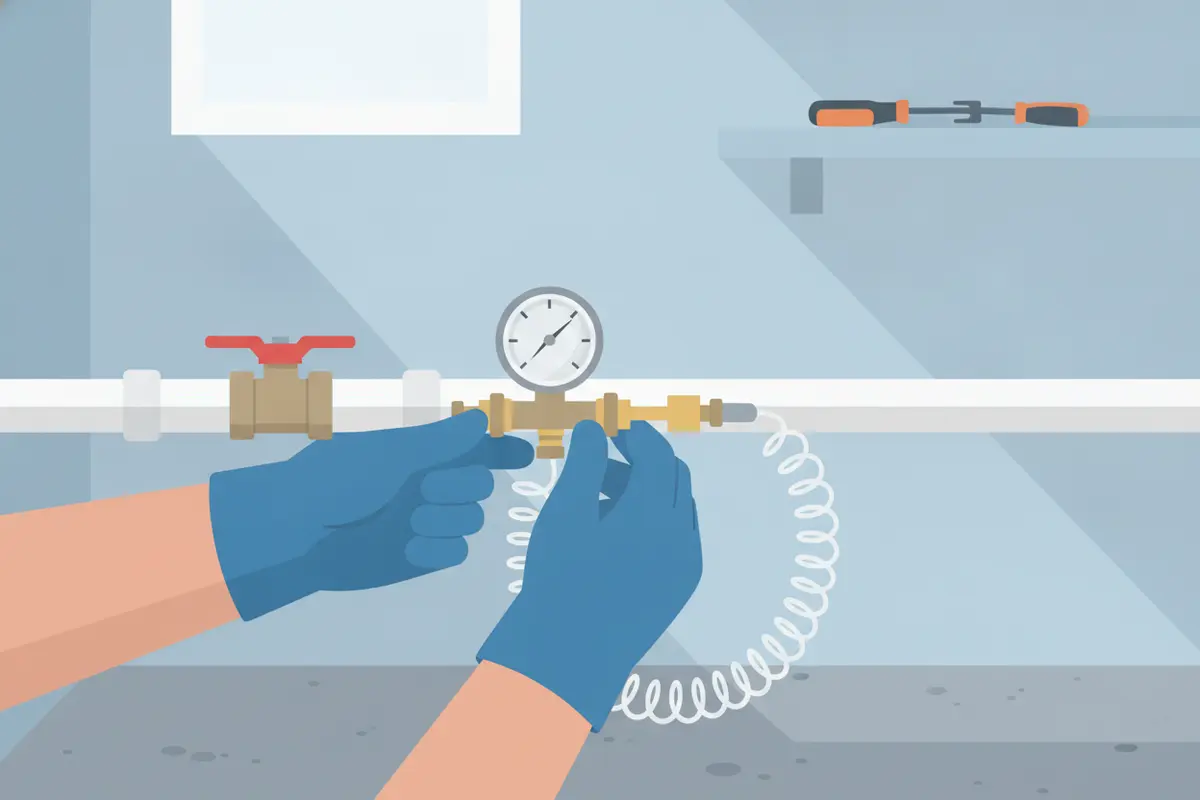
Not every follow-up check answers the same question. Use the table as a discussion aid, not as a recommendation that every property needs each method. The right approach depends on what was repaired, what symptoms remain, and what sections can be accessed or isolated.
| Option | Main question it can address | What to clarify |
|---|---|---|
| Hydrostatic pressure test | Does the defined, isolated water-line section hold pressure under the test conditions? | Which line and boundaries are included, the pressure and observation period, and how the result will be recorded. |
| Visual review of repair and accessible connections | Are there visible concerns at the repair area or accessible fittings? | Which locations were accessible and whether a visual check alone answers the concern. |
| Additional leak detection | Could an unexplained leak remain elsewhere or have a different source? | Which method fits the pipe and location, and what finding would lead to another step. |
| Camera inspection for a suitable drain or sewer line | What is visible inside an accessible drain or sewer pipe? | Whether the concern is in a camera-accessible line; a camera view does not test a pressurized water line. |
For a broader comparison of repair approaches, Pipe Surgeons also explains trenchless pipe repair. That information can help frame a repair conversation, but a repair-method page is not a substitute for documenting how a particular post-repair test was performed.
What should you ask before and after the test?
Clear questions make a technical appointment more useful. Before work begins, describe the original symptoms and what has changed since the repair. Bring any report, repair notes, photographs, or previous test readings you have. If more than one person is coordinating the property, agree on who will receive the findings and what decision needs to follow.
Before the test
- Which line or section will be tested, and where are its boundaries?
- Can the section be isolated from connected fixtures and branches?
- What question is this test intended to answer about the repair?
- What pressure and observation period will be used, and why are they suitable for this system?
- Could the proposed test affect any connected equipment, and what preparation is needed?
- What other diagnostic step would be considered if the result is unclear?
After the test
- What exact section was included, and what sections were excluded?
- What starting and ending readings were recorded, and over what period?
- Did the test meet the stated acceptance criteria for this job?
- What does the result establish, and what does it not establish?
- If a pressure change occurred, what possible causes were considered?
- What is the next step if symptoms continue or return?
If the concern involves more than the repaired line, explore the available pipe repair and inspection services and ask which service fits the specific system. For property teams managing several types of infrastructure, the industries served page provides additional context about the company’s work across property settings.
How do you decide what to do with the result?
Think of the test as one piece of evidence in a short decision process, not a final judgment about the entire property. First, confirm that the test covered the repaired line. Next, compare the finding with the original symptoms and any current signs. Then decide whether the question is resolved or whether the remaining evidence points to another location or diagnostic need.
A result that suggests a problem needs a careful follow-up, not an unsupported assumption about the location or repair. The specialist may review isolation points, connections, test conditions, and the repair record before recommending another diagnostic step. If the test is stable but a separate symptom continues, report that symptom precisely: when it occurs, where it appears, and whether it changes with water use.
For homeowners and property managers, this written trail also helps prevent repeated guesswork. Keep a simple timeline of the original concern, diagnostic visit, repair, post-repair test, and any later symptoms. A timeline does not diagnose the issue, but it helps a pipe service specialist distinguish a continuing concern from a separate one. Pipe Surgeons has additional guidance on signs of a hidden leak and how leaks can cause further damage; use those resources as prompts for observation, not as a substitute for an on-site assessment.
If a repair approach is still under discussion, ask whether a targeted repair or a broader line rehabilitation is being considered and why. Pipe lining and pipe bursting are different approaches, and suitability depends on the line and site conditions. A pressure test helps assess the defined section; it does not select a repair method on its own.
Talk with a pipe service specialist
Frequently asked questions about testing after slab leak repair
Does every slab leak repair need a hydrostatic test afterward?
No single follow-up test is right for every repair. Whether a hydrostatic test is appropriate depends on the line, repair method, ability to isolate the section, the original findings, and any applicable requirements. Ask what verification is planned and what question it will answer.
Does a stable test prove there are no other leaks?
No. A stable result applies to the section included in the test under the recorded conditions. It does not rule out a concern in an excluded branch, a separate line, or another part of the property.
What does it mean if the pressure drops?
A pressure change means the outcome needs interpretation in light of the setup and the criteria used. It does not independently pinpoint a leak. Ask whether the tested section was isolated correctly, whether connections were checked, and what follow-up would distinguish among possible causes.
Can I compare readings from different tests?
Only with care. Readings may not be comparable if the test boundaries, pressure, duration, equipment, or system conditions differ. Keep the written details for each test and ask the technician to explain any comparison.
What should I do if symptoms continue after a stable result?
Describe the remaining symptom and when it occurs, then ask whether the test included the relevant line. If it did not—or if the symptom suggests a different system—ask what diagnostic method fits that concern. Do not treat a test of one section as a diagnosis of the entire property.
Plan the next step for your repaired water line
A post-repair test is most useful when you know exactly what was tested, what the result means, and which questions remain. Keep the test record with the repair information, and seek a focused evaluation if the symptoms persist or the tested section is unclear.
Request a focused leak evaluation
Clear test boundaries and a plain-language report can help you make the next decision with confidence.