A sewer line's visible symptoms rarely tell you what material is buried underground or whether the pipe needs repair, lining, or replacement. Choosing by age or by a material's reputation alone can miss the details that matter: the pipe's condition. Its route and installation demands, and the standards that apply to the work.
Request a sewer line assessment
For sewer pipe materials Florida owners may encounter, start with the existing line, its condition, and its location. Then consider site demands and applicable specifications. No single material is right for every property. The EPA lists trench conditions, corrosion, temperature and safety among selection considerations, alongside performance traits such as leak tightness and hydraulic characteristics (EPA pipe-material guidance).
That makes a property-specific comparison more useful than a statewide ranking. Start by separating the materials found in existing lines from those specified for new work, then consider what the site and inspection actually show.
Which Sewer Pipe Materials in Florida Fit Your Property?
A pipe material is only one part of the decision. The right option depends on the line's purpose, its condition, trench and site conditions, required loading and wall specifications, and the rules that apply to the project. The U.S. Environmental Protection Agency identifies ductile iron, concrete, plastic, and vitrified clay among materials used in wastewater collection systems. While also noting that selection involves factors such as corrosion, temperature, leak tightness, and hydraulic characteristics. Those categories are useful context, not a ranking for every property.
For an existing private line, records and inspection findings matter more than assumptions based on the home's age or location. Older lines may include cast iron, clay, or bituminous-fiber pipe often called Orangeburg; plastic pipe is another category. A contractor should confirm what is present and assess its condition before proposing a repair or replacement material.
| Material | Context | Caveat and assessment |
|---|---|---|
| Cast iron | May be encountered in existing building sewer systems. | Do not infer condition from the material name alone. Confirm the affected section and the observed defect before choosing repair or replacement. |
| Vitrified clay | A recognized wastewater pipe material that may appear in existing systems. | Check the line and its joints for condition and alignment; material alone does not establish whether rehabilitation is suitable. |
| Orangeburg (bituminous fiber) | An example of older pipe that may be found in an existing line. | Have the pipe assessed directly. Do not assume its condition or a specific service life based on the label. |
| PVC and other plastic | Local public-works specifications provide examples of PVC for gravity sewers. Miami-Dade specifies green PVC SDR 26, and Stuart and Fort Myers also publish PVC requirements for gravity sewer construction. | These are local municipal specifications, not a statewide rule or automatic requirement for a private lateral. Confirm the applicable authority, product specification, installation conditions, and intended use. |
| Ductile iron and concrete | Included among wastewater collection pipe materials described by EPA; concrete products are used in different sewer applications. | Do not assume a municipal-main specification applies to a home's private connection. The designer or contractor should verify the required material and project specifications. |
For new public gravity-sewer work, the local examples are useful precisely because they show that requirements are project- and jurisdiction-specific. A city specification for a public sewer does not by itself determine what belongs on a private property. Ask which authority's requirements govern the work and how diameter, loading, wall thickness, and connection details are being addressed. EPA's wastewater pipe overview notes that specifications cover parameters such as diameter, loading class, and wall thickness.
If inspection indicates that the existing line needs work, material choice and repair method are separate questions. A lining system may rehabilitate a suitable host pipe, while a failed or unsuitable line may call for replacement. Review trenchless pipe repair options and CIPP lining for eligible pipes as possibilities to discuss after the line's condition and local requirements are established.
How Should Florida Conditions Affect a Sewer Pipe Material Choice?
Florida is not a single set of underground conditions. The right material depends on what is present at the specific property, how the pipe will be installed, and which requirements apply to the project. A useful assessment starts with the route and intended use of the line. Then checks site conditions and the design details rather than choosing by state or material name alone.
The U.S. Environmental Protection Agency identifies trench or geologic conditions, corrosion, temperature, safety requirements, and cost as factors in pipe selection. It also highlights corrosion resistance, scouring, leak tightness, and hydraulic characteristics as important pipe properties. Review the EPA's wastewater pipe material overview for the broader selection framework.
Start with the trench and the pipe's exposure
Ask what the installation will encounter along its actual route. Soil and trench conditions, surrounding utilities, existing structures, and the planned depth can affect what a design and installation need to account for. Do not assume conditions from a city name or from a general statement about Florida soil or groundwater. Where corrosion or other exposure is a concern, identify the exposure and assess the material's interior and exterior resistance against it. Temperature and safety requirements also belong in that project-specific review; they should be evaluated, not presumed from the climate alone.
Match the pipe to hydraulic and structural demands
A material is only one part of the specification. The design needs to account for the required internal diameter and hydraulic performance, as well as the loading and wall thickness appropriate to the installation. EPA notes that pipe standards address parameters such as diameter, loading class, and wall thickness. Those details should be checked against the intended use and conditions above and around the line, not selected from a generic recommendation. Leak tightness and the ability to move wastewater as intended matter alongside material durability.
Confirm which authority's specification applies
Public specifications show why local verification matters. Miami-Dade Water and Sewer Department lists green PVC SDR-26 for gravity sewer applications and states a depth limitation for that specified product. The City of Stuart specifies green PVC SDR-26 for gravity sewer mains, while a Fort Myers specification references PVC meeting ASTM D3034 for gravity sewer pipe. These are examples for their respective jurisdictions and project specifications, not statewide rules or automatic recommendations for every private lateral.
Before approving a material, ask the contractor to identify the applicable authority and specification. Then explain how the proposed diameter, wall, loading, and installation fit the line's observed conditions. If trenchless work is under consideration, compare the site's constraints with the available trenchless pipe repair options rather than assuming one method or material suits every property.
How Can You Identify the Material and Condition of an Existing Sewer Line?
Start with what can be verified, not a guess based on the home's age. A useful assessment combines records, any safely visible pipe, and inspection findings. A camera can show the interior and document defects, but it does not always establish the pipe material on its own.
Gather plans and repair records. Look for plumbing plans, permits, prior inspection videos, invoices, and notes from past repairs. These may identify the pipe or show where a newer section connects to older piping. Treat records as clues, then check that they describe the line being assessed; properties can have repairs or material changes along one route.
Separate visible access points from the buried main. A cleanout or an exposed section may provide a view of a fitting or pipe surface, but it represents only that accessible location. Do not assume the material at a cleanout is the same throughout the buried sewer line. Avoid digging or opening pipe to identify it without an appropriate professional.
Request a camera inspection and the evidence. A sewer camera inspection can help locate structural and maintenance features and assess whether pipe condition meets standards for proposed rehabilitation. Ask for the video, a written report, and the location of each finding, such as a crack, leak, corrosion, root intrusion, or joint issue. Florida utility specifications describe CCTV assessment for rehabilitation and PACP coding by a certified operator as one formal approach. This is an example of documented reporting, not a claim that every private inspection follows that specification. See ECUA's television-inspection specification.
Ask how each finding affects the repair choice. Have the contractor explain whether the camera view supports a material identification or only a condition assessment, and what additional evidence would clarify uncertainty. Then ask how the observed defects, pipe shape, joints, and access affect lining, a localized repair, or replacement. An inspection report with mapped findings makes it easier to compare recommendations and understand what each option addresses.
Request clear documentation. Florida utility specifications use CCTV to assess a sewer line for planned rehabilitation and to help verify completed repairs alongside other tests. Ask what recording and reporting standard applies to your project. ECUA's specification gives one example.
When Can an Existing Sewer Pipe Be Lined Instead of Replaced?
The pipe's material and the repair method are separate questions. A sewer line is not automatically a candidate for lining because it is made of cast iron, clay, or plastic. The deciding issue is whether the existing pipe's condition, shape, access, and applicable local requirements make the proposed rehabilitation suitable.
A camera inspection can reveal cracks, corrosion, breaks, and geometry problems that affect the decision. The assessment should account for whether the pipe has sagged, shifted, or developed offset joints, as well as whether the repair equipment can reach the affected section. Florida's building-sewer rules and local review requirements also matter, so confirm the method with the authority having jurisdiction rather than assuming one approval applies statewide.
When lining may be an option
Pipe Surgeons describes cured-in-place pipe (CIPP) as a method that forms a new lining within an existing pipe, with listed applications including cracked, crushed, corroded, or unaligned pipes. That does not mean every line with those defects is suitable: the inspection must establish whether its structure and alignment can support the proposed work. See CIPP lining for eligible pipes for more about the service.
Local rules can narrow the options. For example, Pinellas County discusses CIPP use for private laterals conditionally. Its memo requires no sags, deflections, or offset joints, and an inspection video submitted for review and approval. The memo also describes building-official approval for alternative methods. This is a jurisdiction-specific example, not a statewide rule; check current requirements for the property and project. Read the Pinellas County memo.
When replacement may make more sense
If the pipe's shape or structural condition prevents a suitable lining, replacement may be considered. Pipe bursting breaks the existing pipe while pulling new HDPE pipe into its place; unlike CIPP, it replaces the old pipe rather than lining its interior. Whether either approach fits depends on inspection findings, access, site conditions, and code review, not a blanket ranking of sewer pipe materials in Florida. Learn about pipe bursting as a replacement method.
Ask the contractor to connect the proposed method to specific inspection findings and explain any local approval needed. The right recommendation should account for what the camera shows and what the authority permits, rather than treating trenchless work as suitable by default.
What Questions Should You Ask Before Approving Sewer Pipe Work?
Before agreeing to a repair, lining, or replacement, ask the contractor to connect the proposed work to what was actually found in your line. Material matters, but it is only one part of the decision. Pipe selection can also depend on trench conditions, corrosion, temperature, safety requirements, and cost, while performance considerations include leak tightness and hydraulic characteristics, according to the EPA's wastewater pipe material guidance.
- What material is in the line, and what condition is it in? Ask which sections were identified and what the inspection showed about their condition. If material identification is uncertain, ask what evidence supports the conclusion rather than treating an estimate as a confirmed finding.
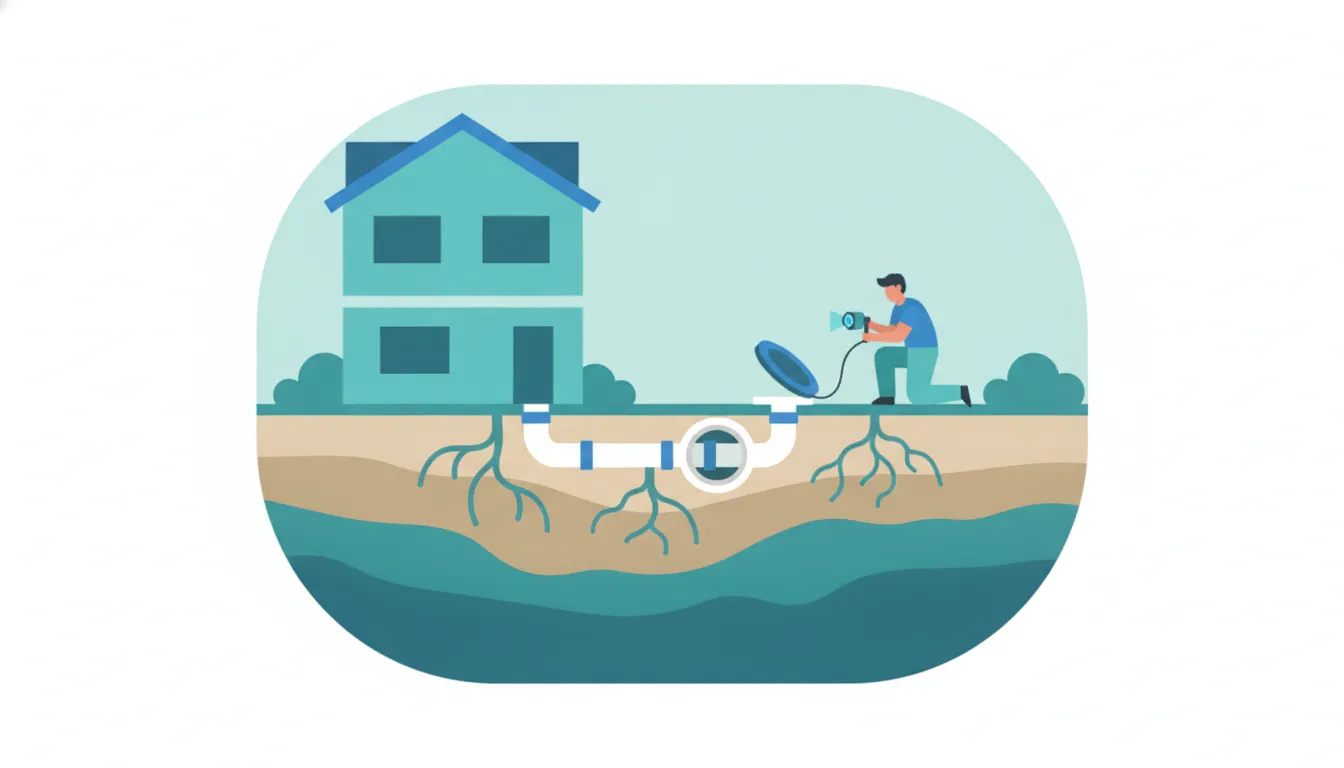
- What inspection supports the diagnosis? Request the camera findings, including the location and type of defects, and ask whether the recording or a written report is available. Camera inspections are used to locate construction and operational features and assess whether pipe condition meets the requirements for a proposed rehabilitation. Learn which signs can point to a broken sewer line, but have the underground condition verified rather than relying on symptoms alone.
- Which exact defect requires this work? Ask whether the recommendation addresses a crack, root intrusion, leak, corrosion, collapse, or another observed issue, and where it occurs. For example, tree-root damage to sewer lines may be visible during inspection, but the scope should still match the documented damage.
- Do permits or local authority specifications apply? Ask who will confirm the requirements for your property and whether the proposed material, size, installation, or rehabilitation method needs review. Standards can specify details such as diameter, loading class, and wall thickness; one jurisdiction's specification should not be assumed to apply everywhere.
- Why is this repair method appropriate? Ask why a spot repair, liner, or replacement is recommended for the observed condition, and what would make another option unsuitable. Pipe Surgeons considers camera findings when developing repair, rehabilitation, or replacement options; an existing pipe should not be lined simply because lining is available.
- How will the work be checked afterward? Confirm what completion records, testing, or post-work camera inspection will be provided. ECUA's Florida utility specification uses CCTV inspection, alongside other specified tests, to verify repairs, so ask what verification applies to your particular job.
Clear answers should show how the material, defect, applicable requirements, and verification plan fit together. If one link is missing, ask for it before approving the scope.
Frequently Asked Questions
What materials are commonly used for sewer pipes?
Wastewater collection systems use ductile iron, concrete, plastic, and vitrified clay, according to the U.S. Environmental Protection Agency. Which materials you encounter depends on the pipe's purpose, location, and installation context. That list is not a guarantee that every material is suitable for a particular private sewer line. EPA pipe-material overview.
Which sewer pipe material is best for a Florida property?
There is no single best choice for every property. A sound recommendation considers trench and site conditions, required loading, pipe dimensions, joints, and the applicable local specification. Have the line assessed and confirm requirements with the authority having jurisdiction before approving a material. EPA selection and specification factors.
What materials are used in new sewer pipe installations?
New installations can use different materials depending on whether the line is a gravity sewer or a force main, along with project specifications. For example, municipal specifications in Miami-Dade and Stuart include PVC SDR-26 for gravity sewer applications. Those public-works examples do not establish a statewide rule or determine what is approved for a private lateral. Miami-Dade specification; Stuart specifications.
When is PVC used for sewer lines?
PVC is used in some gravity sewer projects, as local specifications illustrate, but the required product and installation details depend on the project and governing requirements. There is no single start year that tells you whether an existing line is PVC or whether PVC is appropriate as its replacement. Verify the actual pipe and condition rather than relying on the property's age alone.
Ready to Discuss Your Existing Sewer Line?
A material choice is only part of the decision. The existing line's documented condition helps frame which repair options are worth discussing. Share any inspection findings or records when asking for an assessment. This keeps the conversation focused on the line in front of you, not a one-size-fits-all recommendation.