
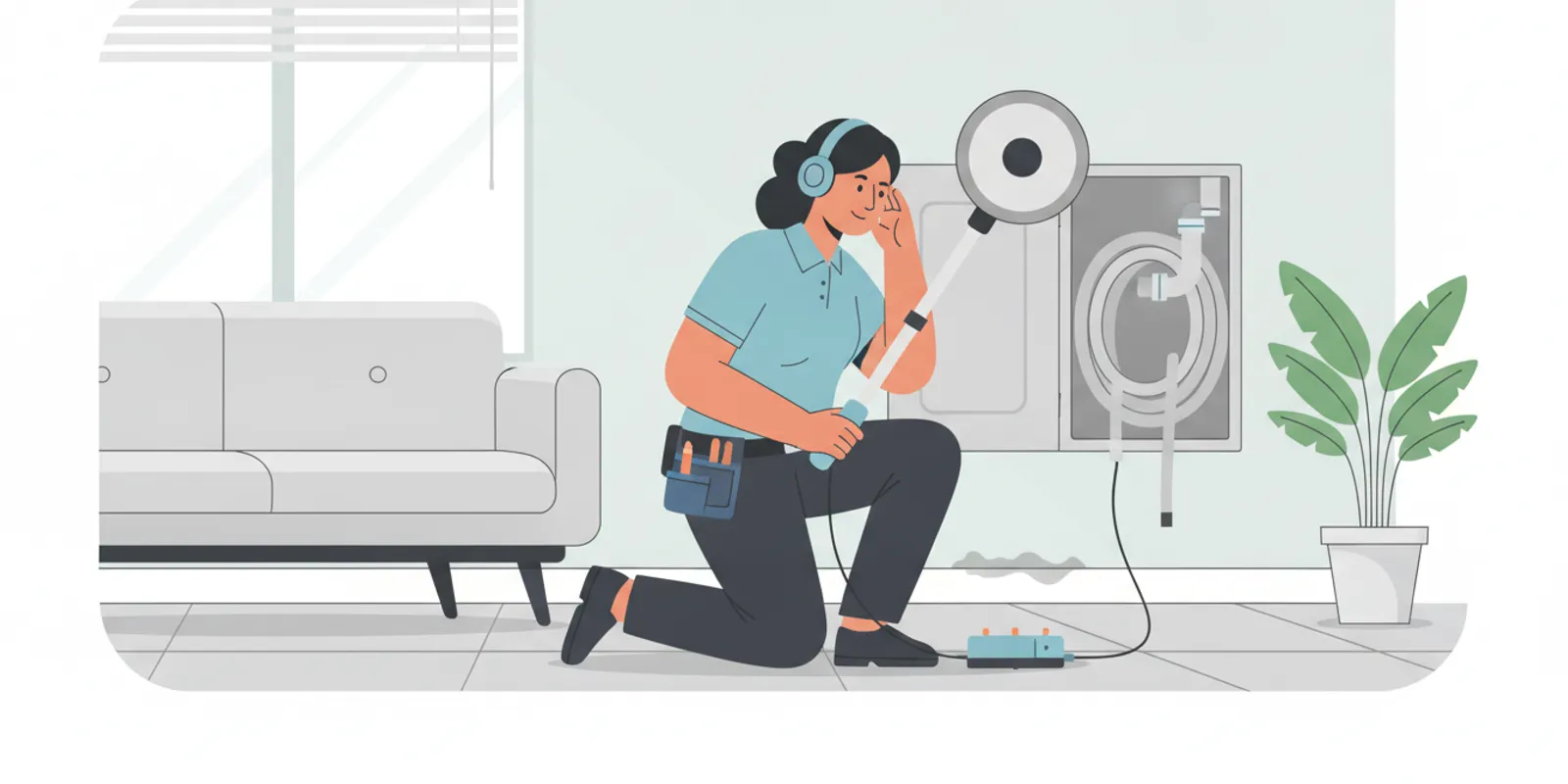
Signs of a water leak are not always dramatic. A sudden change in a water bill, persistent dampness, or water sounds when everything is off can be clues worth checking. These signs do not confirm the source, but noting when and where they occur can help narrow down the next step.
What signs of a water leak should you look for?
Leaks can occur at visible fixtures, buried water lines, or pipes concealed behind walls and beneath floors. Pay attention to changes that persist, recur, or appear without an obvious cause. One clue may have another explanation; several clues together deserve attention. The U.S. Environmental Protection Agency's WaterSense guidance recommends checking for leaks and notes that household leaks can waste water; review its Fix a Leak Week guidance for practical household checks.
- An unexplained rise in water use: Compare recent bills with your usual pattern, considering seasonal irrigation and household changes.
- Damp or discolored areas: Look for recurring wet patches, bubbling paint, softened drywall, or flooring that changes in one location.
- Musty odors: A persistent smell near a cabinet, wall, or floor can accompany ongoing moisture, but odor alone does not identify a leak.
- Water sounds with fixtures off: Hissing, trickling, or running sounds may be worth checking when no appliances or fixtures are in use.
- Unusual pressure changes: Several causes are possible, but a noticeable change paired with other symptoms is useful to report.
- Warm or wet floor areas: A localized change underfoot may be a clue if it continues without a spill or cleaning explanation.
For background on warning clues, see signs of a hidden leak. If dampness is near a bathroom or kitchen, note whether it follows fixture use or happens independently.
How can you check whether water use continues when fixtures are off?
A meter check can help distinguish ongoing water use from a one-time spill. Turn off taps and pause water-using appliances, then make sure no one uses water during the observation. Record the meter reading, wait a short period, and check it again. A change may mean water is still flowing somewhere, but the meter cannot locate the source or prove that a concealed pipe has failed.
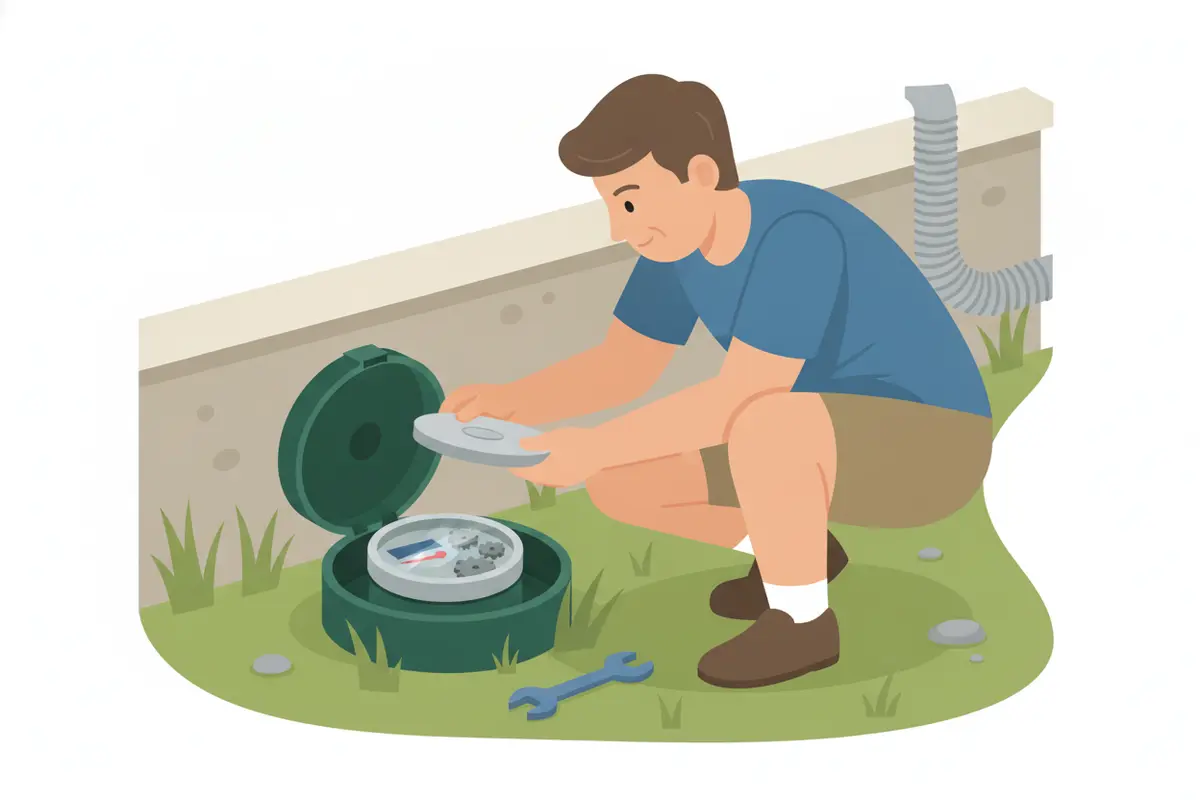
If the meter has a leak indicator, note whether it moves while water is not being used. Follow its instructions and avoid opening equipment or touching electrical components near water. A toilet that runs intermittently, an irrigation system, or an appliance may also account for movement. Check those possibilities before concluding that a concealed line is leaking.
You can also write down the time and reading before leaving the property for a few hours, if practical, while water use is paused. Do not shut off equipment if doing so could affect safety or essential systems. If readings continue to change or symptoms persist, a professional assessment can help investigate what is happening.
What details help distinguish a leak from another moisture problem?
Moisture can come from a leaking pipe, rain intrusion, condensation, an appliance, or a recent spill. Timing and location help create a useful record. Compare what you see with conditions around the property rather than treating any one clue as a diagnosis.
| Observation | What it may suggest | Useful next detail |
|---|---|---|
| Dampness returns in the same indoor area | A continuing source nearby, which may include a pipe | Record the location, timing, and fixture use |
| Water appears after rain | Possible exterior water entry or drainage issue | Note rainfall, affected walls, and drying time |
| Moisture forms on a cold surface | Condensation may be involved | Note temperature, ventilation, and surface conditions |
| Meter changes while use is paused | Ongoing water use somewhere on the property | Check toilets and appliances; record readings and times |
This comparison is a starting point, not a diagnosis. Avoid opening walls or floors to search when the source is uncertain. A water leak detection assessment can use diagnostic methods to investigate rather than relying on guesswork.
How should you interpret a higher water bill?
A bill is a useful signal only when you compare it with context. Look at the billing period, the number of days covered, and whether outdoor watering, guests, occupancy, or appliance use changed. A longer billing cycle can look like a sudden jump even when daily use is similar. If the utility provides daily or interval readings, compare those too, while remembering that usage data points to consumption rather than its location.
Consider a simple example: a household sees a larger bill after adding regular irrigation. That change may explain the increase, especially if the meter is steady during a separate test with irrigation paused. In another case, the bill rises despite unchanged routines, and the meter continues moving when all known fixtures and appliances are off. That combination makes further investigation more reasonable, though it still does not identify a particular pipe.
Keep the bill and your notes together. Record what changed in the household, when the increase began, and whether the meter test was done during a period with irrigation or other automatic systems disabled. This avoids confusing normal seasonal use with unexplained consumption.
When should you arrange professional leak detection?
Ask for specialist help when the meter continues to move with water use paused, a damp area returns, or you hear water flow without an apparent source. It is also sensible to arrange an assessment when a suspected leak may be below a floor or underground, or symptoms are spreading. Timely diagnosis can clarify whether a leak exists and where additional work may be needed.
Pipe Surgeons focuses on pipe diagnostics and repair rather than general fixture service. Its leak detection methods may include hydrostatic, smoke, and electronic testing, selected according to the situation. Testing gathers evidence about the location and nature of a suspected leak. Detection is distinct from choosing a repair; findings, pipe condition, and access all affect which options may fit.
For instance, a recurring damp patch and a changing meter reading provide different kinds of evidence. The first describes where moisture is visible; the second suggests ongoing use. A specialist can consider both alongside the layout and test results. If a concealed or underground pipe problem is identified, learn about trenchless pipe repair. The appropriate approach depends on the pipe and inspection findings, not on symptoms alone.
Pipe Surgeons also offers pipe repair and inspection services. Ask what the proposed diagnostic step can establish, what it cannot establish, and whether additional testing may be needed. Clear limits help set expectations before decisions about repair.
How should you prepare for an assessment?
A few notes make a conversation more useful. Gather recent water bills if increased use is part of your concern. Record meter readings with dates and times, and take photos of visible dampness or staining without disturbing damaged materials. Describe where symptoms appear relative to fixtures, exterior walls, and floors.
- Write down when the issue began and whether it is constant or intermittent.
- Note which taps, appliances, irrigation, or other systems were operating when symptoms appeared.
- Describe sounds, odors, pressure changes, and recurring wet spots, including the time of day.
- Share prior repairs or inspection findings relevant to the affected area.
- List what you already checked, such as toilets or visible appliance connections, and what you did not access.
- Ask what test is proposed, how it works in general, and what evidence it can provide.
- Ask what remains uncertain after testing and what would trigger a different diagnostic step.
A short timeline can be more helpful than a long list of impressions. For example: “Damp mark appeared Monday after rain, dried Tuesday, returned Thursday after no rain; meter stayed still during a 30-minute test.” The note does not diagnose the cause, but it gives the specialist a sequence to investigate. If you need to discuss service coverage, review Pipe Surgeons service areas and use the company information for background.
What should you avoid doing while you investigate?
Keep observations safe and non-invasive. Do not cut into drywall, lift flooring, or dig based on a damp patch alone. The visible mark may be some distance from the source, and opening a surface can add damage without resolving the uncertainty. Avoid handling electrical equipment where water is present.
Do not assume that a quiet meter test rules out every intermittent problem. A leak may not be active during the observation, and automatic systems may operate on a schedule. Repeat a safe check at a different time if useful, and include the conditions in your notes. Likewise, do not treat a single pressure fluctuation or odor as proof of a leak; report it alongside other observations.
If water is actively accumulating or threatening belongings, focus first on safety and limiting damage. If you know how to use the property's main shutoff safely, follow its instructions; otherwise seek qualified guidance. Keep people away from wet electrical areas. The assessment can come after immediate hazards are addressed.
How can you compare the next steps?
The right next step depends on how strong the evidence is and whether there is an immediate hazard. Use this simple comparison to organize a decision, not as a substitute for professional judgment.
| Situation | Reasonable next step | What to record |
|---|---|---|
| One brief damp spot after a known spill | Dry the area safely and watch for recurrence | Date, location, and whether it returns |
| Bill rises after household or irrigation changes | Compare billing periods and check known water uses | Changes in occupancy, watering, and appliances |
| Meter moves while known uses are paused | Check safe, accessible fixtures and arrange diagnosis if unexplained | Start/end readings and systems paused |
| Recurring moisture, sounds, or spreading symptoms | Request specialist assessment | Timeline, photos, bills, and prior work |
| Water near electrical equipment or rapid accumulation | Keep clear and address immediate safety concerns first | Only document from a safe distance |
Even when symptoms point toward a leak, diagnosis should precede decisions about opening surfaces or repairing a line. Ask how the findings connect to the proposed scope. If the assessment identifies an issue, request an explanation of the evidence and the options that apply to that pipe.
How can you make a useful symptom log?
A compact log turns scattered impressions into observations that can be compared. Use one entry for each event rather than trying to remember a week of details later. Include the date and time, the room or outdoor area, what was happening just before the symptom, and whether the condition changed afterward. If there is a meter reading, write down the exact reading and what water uses were paused. A photo can show whether a mark is spreading, but take it from a safe position and do not remove coverings or touch wet materials.
For example, an entry might say: “Tuesday, 7:15 a.m.; warm strip of floor near the hallway; no shower or laundry running; meter indicator moved during a 20-minute quiet period.” A different entry could note that moisture appeared only after a storm and faded as the surface dried. These descriptions preserve useful distinctions without claiming to know the cause. If several areas are involved, label each location consistently on a simple sketch or describe its distance from a fixed feature such as a doorway.
Review the notes after a few observations. Look for a repeatable connection: does the dampness follow use of one fixture, a scheduled irrigation cycle, rain, or no obvious event? Does a sound occur at a particular time? A pattern can guide questions for the assessment, while an absence of a pattern is also worth mentioning. Do not wait to document if water is actively spreading or creating a safety concern; address immediate risks first.
What happens after the initial diagnostic conversation?
A useful assessment begins by clarifying the concern and the limits of the evidence. Describe the symptoms, share the timeline, and explain what checks you completed. The specialist may ask about the building layout, accessible shutoffs, recent work, or which water systems were operating. This context helps select a diagnostic approach; it does not mean a conclusion can be drawn from the conversation alone.
Before testing, ask what area or system the proposed method is intended to evaluate and what result would count as evidence of a problem. Ask whether the test requires water to be turned on or off, whether any preparation is needed, and whether access to a particular space is required. Afterward, request a plain-language explanation of the observations, including uncertainty or limitations. If the findings do not match the visible symptom, ask what alternative causes remain possible and whether another diagnostic step is appropriate.
Keep diagnosis and repair decisions separate. A test may narrow down where to investigate without settling the repair method, access plan, or scope. Those decisions depend on the pipe and the conditions found. A written summary of the finding and proposed next step makes it easier to compare options or ask a follow-up question without relying on memory.
Frequently asked questions
Can a higher water bill prove there is a leak?
No. A bill can rise because of household habits, irrigation, a running toilet, or another use. Compare the period with your usual routine and check whether the meter moves while fixtures are off. Persistent unexplained use is a reason to investigate, not proof of a particular leak.
Can I locate a hidden leak by listening?
Sounds such as hissing or trickling can be clues, but they do not reliably identify a pipe or its location. Appliances and fixtures may create similar sounds. Record when it happens and seek an assessment if it continues.
Should I open a wall or floor to find the source?
Not as a first step. Visible moisture may originate elsewhere, and opening a surface can add damage without finding the cause. Diagnostic inspection can help narrow down the location before invasive work is considered.
Does leak detection include the repair?
Detection is the diagnostic step. Once findings are reviewed, the needed repair and available options can be discussed separately based on the pipe and conditions at the property.
Plan a clear next step for your property
Write down symptoms, check safely whether water use continues when fixtures are off, and avoid assuming that one clue confirms a leak. Clear observations help a specialist investigate and explain what the evidence supports.
When you are ready, share what you have observed and ask about the appropriate next step for your property.