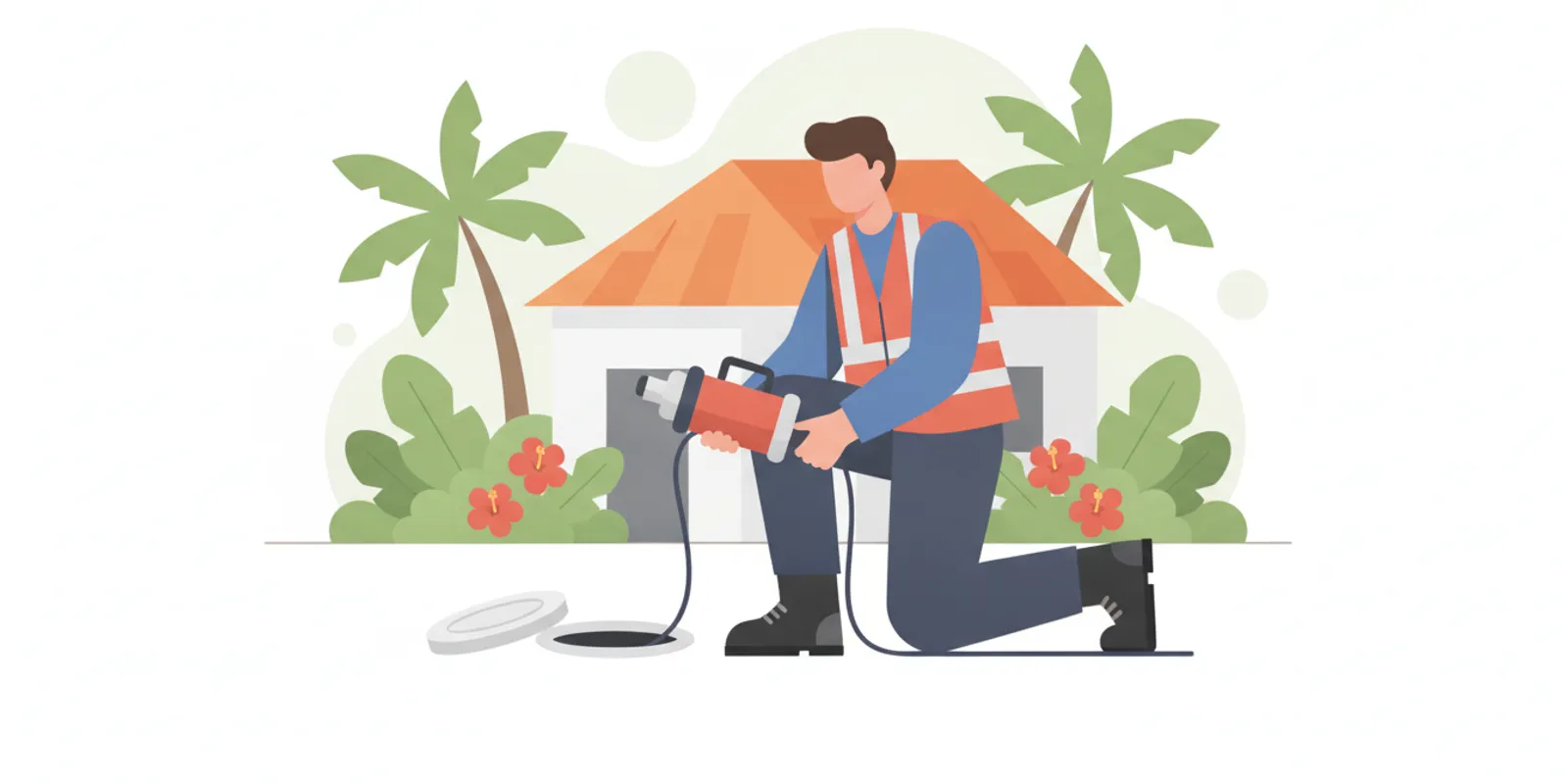
If a sewer-like odor keeps returning indoors or outdoors, smoke testing sewer odor private property may help identify an opening or connection that deserves a closer look. The test sends visible, non-toxic smoke through a section of a sewer system so an inspection team can observe where it escapes. It is a diagnostic step, not a repair or a guarantee that every odor source will be found.
What can smoke testing show on private property?
During a smoke test, a technician introduces smoke into an isolated sewer line or system. If smoke appears at an unexpected point, that visible path can help narrow the investigation. Possible observations include smoke escaping around a damaged pipe, a poorly sealed opening, or an improper connection. The exact meaning depends on the system layout and where the smoke appears.
Smoke testing is used to investigate sewer-system connectivity and defects that can allow unwanted water into the system or sewer gases out. The City of Santa Barbara describes smoke testing as a way to locate cracks or leaks in public systems or on private property, while noting that the smoke is non-toxic. Those general descriptions help explain the method; they do not establish the condition of a particular property or dictate who owns each pipe segment. See the city's sewer smoke testing handout for an overview.
A visible smoke exit is a clue, not a full diagnosis. An inspection team may need to determine whether the opening is connected to the sewer line being tested, whether the feature is intended to vent, and whether the finding could explain the reported odor. A smoke test also does not, by itself, show the full interior condition of a pipe or measure every possible leak.
For a broader look at diagnostic options, review Pipe Surgeons' leak detection services. The appropriate method depends on the symptom, pipe material, accessible cleanouts, and what the initial evaluation reveals.
When is a smoke test worth considering?
Consider asking about smoke testing when an odor seems connected to a sewer line or drain system, but its path is not obvious from a basic visual check. It may be useful when:
- A sewer-like smell returns after drains have been used, even when fixtures appear intact.
- An odor is strongest near a cleanout, floor drain, yard, or other point along a private sewer route.
- A building team needs to investigate several connected fixtures or areas rather than assume one drain is responsible.
- There is a reason to check for an unexpected connection or an opening that could provide a path for odor.
- Prior observations have not identified a clear source, and a targeted test could help plan the next inspection.
It helps to separate what you observed from what you suspect. For instance, record “odor noticed at the exterior cleanout after several fixtures were used” rather than “broken sewer pipe.” The first statement gives a technician a location and a repeatable condition to investigate; the second assumes a cause that testing has not yet established. A careful description can also prevent attention from narrowing too early to one fixture or one section of line.
For example, a property manager might note that an odor appears outside near a cleanout after heavy fixture use, while a homeowner might notice it near one bathroom drain at particular times. Those details help an inspection professional decide where to begin and how to interpret observations. Pipe Surgeons also describes its smoke testing process and offers camera inspection services when visual assessment inside an accessible pipe is appropriate.
How does the test work, step by step?
The setup varies with the piping arrangement and the scope of the investigation. In general, a qualified crew first identifies the line or area to test and then introduces smoke under controlled conditions. The crew watches for smoke at points that may indicate an opening or an unexpected route. The City of Pacifica's sewer smoke test FAQ describes the method as introducing non-toxic smoke into a sanitary sewer system to find damaged pipes or improper connections.
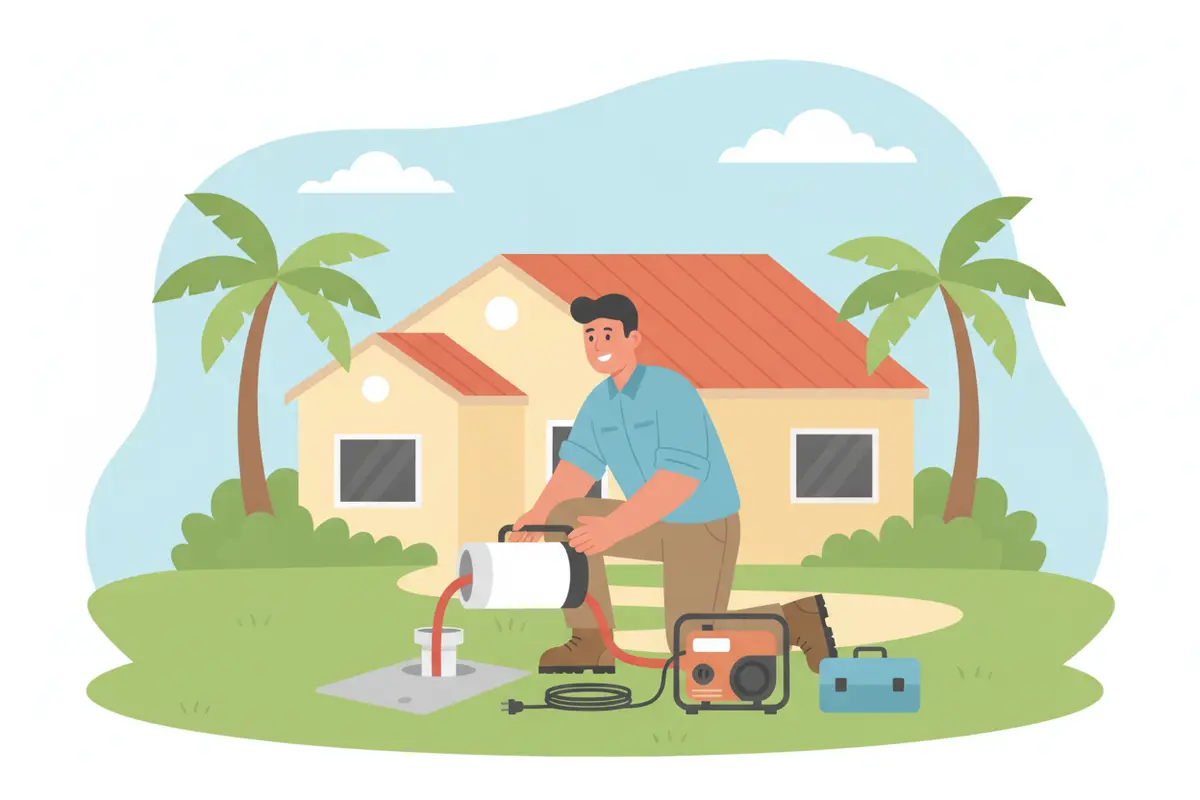
Smoke may travel through connected piping, so a test plan should account for the system rather than treat one visible point as proof about the entire property. An inspection professional can explain what was isolated, what areas were observed, and any limitations that affected visibility. The National Association of Sewer Service Companies' smoke-testing specification guideline discusses using testing to assess connectivity and identify defects associated with inflow and infiltration in gravity sewer systems.
Before testing begins, clarify the planned boundaries in plain language: which access point will be used, what connected section is included, and which areas someone will observe. This is especially useful where a building has multiple branches or a property line is close to the suspected route. If a section cannot be reached or observed, ask that limitation to be noted rather than assuming the test covers it. A good explanation distinguishes the parts actually tested from nearby pipes that were outside the test area.
Also ask what occupants should expect during the visit and whether anyone needs to provide access to a room, yard, or shared area. The crew should direct equipment operation and testing. Residents and staff can help by identifying odor locations, opening agreed access points when requested, and keeping the observation areas available. Do not modify a cleanout, block a vent, or try to produce smoke on your own; an uncontrolled test can complicate the investigation and create avoidable exposure.
What should you prepare before the appointment?
A few observations can make the visit more focused. You do not need to diagnose the line yourself. Instead, gather information that helps the technician understand the pattern and identify a useful test area.
- Write down the odor locations, approximate start date, and times it becomes noticeable.
- Note which fixtures or drains are nearby and whether the smell changes with their use.
- Point out cleanouts, recent repair areas, accessible utility plans, or known pipe routes, if available.
- Tell the technician about prior camera inspections, smoke tests, or other evaluations and share any reports.
- Clear reasonable access to the suspected area, while leaving equipment operation and system testing to the crew.
- Ask what section will be tested, how smoke will be introduced, what areas need to be observed, and how results will be documented.
A practical symptom log can be brief. Use one row for each occurrence: date and time, location, nearby fixture activity, whether doors or windows were open, and how long the odor lasted. You do not need to monitor every room or create a complicated report. The purpose is to notice patterns that could otherwise be forgotten by the appointment. If several people use the building, ask them to report the same basic details rather than relying on a general description such as “it smells sometimes.”
Before the appointment, gather only records that are readily available. A prior inspection report, a basic site plan, or notes about a repair can save time, but do not delay an evaluation while searching for old paperwork. Tell the crew if you are unsure where a line runs. A qualified professional can explain whether that uncertainty affects access or the proposed test. For shared properties, notify the person responsible for coordinating residents or tenants so the relevant areas can be observed during the scheduled work.
How does smoke testing compare with other inspections?
Different methods answer different questions. Smoke testing can make some pathways visible, while a camera can show portions of a pipe interior that the equipment can reach. Leak-detection methods may be selected to investigate a suspected water leak or another defined condition. The table below is a starting point for discussing the options; it is not a substitute for a site-specific recommendation.
| Method | What it may help investigate | What it does not establish by itself | Useful follow-up question |
|---|---|---|---|
| Smoke testing | Visible smoke pathways that may indicate an opening, defect, or unexpected connection in the tested system. | The complete internal condition of every pipe or the cause of every odor. | Where was smoke observed, and what part of the system was included? |
| Sewer camera inspection | Visible conditions inside accessible pipe sections along the camera's route. | Conditions outside the camera's field of view or beyond inaccessible sections. | Which sections were reached, and can the footage be reviewed? |
| Other leak-detection testing | A defined suspected leak or water-loss concern, depending on the method selected. | A universal answer about all sewer odor sources. | What specific question is this test designed to answer? |
| Repair evaluation | Whether an observed condition may call for a repair approach and what access it could require. | A final scope or price before the pipe, site, and work requirements are assessed. | What evidence supports the recommendation, and what alternatives are appropriate? |
Think of these methods as tools for different stages rather than choices that compete to provide one universal answer. If the question is “Does smoke escape through an unexpected opening in this tested system?” smoke testing may be relevant. If the question is “What does the inside of this accessible pipe section look like?” a camera may provide useful visual information. If the concern is water loss, another leak-detection approach may be more suitable. Sometimes the first finding makes a second method worthwhile; sometimes it does not.
For example, smoke observed near a pipe route may identify a point for further inspection, but it may not show whether the pipe has a crack, a loose connection, or another condition. A camera inspection could help view an accessible interior section. If the route or boundaries remain uncertain, site records or pipe mapping may help establish what serves which area. The goal is not to stack tests automatically. It is to select the next step only when it addresses an unanswered question.
Pipe Surgeons focuses on specialized pipe diagnostics and rehabilitation. If a test points toward a damaged underground line, the next step may be a closer inspection and a comparison of suitable repair approaches, such as trenchless pipe repair, CIPP pipe lining, or pipe bursting. Those options are not interchangeable; the pipe's condition, configuration, access, and project constraints matter.
How should you interpret a smoke-test result?
Ask for a clear description of the test area and observations. Useful notes include the cleanout or access point used, the system or section included, where smoke was seen, and any limits on visibility or access. Ask whether the observation is confirmed, suspected, or inconclusive, and what evidence supports that interpretation.
If smoke appears at a location, ask whether it could be an intended vent or another connected opening. A result may identify a point for follow-up without identifying the exact pipe defect or showing its full extent. If smoke does not appear, that observation only applies to the area and conditions tested; it should not be treated as proof that no defect exists anywhere on the property.
Request that the proposed next step answer a specific question. For example: Would a camera inspection help view the interior of the suspected section? Is another leak-detection method more suitable? Does the observed condition warrant a repair evaluation? If a repair is proposed, ask which finding supports it, what parts of the system are included, and whether there are appropriate alternatives.
It can help to organize the result into three columns: observation, interpretation, and next question. “Smoke visible near the cleanout” is an observation. “Possible opening along the tested path” is an interpretation that may need confirmation. “Can a camera reach this section to inspect it?” is a follow-up question. Keeping these categories separate makes a report easier to discuss and helps property owners avoid treating an early clue as a confirmed repair scope.
If the test is inconclusive, ask what made it so. Access limitations, an unclear system layout, or an observation that could have more than one explanation may affect how much the result can tell you. Then ask whether a different access point, a review of available plans, or another diagnostic method would meaningfully reduce uncertainty. It is reasonable to pause and request an explanation before authorizing work that goes beyond the evidence gathered.
Where ownership or responsibility is unclear, ask the relevant utility, municipality, property manager, or qualified professional who maintains the section in question. Property boundaries and service responsibilities differ; an odor or test observation alone does not settle responsibility. Pipe Surgeons provides services for different types of properties, including residential pipe systems and commercial facilities, but the site and system determine the appropriate scope.
What should you ask before choosing a next step?
Before authorizing additional work, make sure you understand the purpose and limits of the recommendation. These questions can help:
- Which symptom or observation is this next step intended to address?
- What parts of the line can the crew access and inspect?
- What did the test establish, and what remains uncertain?
- Would a camera inspection or another diagnostic method add useful information?
- If repair is recommended, what pipe section is involved and what repair methods may fit?
- What site access, preparation, or follow-up will be needed?
- How will findings and the work scope be communicated before work begins?
Talk with Pipe Surgeons about your findings
Frequently asked questions about private-property smoke testing
Is smoke testing used to find every sewer odor?
No. It can help make certain openings or connections visible in the tested system, but it does not identify every possible odor source or inspect every pipe surface. The reported symptom and test conditions guide the interpretation.
Is the smoke toxic?
The cited municipal descriptions characterize sewer-testing smoke as non-toxic, but follow the testing crew's instructions and keep people and pets away from work areas as directed. If you have a health concern or an unexpected exposure, leave the area and contact an appropriate medical or emergency resource.
Does smoke coming out prove that the pipe needs replacement?
No. Smoke at a location is an observation that needs context. The next step may be verification or a closer inspection; a repair decision should account for the specific pipe condition and available evidence.
Can smoke testing confirm that the odor will stop?
No test can promise that outcome in advance. A smoke test may help narrow the investigation, but the odor source may require additional checks and any repair needs to be assessed separately.
Should I use smoke testing or a camera first?
That depends on the question. Smoke testing can reveal some pathways from a sewer system, while a camera inspection can show accessible portions of the pipe interior. A qualified evaluator can recommend a starting method based on the odor pattern, access, and available information.
Plan the next step for a sewer odor concern
Keep a short record of where and when the smell occurs, then ask whether smoke testing can answer a specific question about your private sewer system. Review the observations before choosing follow-up testing or a repair, and make sure the proposed scope matches what the evidence shows. To discuss an odor concern or arrange a pipe evaluation, contact Pipe Surgeons and describe what you have noticed.
Request an evaluation for your property
A focused evaluation can help turn an unexplained odor into a clearer, evidence-based plan for your pipes.