
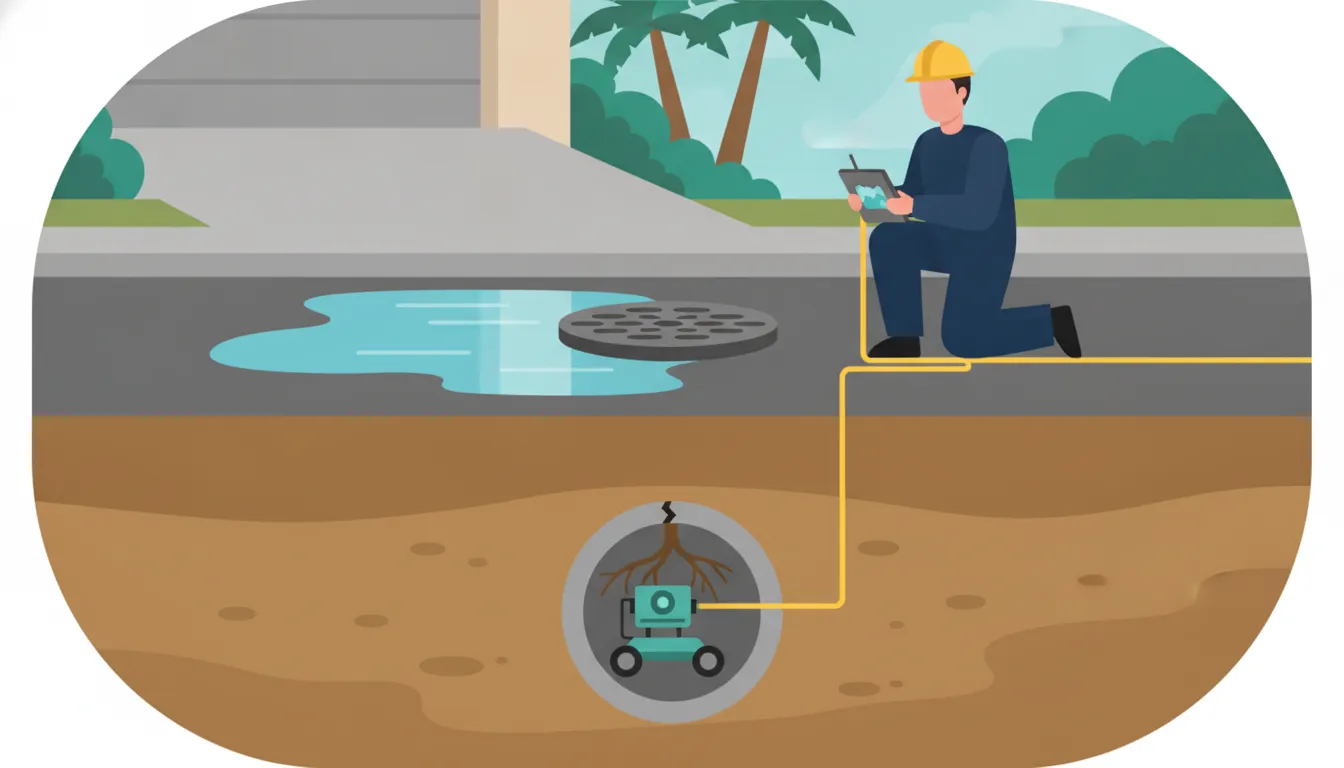
Storm drain pipe repair usually starts with a question: is the water problem coming from a blocked inlet, a damaged pipe, or a drainage system that is simply receiving more runoff than it can move? Standing water after a downpour can be a temporary nuisance, but repeated ponding, sinkholes, or water backing up toward a building deserve a closer look. The right inspection helps property owners address the actual defect instead of paying for surface cleanup that leaves the underground problem in place.
Call (877) 747-3494 to schedule storm drain pipe repair. Contact Pipe Surgeons online
What Does Storm Drain Pipe Repair Need to Solve?
At a glance: Repair should address the restriction, break, displacement, or capacity issue that is causing water to collect, not just remove visible debris from the surface.
A storm drain system can include grates, inlets, catch basins, traps, underground pipes, outlets, and connections to a larger drainage route. A failure at any one point can look like a simple clog from above. For example, leaves may cover a grate, but the real issue could be a crushed pipe below the pavement. A clean inlet may still drain slowly if roots, sediment, a separated joint, or a collapsed section is restricting the line.
That is why storm drain pipe repair should be treated as a diagnosis problem first. A technician needs to determine where water stops moving, whether the obstruction can be cleared, and whether the pipe itself remains structurally sound. Pipe Surgeons describes its storm drain repair service as covering both clearing clogged drains and repairing or replacing damaged piping when the condition calls for it.
The goal is not automatically to replace a pipe. A camera inspection may show that cleaning restores flow, or it may show damage that makes a repair, replacement, or trenchless option more appropriate. The starting point should match the evidence.
Which Warning Signs Point to a Damaged Storm Drain Pipe?
At a glance: Repeated standing water, new depressions, sinkholes, foul odors, erosion, and water moving toward a structure are warning signs that go beyond a one-time surface blockage.
Watch how the drainage area behaves during and after rain. A single slow drain after an unusually intense storm does not prove that the pipe is damaged. A pattern that returns in the same location is more useful. Keep notes or photos showing when the water appears, how long it remains, and whether the problem affects a driveway, yard, parking area, roadway edge, or building.
- Standing water that returns: Ponding around an inlet or at a low point after routine rain can indicate restricted flow, a blocked catch basin, or a problem farther downstream.
- Water backing toward a building: Water that approaches a foundation, garage, loading area, or entry point needs prompt attention because the drainage route may not be carrying runoff away as intended.
- Sunken pavement or soft ground: A depression near a storm drain can develop when soil is washing into a broken or separated underground pipe.
- A sinkhole or sudden void: This is an urgent warning. Keep people and vehicles away from the area and arrange an inspection rather than filling the surface without finding the cause.
- Exposed or damaged components: A broken grate, loose concrete, shifted curb, or damaged inlet can allow debris into the system and create a safety hazard.
- Repeated sediment, roots, or debris: Recurring material may point to a joint, crack, intrusion, or low section that is collecting material inside the pipe.
- Unusual odors or slow-connected drains: These clues can indicate a trap, outlet, or connected line needs evaluation, although odor alone does not identify the exact defect.
Stormwater runoff moves across roofs, driveways, streets, and other hard surfaces. The Florida Department of Environmental Protection explains that runoff from impervious surfaces can carry pollutants and that stormwater systems are designed around specific rain events and local conditions. That context matters: a system may overflow during an unusually large event without having a broken pipe. Repeated problems under ordinary conditions, however, make a physical inspection more important.
What Should an Inspection Check Before Repair?
At a glance: A useful inspection follows the water path from the surface opening through the catch basin and pipe to the outlet, while documenting access, condition, and the location of any defect.
The first step is a visual check of the area. The technician can look for a missing or damaged grate, debris at the inlet, sediment in the catch basin, loose pieces of asphalt or concrete, erosion, and signs that water is bypassing the intended opening. If a commercial property is involved, the inspection should also consider traffic areas, loading zones, parking-lot slopes, and places where ponding could create a safety issue.
Next, the available access points and connected components should be identified. A cleanout, catch basin, inlet, or outlet may provide a practical entry point for inspection equipment. Access affects what can be seen and which repair methods are feasible. It can also affect cost, because reaching a buried line beneath pavement or a structure is different from reaching an accessible basin.
A camera inspection can then show the interior of the pipe. The operator is looking for roots, sediment, cracks, holes, offset joints, collapsed sections, standing water, and changes in the pipe's shape or grade. The camera location helps connect the finding to a surface landmark. Without that location information, a property owner may know that damage exists but still not know where targeted excavation or repair would occur.
Pipe camera work is not the same as guessing from the surface. Pipe Surgeons also provides broader camera inspection services, including sewer camera inspection. The appropriate inspection route depends on the connected system and the access available at the property.

How Do Camera Findings Change the Repair Recommendation?
At a glance: The inspection result separates maintenance from structural repair and helps determine whether the least disruptive effective option is cleaning, spot work, lining, or replacement.
| Finding | Possible starting point | What the inspection must confirm |
|---|---|---|
| Debris or sediment without visible pipe damage | Cleaning or hydrojetting, when suitable | That the material can be removed and flow returns without exposing a structural defect |
| Roots or recurring intrusion at a joint | Targeted repair or another approved pipe rehabilitation option | Where the intrusion enters and whether nearby joints are also compromised |
| Crack, hole, offset joint, or separated section | Spot repair, lining, or replacement based on location and condition | The extent of damage, access, pipe material, and connection details |
| Collapsed or badly displaced pipe | Replacement or a trenchless alternative when feasible | Whether the route can be restored and whether the surrounding soil or pavement is stable |
| Open or damaged inlet, grate, or outlet | Component repair plus line inspection if needed | Whether the component failure allowed debris or erosion into the underground line |
Cleaning is not a substitute for structural work when the pipe wall is broken or the line is collapsing. Conversely, a property owner should not assume that a visible clog requires excavation. The hydrojetting service page explains one method that may be considered for suitable buildup, while trenchless sewer and drain repair provides a route to discuss less-disruptive options when the pipe condition and site allow them.
Repair methods are not selected from a keyword or a photograph alone. Pipe material, diameter, depth, access, connections, soil movement, traffic loads, and the extent of damage all matter. A good recommendation explains what the camera found, where it is, and why the proposed work fits that finding.
What Can Property Owners Do Before the Technician Arrives?
At a glance: Document the symptoms, protect the area, and avoid actions that could move debris or put people near an unstable surface.
- Photograph the problem safely. Capture the grate, standing water, erosion, pavement depression, or sinkhole from a safe distance. Note the date and recent rainfall.
- Keep people and vehicles away from unstable areas. Cone off or otherwise mark a sinkhole, collapsed pavement, exposed pipe, or damaged grate without entering the area.
- Do not cover up a depression before inspection. Filling the surface may hide the location and delay the search for a leaking or collapsed line.
- Clear only loose surface debris you can reach safely. Do not remove a grate, enter a basin, or reach into standing water if the component is damaged or the water may be contaminated.
- Gather site information. Share where the water comes from, how often the issue happens, what areas are affected, and whether prior cleaning or repair was performed.
- Check property and local responsibilities. A private storm drain component and a municipal drainage structure may have different owners or approval requirements. An inspection can help clarify the physical condition, but it does not replace a local authority's direction.
The U.S. Environmental Protection Agency notes that runoff from roofs and paved surfaces can flow into storm drains and contribute to flooding and water pollution. Keeping soil, oil, chemicals, and loose debris out of the system is helpful, but prevention does not eliminate the need to investigate a recurring pipe defect.
When Is Storm Drain Pipe Repair Urgent?
At a glance: Treat a sinkhole, sudden pavement collapse, water entering a building, exposed electrical hazards, or rapid erosion as urgent conditions and keep clear while arranging qualified help.
Storm drain problems can create both drainage and site-safety concerns. A sinkhole or a growing depression may mean soil is moving below the surface. Water entering a building can damage materials and create conditions that worsen with each storm. A broken grate can expose people to a fall, while standing water near electrical equipment creates an additional hazard.
Not every puddle requires an emergency response. The practical distinction is whether the condition is stable and isolated or changing quickly and threatening people, property, or access. If a public roadway, sidewalk, or municipal structure is involved, notify the responsible authority as appropriate. If the problem is on private property, a storm drain inspection can help establish whether the next step is cleaning, component repair, or pipe repair.
Pipe Surgeons serves residential and commercial pipe-service needs in South Florida and the Treasure Coast. The company's service-area information can help property owners identify the regions covered, while the inspection team can discuss what access and documentation are needed for the specific site.
Frequently Asked Questions About Storm Drain Pipe Repair
At a glance: The best repair decision comes from matching the recurring symptom to an inspected location and documented pipe condition.
Can a storm drain clog be cleared without repairing the pipe?
Yes, when the inspection shows that the pipe is intact and the problem is limited to removable debris or buildup. If material returns quickly or the camera shows a crack, root intrusion, offset joint, or collapse, cleaning alone may not solve the underlying cause.
Does standing water always mean the storm drain pipe is broken?
No. Standing water can result from a blocked grate, a full catch basin, unusual rainfall, grading, limited system capacity, or a damaged underground pipe. Repeated ponding in the same location is a reason to inspect rather than proof of one specific defect.
Can a camera inspection find the exact repair location?
A camera can often identify and help locate defects along the inspected route, but visibility depends on access, water, sediment, pipe size, and the condition of the line. The technician should explain the limits of the inspection and how the finding relates to the surface.
Is trenchless repair appropriate for every storm drain?
No. Feasibility depends on the pipe's material, size, shape, access, connections, damage, and surrounding conditions. A camera inspection and site review are needed before comparing trenchless work with excavation or replacement.
Book a storm drain inspection with Pipe Surgeons so the next repair decision is based on the condition below the surface.
Call (877) 747-3494 to book storm drain pipe repair. You can also contact Pipe Surgeons online with the location, symptoms, and recent inspection history.