
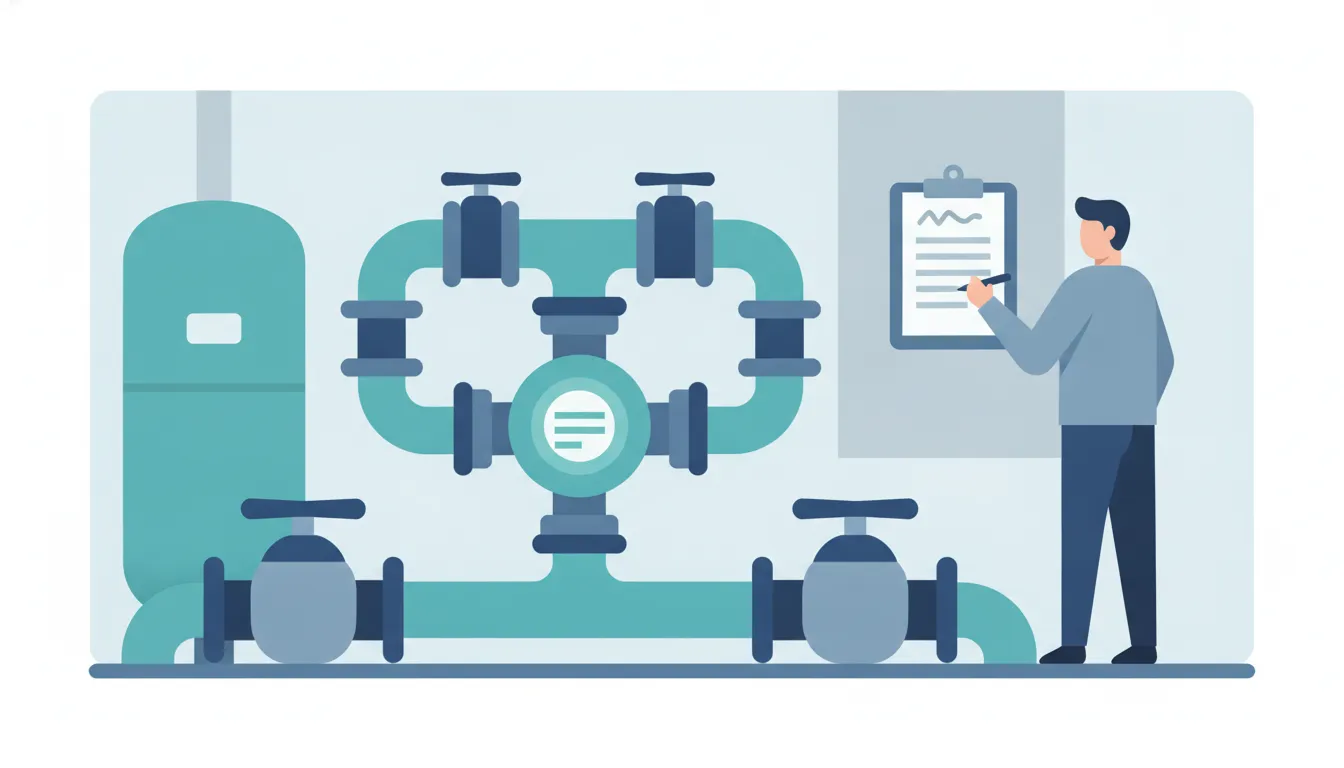
Commercial backflow prevention is the ongoing plan that keeps a property's drinking water from being pulled back toward a non-potable use. A single passing test does not answer who owns the devices, where the records live, or what happens when a unit fails. Facility teams in South Florida need a written program that covers inventory, roles, testing cadence, and the point where a pipe or assembly needs a closer look.
Contact Pipe Surgeons about commercial backflow prevention
What should a commercial backflow prevention plan cover?
A useful plan answers four questions before anyone schedules the next test. Which connections can reverse flow? Who is responsible? Where is the proof filed? When does a finding move from a record update to a repair evaluation?
- Inventory. List every potable connection that could meet irrigation, fire protection, a process system, a boiler, or another non-drinking use.
- Roles. Name the person who walks the site, the person who books the tester, and the person who sends paperwork to the water supplier.
- Records. Keep device location, last test result, and the supplier's required interval in one file.
- Escalation. Write the trigger that turns a failed or missing assembly into a pipe or device evaluation, not another reminder email.
That boundary matters. A whole-building maintenance checklist can mention backflow devices as one asset among drains and water lines. A commercial backflow prevention plan stays on the drinking-water cross-connections and the paperwork that proves they are protected. Device selection and the physical install belong on the installation service page, not in this plan.
How do you inventory cross-connections on a commercial property?
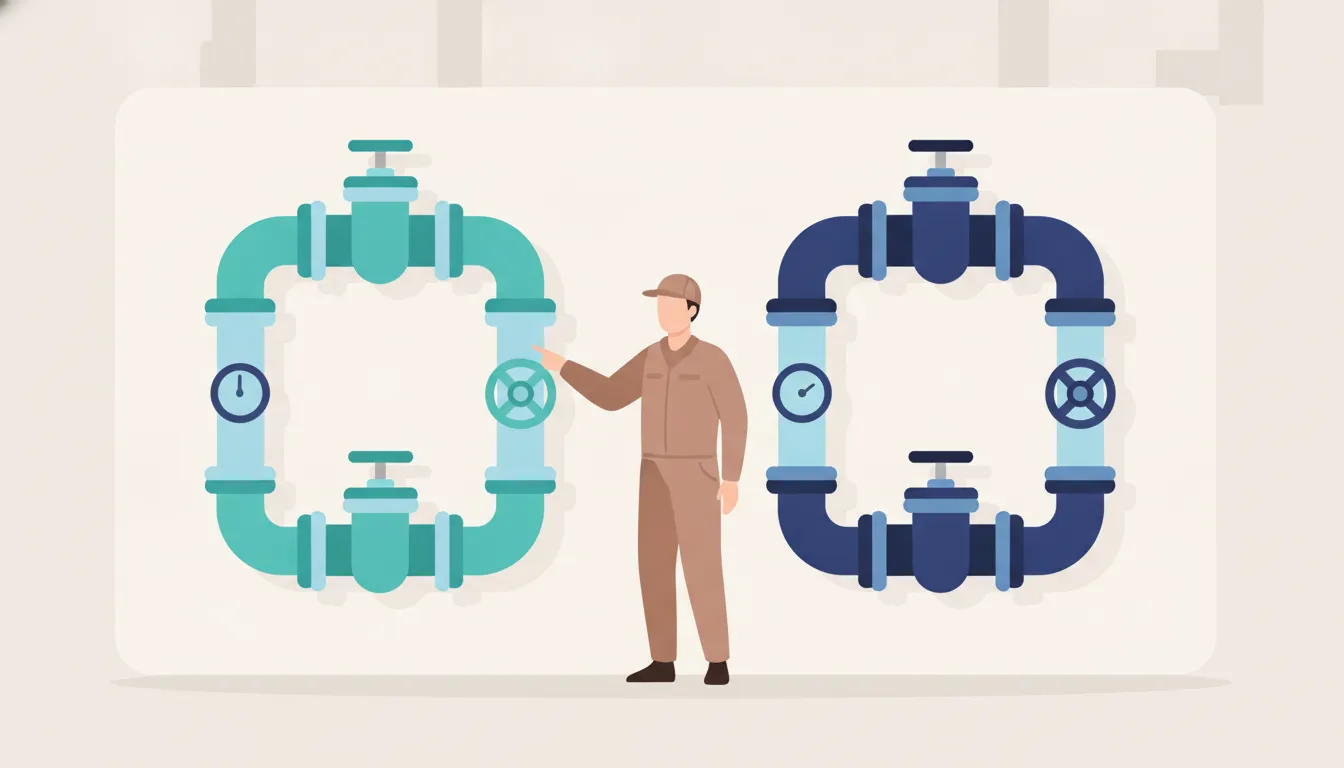
Start at the water service and walk toward every use that is not a drinking tap. The Florida Department of Environmental Protection describes a cross-connection as any link between drinking water and a non-potable source. Examples include auxiliary, cooling, and irrigation piping. On a commercial site, the usual stops are the domestic service, the irrigation tap, the fire line, mechanical rooms, and any process or lab connection.
Write each stop as a row, not a memory. Record the location, what the line serves, whether an assembly is visible, and whether the water supplier already has a record for it. If a connection is hidden behind a locked room or a tenant build-out, note the access contact. Do not guess the device model from the outside of a cage. A missing tag is a finding, not a reason to invent a type.
Separate sewer backups from potable backflow while you walk. A device that keeps sewage out of floor drains is a different job from an assembly that protects the public water main. Mixing those lists makes the testing file hard to defend later. If the walk finds unexplained wet spots, pressure swings, or a service line you cannot trace, pause the inventory. Look at leak detection before you treat the line as a paperwork gap.
The inventory is done when a new manager can find every listed connection without calling the last tester. It is not done when the file only contains last year's passing certificates.
Who should own testing, records, and water-supplier notices?
Give the program one owner and two backups. The owner is usually the facility manager or chief engineer. That person does not have to perform the test. The owner has to know which assemblies exist, when each one is due, and where the signed result goes.
Split the work so a vacation does not drop a deadline:
- Site lead. Keeps the inventory current after tenant work, irrigation changes, or a fire-system repair.
- Scheduler. Books the certified test before the supplier's due date and confirms water-shutoff windows with occupants.
- Records lead. Files the pass, fail, or repair note and sends the copy the utility asks for.
Water suppliers usually cannot walk every premises. The Florida DEP says each supplier should make sure a proper preventer is installed and maintained where the hazard is significant. That includes dedicated fire and irrigation lines, plus industrial, medical, and laboratory sites. Your plan should assume the utility will ask for proof. Do not wait for the utility to discover a missing assembly.
Put the utility contact, the property's account number, and the preferred submittal method on the first page of the file. If a test fails, the records lead should know whether the supplier wants the failure notice, the repair note, or both. That step is coordination. It is not a promise that any one visit will satisfy every city.
How should a property set its backflow testing cadence?
Ask the water supplier for the interval that applies to each assembly, then put that date on the inventory. Do not copy a residential "once a year" habit onto every commercial device. The Florida Department of Environmental Protection’s cross-connection guidance and Florida's cross-connection rule, Rule 62-555.360, address protection against unprotected cross-connections into a public water system. It points utilities to AWWA Manual M14 for appropriate protection. For wastewater or reclaimed-water connections, the rule generally calls for an air gap or another DEP-approved method that provides equivalent protection. A single annually tested mechanical preventer is not enough for that hazard.
Use the supplier's letter as the schedule. Use the rule as the reason the schedule exists. The Florida DEP explains why a calendar matters. Mechanical preventers have seals, springs, and moving parts that foul or fatigue. Mechanical units and air gaps can both be bypassed. Mechanical assemblies need a test with calibrated gauges. A look at an air gap can be visual. Your cadence should say which check applies to which row.
| Plan item | What to record | What this plan does not decide |
|---|---|---|
| Service and fire lines | Location, hazard notes from the utility, last result, and next due date. | Which assembly model to buy. |
| Irrigation and process taps | Whether the connection is still active after tenant or landscape work. | How to pipe a new install. |
| Test calendar | Supplier interval, shutoff window, and who books the tester. | The gauge steps inside the test. |
| Failure file | Fail date, repair or replacement request, and retest due. | A price for the repair. |
| Air gaps | Visual-check date and any bypass or hose left in place. | A substitute for the utility's own rule. |
Build a reminder 30 days before each due date so a failed unit still has time for a retest. If the supplier requires a shorter interval on a high-hazard assembly, that shorter date wins. Local rules differ across South Florida utilities, so the plan should cite the notice you were given rather than a statewide testing slogan.
What belongs in the backflow record file?
Keep one record per assembly, even when several devices share a mechanical room. A passing stack of certificates with no locations will not help the next tester or the next property manager.
Each record should include:
- A plain-language location, such as "irrigation vault, north parking lot," plus any asset tag the site already uses.
- The service it protects, such as domestic, irrigation, or fire.
- The last test date, the result, and the name of the testing firm.
- The water supplier's required interval and the next due date.
- Any fail, repair, or retest note, including the date the paperwork was sent.
- Access limits, including lock codes held by security and hours when a shutoff is allowed.
Add a site sketch or photo index only if it shows the assembly and the shutoff without publishing tenant security details in a public folder. Store the file where the after-hours supervisor can open it. A binder in a truck and a drive only one person can unlock is not a program.
Review the file when the building changes, not only when a test is due. A new tenant kitchen, a reworked irrigation zone, or a fire-pump replacement can add a cross-connection that last year's certificate never mentioned. The broader property checklist in the commercial plumbing maintenance plan is the right place for drains and general water-line rounds. Keep the backflow file specific so those other rounds do not bury the drinking-water records.
When should a failed or missing assembly move beyond the test calendar?
Move the item out of the reminder list in three cases. The assembly is missing. The tester cannot get a valid test. The same unit fails again after a repair. At that point the property needs an evaluation of the device and the pipe around it, not another calendar entry.
Typical handoff triggers:
- No assembly where the inventory or the utility says one should be.
- A test port, shutoff, or relief opening that is blocked, buried, or impossible to access.
- Repeated failure on the same unit, or a repair that does not hold through the retest.
- A service line with wet ground, a pressure change, or a route nobody can confirm.
Keep the handoff on the drinking-water program. Backflow prevention certification is the potable-water job. Certified technicians test and certify assemblies where drinking water can meet non-potable sources such as sprinklers or HVAC systems. Use that visit when a listed assembly is due, failed, or missing its paperwork. This planning guide does not replace the test. If the finding is a damaged potable line rather than a paperwork miss, compare commercial water main repair planning. That guide covers shutoff timing and site access with occupants in mind.
Do not treat a failed test as proof that the whole water service must be replaced. Do not treat a clean test as proof that an unlisted irrigation or process connection is safe. The plan's job is to make that distinction in writing, then send the right visit.
How does this plan relate to other pipe work on the property?
Backflow records sit next to other pipe decisions, but they should not absorb them. A pressure complaint may be a supply problem, a closed valve, or a failed assembly. Start with the symptom and the file, then choose the trade work.
Use these boundaries:
- Unexplained wet areas or a line you cannot trace belong with commercial acoustic leak detection, not with a test certificate.
- Ongoing low or high pressure belongs on the water pressure service page until someone confirms the cause.
- A missing or failed potable assembly belongs with backflow prevention certification, not with another calendar reminder.
- Commercial drain and sewer rounds stay in the maintenance plan. They are not a substitute for potable cross-connection control.
Commercial properties across South Florida, from offices to restaurants and medical buildings, can use the same file shape. The hazard list and the utility interval will differ. Commercial pipe services cover the repair side once the plan shows that a line, not just a form, needs work.
Keep the program small enough that the site lead will update it. A short inventory, a named owner, a supplier-based calendar, and a clear handoff will do more than a binder nobody opens between tests.
Contact Pipe Surgeons about your backflow devices
Frequently asked questions
What is commercial backflow prevention?
It is the property's program for stopping non-potable water from flowing back into the drinking-water piping. The program includes the inventory of cross-connections, the assemblies or air gaps that protect them, the test calendar, and the records the water supplier can review.
Does every commercial building use the same testing interval?
No. Ask the water supplier for the interval on each assembly. Florida's cross-connection rule is stricter about wastewater and reclaimed-water connections than a single annual mechanical test, and local utilities can set their own submittal dates.
Who keeps the test certificates?
The property should keep them, even if the tester also submits a copy. Name a records lead, file each result by device location, and note the date it was sent to the supplier.
What should we do if a test fails?
Record the failure, follow the supplier's notice rule, and schedule the repair and retest. If the unit is missing, inaccessible, or failing again after repair, move it to a device or pipe evaluation instead of leaving it on the reminder list.
Is a backflow plan the same as a plumbing maintenance plan?
No. Maintenance planning covers drains, sewer lines, water lines, and records across the building. Commercial backflow prevention stays on potable cross-connections, testing cadence, and the handoff when a device or pipe needs service.