

Water pipe corrosion repair depends on how far the damage has spread. One pinhole in sound metal can be a short repair. Pinholes, scale, or thin pipe in several places can make a lining or a longer replacement the more honest plan. On older Florida homes, that pattern is often hidden until a bill rises or a fitting stains.
Pipe Surgeons has worked on pipe problems across South Florida and the Treasure Coast since 1981. The team finds leaks, inspects potable lines with a camera, and then matches the fix to the pipe: a spot or segment repair, epoxy lining, or a replacement. Corrosion tells you which of those is worth pricing. It does not pick the method by itself.
Call (877) 747-3494 to request a water pipe assessment
What should water pipe corrosion repair decide?
The useful question is narrow. Given the corrosion you can document, is a local repair enough, or does the rest of the line need a barrier or a new pipe? That is different from hunting for a leak, and different from a general repair-versus-replacement guide.
Three facts have to be in hand before anyone prices a fix:
- Where the corrosion sits: one fitting, one short run, or several places along the line.
- What the pipe wall is doing: a single pinhole, widespread pitting, scale that narrows the line, or a section that has thinned or offset.
- Whether a technician can reach that section without opening a slab, a driveway, or a finished room.
The water pipe repair and replacement page is the service behind those options. If you are still deciding repair versus replacement in general, use the water line repair versus replacement guide. This article stays on what corrosion changes inside that choice.
In short: map how far the corrosion goes, then match a spot repair, a lining, or a replacement to that map.
How does a single corroded spot differ from a pattern?
A single bad spot and a repeating pattern should not get the same repair. A pinhole at one fitting, with clean pipe on either side, can be a spot repair. The fitting failed. The line did not.
A pattern is different. Green staining at several joints, pinholes that show up months apart. Or scale that keeps coming back means the water and the pipe are reacting along a longer run. Patching the newest leak leaves the next thin spot in place.
Florida burial conditions make a pattern worth confirming, not assuming. Lines sit in wet soil. A high water table and ground movement add stress at joints. Mineral buildup can narrow a pipe and drop pressure before the wall fails. What you see at one valve is a sample, not a map of the yard line.
Keep the clues in their lane:
- One stained fitting in an otherwise dry, reachable area points to a local repair until inspection says otherwise.
- The same clue at two or more openings, or a second leak within a short time, points to a wider look.
- Low pressure with clear water can be scale, a valve, or a leak. It is not proof the whole line is corroded.
Discolored water is also a weak stand-in for a pipe map. A water heater, a fixture, or the utility can cause it. Confirm the source before you treat a color change as a failed service line.
When is a spot repair enough for corroded pipe?
A spot or short segment repair fits when the damage is local and the pipe around it is still sound. Think of a pinhole at a joint you can reach, a failed valve, or a short run that inspection shows is the only thin section.
Ask for these findings before you approve that smaller job:
- The leak or thin spot is located, not just suspected from a stain.
- Pipe on both sides of that spot is intact, without a row of pinholes or heavy scale.
- The section is on your side of the meter, so you are repairing a line you own.
- The repair can be made without opening a slab or a driveway just to reach one fitting.
Pipe Surgeons makes spot and segment repairs when those findings support them. A short repair is the wrong savings if the camera or the test already shows the same wear farther down the line. In that case the second leak is a timing problem, not a new surprise.
Access still matters. A reachable pinhole near the meter is a different job from the same pinhole under a slab. Do not open concrete to "check" a stain. Locate the spot first. If the clues are a higher bill or dampness with no visible source, start with signs of a water leak and leak detection, then come back to the repair choice.
When does corrosion call for lining instead of a patch?
Lining earns a look when the pipe is still a sound host and the corrosion is inside it, not when the pipe has collapsed. Epoxy lining coats the inside of a potable line with a resin barrier. Pipe Surgeons uses that coating to address pinhole leaks and to limit metals from the pipe wall getting into the water. The epoxy potable water lines page describes the service.
Lining fits better when:
- Pinholes or internal corrosion show up along a run, not at one fitting.
- The pipe is still round and continuous, without a collapse or a bad offset.
- There is a usable way to get the lining in, so the yard or the slab does not have to come up for the whole length.
Lining is a poor fit when the wall has failed open, the pipe is badly offset, or scale and debris have not been cleared. A coating cannot bridge a separated joint or a crushed section. Those findings push the plan toward a segment repair or a replacement.
There is a separate health question if older plumbing may contain lead. The U.S. Environmental Protection Agency explains that lead can enter drinking water when plumbing materials that contain lead corrode, especially where the water is more acidic or low in minerals. Read the agency's basic information about lead in drinking water and ask your utility before you treat a corroded line as only a leak. A lining or a replacement does not replace that check.
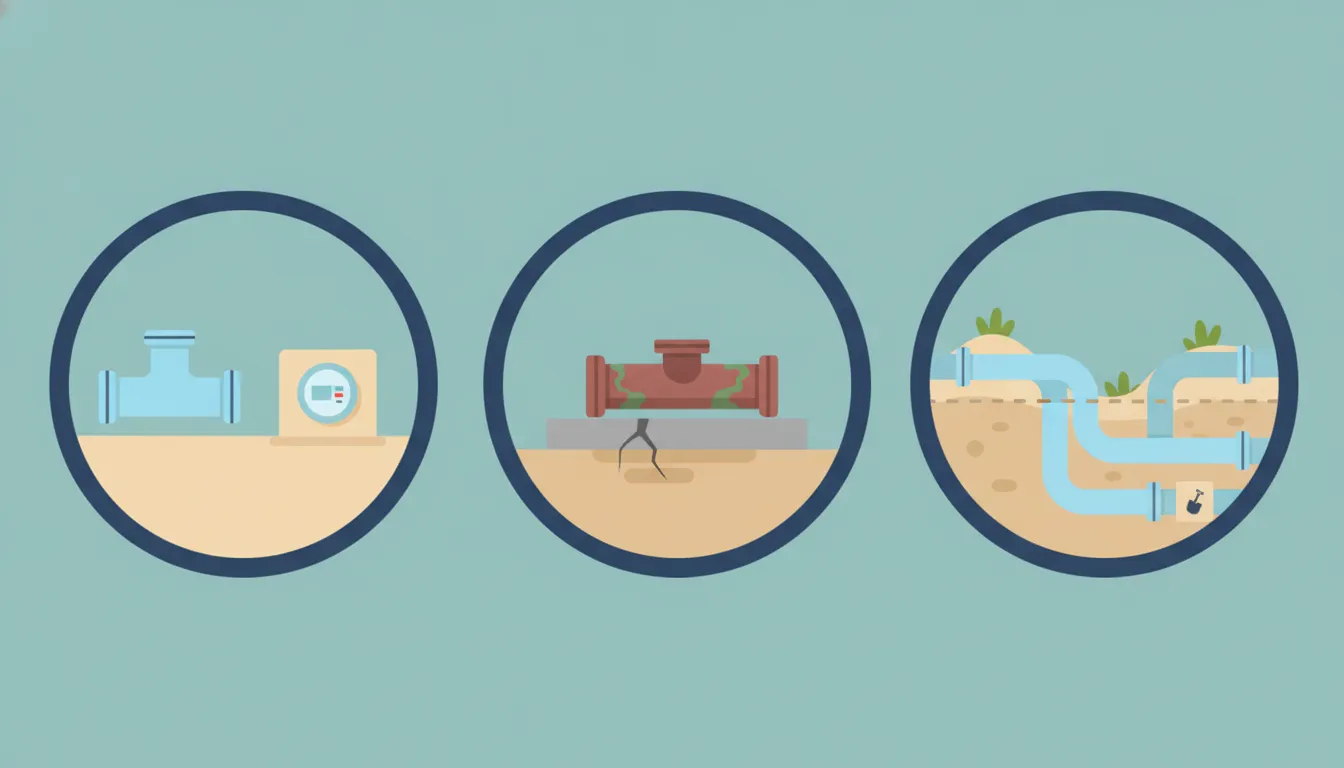
The drawing is a planning aid. An open, reachable segment, a line under concrete, and a long buried run lead to different repair talks even when corrosion is the shared cause.
When should corroded water pipe be replaced instead?
Replacement deserves a serious look when the pipe can no longer serve as the thing you repair. Repeated leaks, a collapsed or badly offset section, or corrosion so widespread that a short repair would only move the problem a few feet all point that way.
Replacement is the stronger candidate when:
- Leaks have already been repaired and a new one appears on the same line.
- Inspection shows thin wall, heavy scale, or offsets along most of the run you can see.
- The pipe has collapsed or separated, so a liner has nothing sound to hold it.
- The line is on your side of the meter and the damaged length is long enough that patches add up to a new line anyway.
That still does not mean the yard has to be opened from end to end. Pipe bursting is one trenchless way to pull a new water line through when the site allows it. Read pipe bursting for a water line and the water line replacement page for the service, not for the corrosion test. Method comparison lives in trenchless versus traditional water line replacement. Use it after replacement is actually the question.
Cast iron has its own age questions. Those belong on the cast iron pipe lifespan guide. Do not borrow a lifespan number from one material and apply it to a copper or galvanized service line.
How do you match the corrosion to the repair?
Use the inspection result, not the symptom that got you to call. A camera, where the line can be entered safely, shows leaks, offsets, and internal corrosion. That service is on the potable water camera inspection page. A pressure problem with no confirmed leak belongs on the water pressure issues page first.
| What inspection shows | Repair that usually fits | Confirm before you approve |
|---|---|---|
| One pinhole or one failed fitting, and sound pipe beside it. | A spot or short segment repair. | The rest of the reachable line is not showing the same wear. |
| Internal corrosion or pinholes along a run that is still intact. | Epoxy lining, if the pipe can host it. | No collapse, no bad offset, and a usable entry point. |
| Heavy scale that narrows the line but the wall still holds. | Cleaning first, then a lining or a repair plan. | The restriction is the pipe, not a valve or a fixture. |
| Repeated leaks, a collapse, or a bad offset. | Segment replacement or a new line. | You own the section, and a liner has nothing sound to grip. |
| Corrosion on the utility side of the meter. | Not your repair to approve. | The meter location and what the utility will do. |
EPA WaterSense suggests a simple screen while you wait: read the meter when no water is in use, then read it again about two hours later. A change means water is moving. It does not show corrosion or location. The agency's home maintenance leak guidance is that screen, not a repair plan.
A slab leak is its own path. Damp flooring over a concrete slab should go to slab leak repairs, not straight to a yard-line replacement. Corrosion in a buried service line and a leak under the slab can both exist. They are not the same job.
What should you ask before corrosion repair is priced?
A clear proposal names the corrosion, how far it goes, and why one fix fits better than a smaller one. If it skips that, you are being sold a method before the pipe is understood.
Ask in this order:
- Where is the corrosion, and what test or camera image shows it?
- Is it one spot, or the same wear in more than one place?
- Is that section on your side of the meter?
- Why is a spot repair, a lining, a segment, or a replacement the better fit?
- What has to be opened, and what can stay covered?
- How will you check the line after the work so the leak is actually addressed?
Pipe Surgeons quotes this work. Access, pipe length, and the method change the number. There is no flat public price. Larger jobs can use the options on the financing page. Cost detail for trenchless water line work sits in the trenchless water line repair cost article. Read it after the corrosion findings say replacement or lining is in play.
Crews serve homes and businesses from Brevard County through the Treasure Coast and into Palm Beach, Broward, and Miami-Dade. County coverage is on the service areas page. If water is actively damaging the building, call (877) 747-3494 rather than waiting on a checklist.
Talk through a corrosion repair plan
Frequently asked questions
Can one corroded pinhole be repaired without replacing the line?
Often, yes, when inspection shows the pinhole is local and the pipe beside it is sound. A spot or short segment repair is aimed at that case. A row of pinholes, or a second leak soon after the first, is a reason to look at lining or replacement instead.
Does epoxy lining fix every corroded water pipe?
No. Lining coats a pipe that is still intact. It can address pinholes and put a barrier between the water and the old wall. It is not for a collapsed pipe, a bad offset, or a line with no way to get the lining in.
Does rusty or discolored water prove the service line is failing?
No. Color can come from a heater, a fixture, or the utility. It is a reason to investigate, not a reason to replace the yard line. A camera or a leak test has to tie the color to the pipe before the repair is chosen.
Who pays if the corroded section is at the meter?
Typically the utility owns the line up to the meter, and the property owner owns the line from the meter to the building. Meter placement varies. Confirm the split before you approve work on a pipe that may not be yours.
Should older Florida pipes be replaced just because of their age?
No. Age is a reason to inspect. Corrosion findings decide the repair. Sound pipe with one reachable defect can stay. Widespread thinning, repeated leaks, or a collapsed section are what move the plan to replacement.